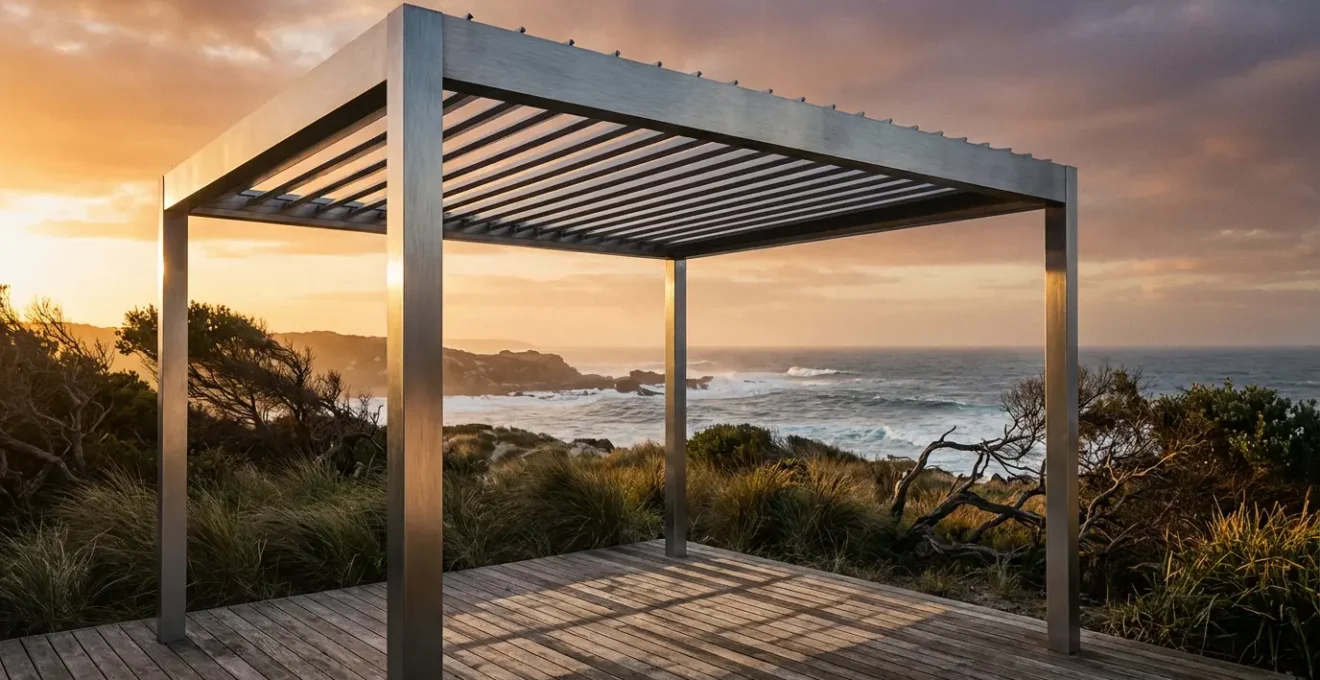
The longevity of an outdoor structure in a coastal area isn’t a simple choice between aluminum and wood; it’s a matter of choosing the *correct grade* of aluminum and understanding the science behind its installation.
- Cheap, recycled aluminum alloys will warp and fail due to thermal stress, while high-grade alloys like 6061-T6 maintain structural integrity.
- The greatest threat isn’t surface rust but silent galvanic corrosion, caused by using the wrong type of screws, which can destroy a frame from the inside out.
Recommendation: For any coastal project, insist on certified 6061-T6 or 6063-T5 aluminum and specify 316-grade stainless steel fasteners to ensure a lifespan measured in decades, not seasons.
For homeowners in coastal regions, the battle against the elements is constant. The salt-laden air, high humidity, and intense sun conspire to degrade outdoor structures at an accelerated rate. The traditional choice, wood, requires a relentless cycle of sanding, staining, and sealing, only to eventually succumb to rot and insect damage. This has led many to seek a more durable alternative, with aluminum emerging as the modern material of choice. However, the conversation often stops at a simplistic “aluminum doesn’t rust” level.
This surface-level understanding is a critical mistake. The reality is that not all aluminum is created equal, and its near-invincibility in harsh climates is conditional. The true difference between a structure that looks pristine after twenty years and one that warps, corrodes, and fails after just a few seasons lies not in the material itself, but in the specific engineering behind it. Factors like alloy composition, thermal expansion properties, the unseen threat of galvanic corrosion, and the science of thermal breaks are what truly dictate long-term performance.
This guide moves beyond the marketing claims to provide a factual, engineering-based perspective. We will dissect the material science that makes high-grade aluminum the superior choice for coastal environments. We’ll explore why cheap alternatives fail, how to maintain a finish correctly, how it compares to steel for large spans, and the critical details—down to the specific screws you must use—that guarantee a structure built to last a lifetime. This is the definitive guide to making an informed investment in your home’s outdoor architecture.
To navigate this in-depth analysis, the following sections will break down the key engineering and maintenance considerations that ensure the longevity and performance of your aluminum structure.
Summary: The Engineering Behind a Lasting Coastal Aluminum Structure
- Why “Cheap” Aluminum Profiles Warp After Only 3 Winters?
- How to Clean Powder-Coated Aluminum Without Scratching the Finish?
- Aluminum vs Steel: Which Is Better for Large Span Glass Structures?
- The Screw Selection Mistake That Causes Aluminum to Corrode Silently
- How to Eliminate Condensation on Aluminum Frames Using Thermal Breaks?
- Why Solid Aluminum Frames Are Terrible for Energy Efficiency?
- Hydraulic vs Electric Motors: Which Is Quieter for Late Night Adjustments?
- How to Orient Adjustable Louvers to Maximize Winter Sun and Block Summer Heat?
Why “Cheap” Aluminum Profiles Warp After Only 3 Winters?
One of the most visible failures of low-quality outdoor structures is warping. A perfectly straight beam begins to twist or bow after a few cycles of seasonal temperature swings. This is not a random defect; it’s a predictable outcome rooted in material science, specifically the coefficient of thermal expansion. Aluminum expands and contracts with heat more than steel or wood. For high-grade alloys, this is a known, manageable property. However, for “cheap” aluminum—often made from inconsistent recycled materials—this process becomes destructive.
These lower-grade profiles lack the uniform metallurgical structure and precise dimensions of architectural-grade aluminum like 6061-T6. They contain impurities and have inconsistent wall thicknesses. As the material heats and cools, these inconsistencies create internal stresses that are relieved by deforming. The material’s thermal expansion is a known quantity; high-grade 6061-T6 aluminum has a coefficient of 23.6 µm/m-°C, a figure engineers use to design joints that allow for movement. Cheap alloys lack this predictability, leading to permanent warping.
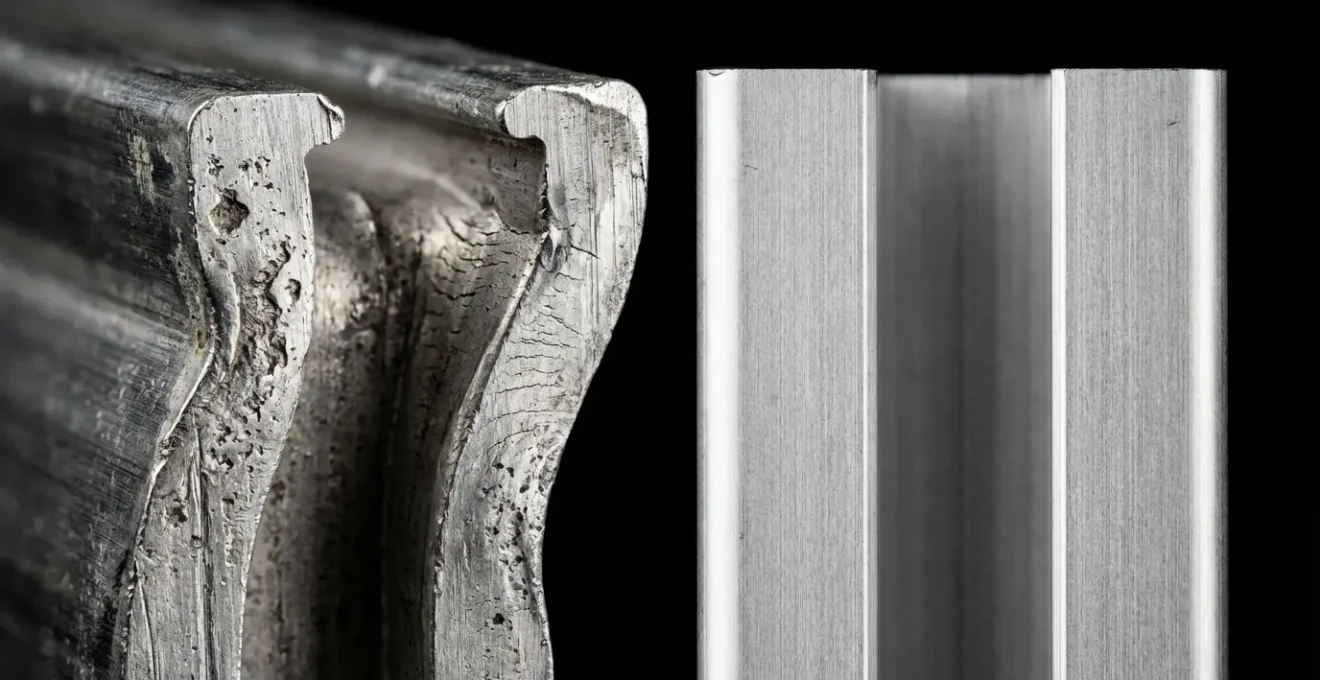
As this image illustrates, the difference is stark. The pristine, straight profile of a high-grade 6061-T6 extrusion contrasts sharply with the twisted, distorted shape of its cheaper counterpart. To avoid this fate, specifying the correct alloy is non-negotiable. It’s the difference between a temporary fixture and a permanent architectural element. The tempering process (the “T6” designation) is also crucial, as it involves controlled heat treatment to maximize strength and stabilize the material’s grain structure, further preventing deformation over time.
How to Clean Powder-Coated Aluminum Without Scratching the Finish?
A high-quality powder-coated finish on aluminum is the first line of defense against the harsh coastal environment. This tough, baked-on polymer layer provides excellent protection, but it is not invincible. Improper cleaning is one of the fastest ways to degrade this barrier, leading to premature fading, chalking, and eventual failure. The most common mistake is using abrasive tools or harsh, alkaline-based chemical cleaners (like many common household degreasers). These can chemically etch the surface and strip away its protective qualities.
In a salty coastal environment, residue must be removed regularly to prevent corrosive salt crystals from slowly breaking down the coating. However, the cleaning method must be gentle. The industry standard is to use only a soft cloth or sponge with a mild, pH-neutral soap and clean water. Anything more aggressive risks creating micro-scratches that dull the finish and trap dirt and salt, accelerating degradation. In fact, studies have shown that using harsh chemical cleaners can halve the life expectancy of powder-coated surfaces.
For structures in high-salt areas, a more proactive maintenance schedule is essential. As professional installers confirm, regular cleaning is the baseline, but adding a protective layer provides significant long-term benefits. A high-quality, non-abrasive automotive wax with UV blockers can be applied annually to act as a sacrificial layer, protecting the powder coat from both salt and sun. This simple step can add years to the finish’s lifespan.
The following table outlines the recommended professional cleaning protocol for maintaining powder-coated aluminum in coastal settings.
| Cleaning Method | pH Level | Frequency (Coastal) | Equipment Needed |
|---|---|---|---|
| pH-neutral soap wash | 6-8 | Every 1-2 months | Soft cloth, filtered water |
| Low-pressure rinse | Neutral | Monthly | Pressure washer on low setting |
| Protective wax application | N/A | Annually | Non-abrasive car wax with UV blockers |
Aluminum vs Steel: Which Is Better for Large Span Glass Structures?
When designing large structures like verandas or pergolas with wide glass spans, the choice of frame material becomes a critical engineering decision. The two primary metal candidates are aluminum and steel. While steel is known for its immense strength, it has a significant, often fatal, flaw in coastal environments: its susceptibility to corrosion. Without a flawless and meticulously maintained coating system (like hot-dip galvanizing plus painting), steel will rust. In a salt-spray environment, bare carbon steel can be more than 100 times prone to corrosion than aluminum, with rust capable of bleeding through coatings and staining surrounding surfaces.
Aluminum, on the other hand, possesses a natural and powerful defense mechanism. When exposed to air, it instantly forms a thin, tough, and transparent layer of aluminum oxide. This passive layer is inert and protects the metal beneath from further oxidation. As expert Todd Miller of Isaiah Industries Inc. states in Metal Construction News:
Aluminum, stainless steel and copper are preferred for coastal environments due to their corrosion resistance.
– Todd Miller, Isaiah Industries Inc., Metal Construction News
Beyond corrosion, aluminum offers a superior strength-to-weight ratio. It is roughly one-third the weight of steel, which dramatically reduces the load on foundations and makes it possible to design elegant, large-span structures with more slender profiles. Modern architectural aluminum extrusions can be engineered with complex internal chambers and reinforcements, providing immense rigidity without the bulk and weight of a comparable steel beam.
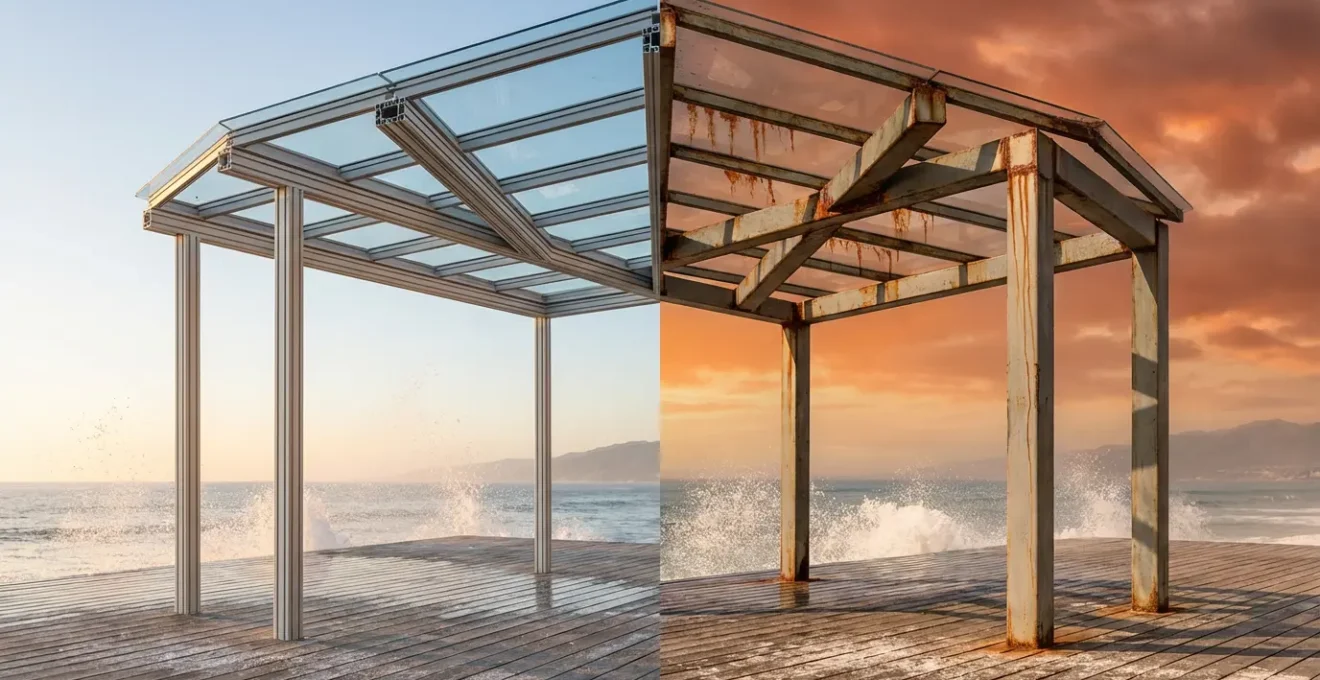
This combination of corrosion resistance, light weight, and high strength makes aluminum the unequivocal choice for modern, low-maintenance glass structures in coastal settings. It allows for designs that are both structurally sound and aesthetically light, maximizing views and minimizing the visual impact of the frame.
The Screw Selection Mistake That Causes Aluminum to Corrode Silently
Even the highest-grade aluminum structure can be doomed to premature failure by one small, often-overlooked component: the screw. The most dangerous form of corrosion in a multi-metal assembly is not the familiar red rust of steel, but a silent, insidious process called galvanic corrosion. This occurs when two different metals are in electrical contact in the presence of an electrolyte (like salty, humid air). The more “noble” metal will cause the less noble metal to corrode at an accelerated rate.
When common zinc-plated or galvanized steel screws are used to fasten an aluminum frame, a galvanic cell is created. The aluminum, being less noble than the steel or its zinc coating, becomes the “anode” and begins to sacrifice itself. The corrosion starts in the crevice around the screw head, often hidden from view, and can eat away at the structural integrity of the frame without any obvious external signs until it’s too late. This is not a minor aesthetic issue; it is a fundamental structural failure in the making.
To prevent this, it is absolutely essential to use fasteners made from a material that is galvanically compatible with aluminum. The undisputed choice for coastal applications is 316-grade stainless steel. This marine-grade alloy is very close to aluminum on the anodic index, minimizing the potential for a galvanic reaction. The recommendation is not just best practice; it is a formal guideline from authorities like FEMA. A key report highlights that for maximum durability, FEMA recommends full 300 series stainless steel fasteners for any installations within 3,000 feet of the shoreline.
Action Plan: Preventing Galvanic Corrosion
- Select fasteners: Use only 316 marine-grade stainless steel screws for all connections involving aluminum in a coastal environment.
- Isolate metals: Where contact with another metal type is unavoidable, install non-conductive polymer washers or gaskets to break the electrical circuit.
- Coat threads: Apply a dielectric or zinc-rich coating to screw threads before installation to further inhibit any potential galvanic reaction.
- Inspect annually: Check around fastener heads for any signs of pitting or white, powdery residue (aluminum oxide), which indicates the start of crevice corrosion.
- Verify certification: Always ask for material certification for both the aluminum profiles and the stainless steel fasteners to ensure you are getting the specified grades.
How to Eliminate Condensation on Aluminum Frames Using Thermal Breaks?
Aluminum’s excellent durability comes with one inherent physical property that can be a drawback: it is a highly efficient thermal conductor. In fact, standard aluminum is approximately 1,000 times more thermally conductive than the double-pane glass it often holds. This means that in winter, the cold exterior temperature is rapidly transferred through a solid aluminum frame to the interior surface. When this cold interior surface meets the warmer, more humid air inside, condensation forms—the same way a glass of ice water “sweats” on a summer day.
This condensation is more than a nuisance. It can damage interior finishes, promote mold growth, and create a cold, uncomfortable environment. For decades, this issue limited the use of aluminum in high-performance windows and doors. The engineering solution to this problem is elegant and highly effective: the thermal break. A thermally broken frame is not a solid piece of aluminum. It consists of two separate aluminum extrusions (one for the interior, one for the exterior) joined together by a less conductive material.
Modern thermal break systems are a key feature of any high-quality aluminum structure intended for a conditioned space. As explained in an analysis of modern aluminum finishes, these systems create a robust insulating barrier within the profile itself. The most common and effective methods use structurally strong, low-conductivity materials like polyamide strips or poured-in-place polyurethane to separate the inner and outer metal frames. This barrier dramatically reduces the flow of heat, keeping the interior frame surface warmer and well above the dew point, thereby preventing condensation from ever forming. It effectively gives you the strength and durability of aluminum without the thermal penalty.
Why Solid Aluminum Frames Are Terrible for Energy Efficiency?
The same high thermal conductivity that causes condensation makes solid, non-thermally-broken aluminum frames a significant source of energy loss. A frame’s ability to resist heat flow is measured by its U-value; a lower U-value indicates better insulation. While modern high-performance glass can have excellent U-values, placing it in a solid aluminum frame negates much of that benefit. The frame essentially becomes a “thermal bridge,” a highway for heat to escape your home in the winter and for unwanted heat to enter in the summer.
The physics are clear: the typical thermal conductivity for 6061-T6 aluminum reaches 152 W/m·K at room temperature. This is hundreds of times higher than that of wood or vinyl. For a homeowner, this translates directly into higher energy bills. A solid aluminum frame will feel cold to the touch in winter, radiating cold into the room and forcing your heating system to work harder. In summer, it will become hot, transferring that solar heat gain indoors and increasing the load on your air conditioning.
The solution, as discussed previously, is the thermal break. The difference in performance is not marginal; it is dramatic. By inserting that low-conductivity polyamide or polyurethane barrier, the U-value of the frame can be cut by more than half. The table below, based on industry data, quantifies the staggering difference in energy performance between a solid aluminum frame and a modern, thermally-broken one.
| Frame Type | U-Value (W/m²K) | Annual Heat Loss (kWh/m²) | Relative Energy Cost |
|---|---|---|---|
| Solid Aluminum | 5.8-6.5 | 180-200 | Baseline (100%) |
| Thermally-Broken Aluminum | 2.2-2.8 | 70-90 | 35-45% of baseline |
| High-Performance Glass Only | 1.4 | 45 | N/A – negated by frame |
Hydraulic vs Electric Motors: Which Is Quieter for Late Night Adjustments?
For high-end aluminum structures like pergolas with adjustable louvers or retractable roofs, the choice of motor system impacts not just reliability but also the quality of life. The two main technologies are hydraulic and electric. While hydraulic systems are powerful and have been used for years, they are inherently noisier, involving a pump, fluid lines, and mechanical actuators that can produce a noticeable hum or whir. For adjustments made late at night or early in the morning, this noise can be disruptive.
Modern electric motors, particularly tubular motors designed for this application, offer a significant advantage in acoustic performance. These compact, self-contained units are engineered for silent operation. Advanced designs incorporating high-quality bearings, precision-machined gears, and insulated casings mean that modern tubular electric motors typically operate at 38-45 dBA. This is comparable to the ambient noise level of a quiet library, making their operation virtually unnoticeable from a short distance.
Beyond the low decibel rating, several technological features contribute to the quietness of premium electric systems. Soft Start/Stop technology is crucial; it ramps the motor’s speed up and down gradually, eliminating the abrupt mechanical jolt and “clunk” associated with older or simpler systems. Furthermore, the use of DC motors with Pulse Width Modulation (PWM) control allows for smoother and more variable speed adjustments, further reducing operational noise. Finally, installing these motors with specialized vibration-dampening mounts isolates them from the main structure, preventing noise from being transmitted and amplified through the aluminum frame. For anyone sensitive to noise, a high-quality electric motor system is the clear winner for discreet, on-demand adjustments at any hour.
Key Takeaways
- Material specification is paramount: Always choose certified architectural-grade aluminum like 6061-T6 over cheaper, recycled alloys to prevent warping.
- The biggest threat is hidden: Use only 316-grade stainless steel screws to prevent silent and destructive galvanic corrosion.
- Energy efficiency is an engineering choice: For any structure attached to a heated or cooled space, a thermally-broken frame is non-negotiable to prevent massive heat loss and condensation.
How to Orient Adjustable Louvers to Maximize Winter Sun and Block Summer Heat?
An adjustable louvered pergola is the ultimate expression of smart architectural design, transforming a static structure into a dynamic tool for climate control. The goal is simple: block the high, intense sun of summer to keep the space cool, while allowing the low-angled winter sun to pass through for passive heating and light. Achieving this requires understanding basic solar geometry and setting the louvers to the correct angles based on the season and your geographic latitude.
In summer, the sun is high in the sky. By tilting the louvers to a steep angle (typically 65-80 degrees from horizontal), you can create a fully shaded, waterproof roof that blocks direct solar radiation. This dramatically reduces heat gain on your patio and adjacent windows. Conversely, in winter, the sun is much lower. By opening the louvers to a near-horizontal position (15-35 degrees), you can capture that valuable, low-angled sunlight, warming the space and brightening your home. A third setting, often around 45 degrees, is used to create a Venturi effect, promoting natural airflow and ventilation without direct sun exposure.
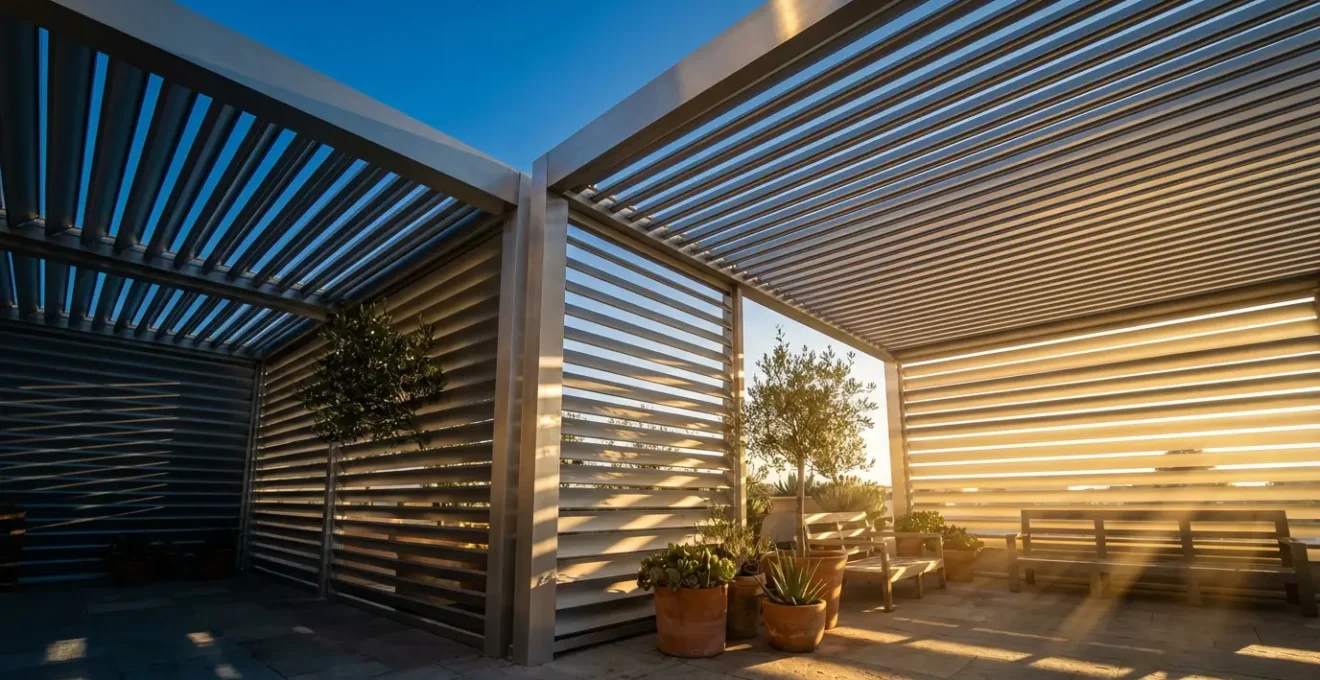
The optimal angles are not universal; they vary with latitude. A home in Florida requires steeper summer angles than one in the Mid-Atlantic to block the more direct sun. Many high-end systems can be programmed with your location to automate these adjustments. The following table provides a general guide for seasonal louver settings based on latitude, demonstrating how to tune the structure for your specific location.
| Latitude | Summer Angle (degrees) | Winter Angle (degrees) | Venturi Effect Angle |
|---|---|---|---|
| 25-30° (Florida) | 75-80° | 15-25° | 45° |
| 35-40° (Mid-Atlantic) | 65-70° | 25-35° | 45° |
| 45-50° (Northern) | 55-60° | 35-45° | 45° |
Investing in a high-grade aluminum structure for a coastal environment is a decision to favor long-term engineering over short-term savings. By specifying the correct alloy, ensuring the use of marine-grade stainless steel fasteners, and opting for features like thermal breaks and quiet motorization, you are not just buying a product; you are commissioning a permanent, low-maintenance, and highly functional piece of architecture for your home. To ensure your project meets these standards, the next logical step is to consult with a specialist who understands the material science and can provide certified components tailored to your specific coastal conditions.