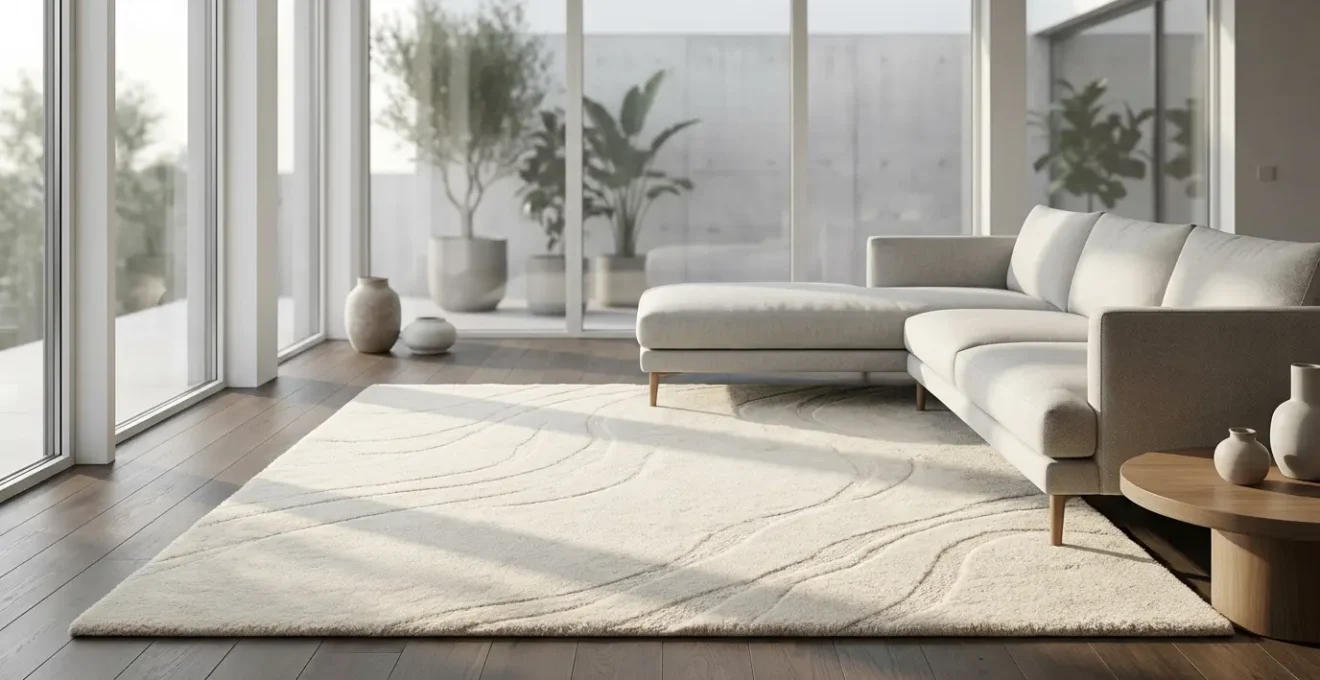
A 100% wool rug isn’t just a decor choice; it’s a long-term performance asset for your home, scientifically engineered by nature to withstand the realities of family life.
- Its natural fibers offer superior resilience, springing back from heavy furniture compression where synthetics fail.
- It possesses an innate chemical structure (lanolin) that resists stains and simplifies cleaning far more effectively than treated synthetic fibers.
Recommendation: Invest in wool not just for its appearance, but for its scientifically-proven ability to endure the daily challenges of kids, pets, and high traffic.
Choosing a rug for a high-traffic living room, especially one filled with the joyful chaos of children and pets, often feels like a compromise. You want comfort and style, but you need durability above all. Many homeowners gravitate towards synthetic options like polypropylene or nylon, believing they offer a practical, budget-friendly solution. These materials are marketed as stain-resistant and tough, promising a worry-free experience. However, this common wisdom overlooks a fundamental truth about textile performance.
The real key to a lasting investment lies not in synthetic treatments but in the inherent properties of the fiber itself. While man-made materials degrade over time, losing their texture and resilience, natural wool offers a completely different paradigm. Its complex, microscopic structure is uniquely designed to handle stress, spills, and constant use. This isn’t just about being a “natural” product; it’s about a superior internal architecture that synthetics simply cannot replicate.
But what if the secret to a rug that lasts for decades wasn’t about avoiding spills, but about choosing a material scientifically built to handle them? This guide departs from generic advice. We will deconstruct the science of the wool fiber to demonstrate why it is not just an alternative, but the superior choice. We will explore its physical resilience, its chemical defenses against stains, and its surprising benefits for your home’s overall environment.
This article will guide you through the practical science of wool ownership. We’ll cover everything from its ability to recover from furniture dents to the correct way to handle a red wine emergency. You will learn how to maintain it, store it, and even how to choose the right size and complementary wall finish to maximize its impact. Prepare to see a wool rug not as a decorative item, but as a functional, long-term investment in your home’s comfort and beauty.
To help you navigate this comprehensive analysis, we have structured this guide to cover every critical aspect of choosing and maintaining a wool rug. The following summary outlines the key topics we will explore, providing you with a clear roadmap to making an informed and confident decision.
Summary: Your Guide to Investing in a Wool Rug
- Why Wool Springs Back After Furniture Compression Unlike Synthetics?
- How to Clean Red Wine from a Wool Rug Without Setting the Stain?
- Loop Pile vs Cut Pile: Which Is Easier for Robot Vacuums to Clean?
- The Storage Error That Invite Moths to Eat Your Rolled-Up Rugs
- When to Rotate Your Rug: The 6-Month Rule to Prevent Sun Fading?
- Why Your Minimalist Decor Is Making Your Living Room Sound Like a Cafeteria?
- The Rug Size Mistake That Makes Your Living Room Look Tiny
- Matte vs Satin Paint: Which Finish Hides Drywall Imperfections Best?
Why Wool Springs Back After Furniture Compression Unlike Synthetics?
The true test of a rug’s durability in a living room isn’t just foot traffic; it’s the crushing, long-term weight of a sofa, coffee table, or bookshelf. This is where the fundamental difference between wool and synthetic fibers becomes visible. Synthetic rugs, made from materials like polypropylene, have a simple, straight fiber structure. When compressed, these fibers bend and crease, and over time, this damage becomes permanent. The rug develops lasting indentations that no amount of fluffing can fix.
Wool, on the other hand, possesses a natural, built-in resilience. At a microscopic level, each wool fiber has a complex, three-dimensional coiled structure known as the fiber crimp. This internal springiness is the secret to its longevity. When weight is applied, the fibers compress, but they don’t break or permanently deform. Once the weight is removed, the crimp allows the fibers to bounce back to their original height, preserving the rug’s plush texture and appearance.
This isn’t just a marginal difference; it’s a matter of structural integrity. Research has shown that a wool fiber can be stretched more than 35% and still easily return to its natural shape. A light mist of cool water is often all that’s needed to encourage the fibers to fully recover from even heavy furniture marks. A synthetic rug under the same conditions will retain permanent compression marks, quickly aging the look of your entire room. This inherent memory is why wool is an investment in lasting texture, not just a temporary floor covering.
How to Clean Red Wine from a Wool Rug Without Setting the Stain?
The fear of a red wine spill is a major deterrent for many considering a high-quality rug. With synthetic carpets, a spill can quickly lead to a permanent, chemically bonded stain. Wool, however, has a natural first line of defense that makes cleaning surprisingly effective if you act correctly. The key is to understand the chemistry of the fiber. Each strand of wool is coated in a thin, waxy layer of lanolin, a natural oil that is hydrophobic, meaning it repels water-based liquids.
This lanolin barrier prevents a spill like red wine from immediately soaking into and dyeing the fiber’s core. Instead, the liquid beads up on the surface, giving you a critical window of time to act. The biggest mistake is to use hot water or to scrub aggressively. Heat will chemically bond the tannins in the wine to the protein structure of the wool, setting the stain forever. Scrubbing simply grinds the pigment deeper into the pile. The correct method is to blot, lift, and use cool solutions.
To effectively remove a fresh red wine stain without causing damage, follow these steps methodically:
- Act Immediately: Use a clean, white cloth or paper towel to gently blot the spill. Never rub. Your goal is to absorb the liquid, not spread it.
- Use Cold Liquid: Lightly dab the area with a cloth dampened with cold water or club soda. The cold temperature is crucial to prevent the stain from setting.
- Work Inward: Always work from the outside edge of the stain toward the center. This contains the spill and prevents it from spreading further.
- Apply a Mild Solution: If the stain persists, mix a small amount of mild, wool-safe soap with cool water. Test this solution on a hidden corner of the rug first to ensure it doesn’t cause color bleeding. Dab gently.
- Lift and Dry: Use a fresh, dry cloth to blot the area again, lifting both the moisture and the stain particles out of the pile. Repeat until the stain is gone, then allow the area to air dry completely.
This blotting technique, shown below, is the cornerstone of effective wool rug maintenance. It works with the fiber’s natural properties, not against them.
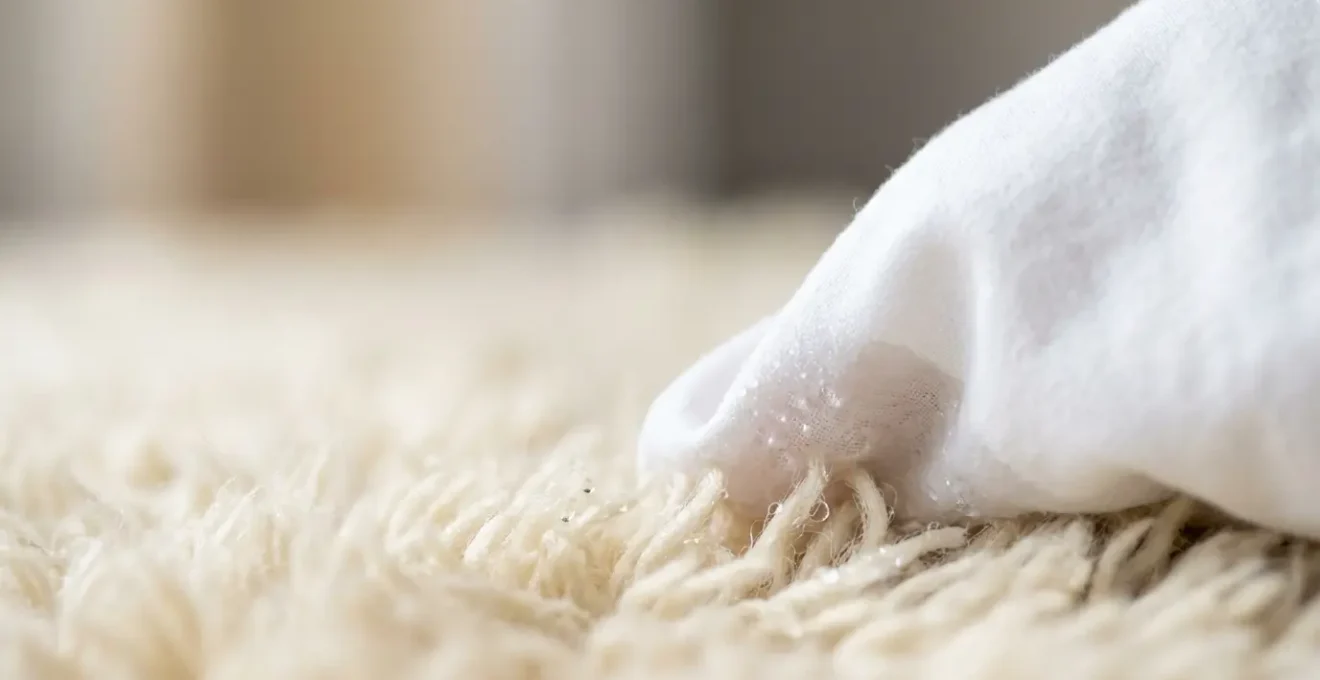
By understanding the protective role of lanolin and avoiding heat, you can confidently manage most household spills. This inherent stain resistance is a major component of wool’s long-term value, keeping it beautiful for years even in a busy family home.
Loop Pile vs Cut Pile: Which Is Easier for Robot Vacuums to Clean?
Regular vacuuming is non-negotiable for extending the life of a wool rug, but the type of pile and the type of vacuum you use matter immensely. The choice between a loop pile (where fibers are looped back into the backing, like a Berber) and a cut pile (where the loops are sheared, creating a plush surface) has significant implications for maintenance, especially with the rise of robot vacuums.
The primary concern with any vacuum on a wool rug is the beater bar—the rotating brush designed to agitate carpet fibers. On a loop pile rug, a beater bar is a recipe for disaster. It can easily snag and pull the loops, causing fraying, unraveling, and irreversible damage. For loop pile wool rugs, a suction-only vacuum or a robot vacuum with the beater bar disabled is the only safe option. While loop piles tend to shed less initially, they are less tolerant of aggressive cleaning.
Cut pile wool rugs are more forgiving of beater bars, provided the bristles are soft and the vacuum’s height is adjustable. The main challenge with new cut pile rugs is shedding. For the first 3-6 months, they will release a significant amount of loose fibers, which is a normal part of the break-in process. This requires more frequent vacuuming (twice weekly) during this phase. A robot vacuum can be a great ally here, but it must have a combination of good suction and a soft roller brush that won’t damage the fibers.
This comparative table breaks down the key considerations for keeping your wool rug clean with modern tools, as highlighted by expert guidance from sources like professional cleaning services.
| Feature | Loop Pile | Cut Pile |
|---|---|---|
| Beater Bar Compatibility | Not recommended – can snag and fray loops | Compatible – handles agitation better |
| Ideal Vacuum Type | Suction-only models | Combination suction + soft roller |
| Shedding Issues | Less initial shedding | Higher shedding first 3-6 months |
| Robot Vacuum Settings | Disable beater bar, use gentle mode | Adjustable height, moderate power |
| Maintenance Frequency | Weekly gentle vacuuming | Twice weekly during shedding phase |
Ultimately, the “easier” rug to clean depends on your equipment. If you have a robot vacuum with a non-deactivatable, aggressive beater bar, a cut pile is a risk. If your vacuum allows for suction-only mode, both types are manageable. The key is to match your cleaning tool to your rug’s construction to prevent premature wear.
The Storage Error That Invite Moths to Eat Your Rolled-Up Rugs
A high-quality wool rug is an asset you may want to store during a renovation or a seasonal change. However, improper storage is the single biggest threat to its longevity, creating a perfect breeding ground for clothes moths. The common mistake is to simply roll up the rug and place it in a basement or attic. This invites disaster, as moths are not attracted to the wool itself, but to the organic matter trapped within its fibers: skin cells, pet dander, and microscopic food spills.
Furthermore, these common storage locations—damp basements and hot attics—provide the ideal climate for moth larvae to thrive. To protect your investment, a professional storage protocol is essential. It begins long before the rug is rolled up. The first and most critical step is to have the rug professionally cleaned. This removes the dirt and organic material that moths feed on. A clean rug is an unappetizing rug.
Proper wrapping and climate control are the next lines of defense. Never seal a wool rug directly in plastic, as this traps moisture and can lead to mold and mildew. The rug must be wrapped in a breathable material first, then stored in a cool, dry environment. This methodical approach is the difference between preserving your rug and feeding a moth colony.
Case Study: The Impact of Climate-Controlled Storage on Wool Preservation
An analysis of wool rug storage conditions reveals a stark contrast in outcomes. Professional storage facilities that maintain temperatures below 65°F (18°C) with controlled humidity report near-zero instances of moth damage on rugs that were cleaned prior to storage. In contrast, rugs stored in traditional home attics or basements showed significant damage from moth activity within a year, proving that a controlled environment is the most effective deterrent.
Action Plan: Your Wool Rug Storage Checklist
- Professional Cleaning: Have the rug thoroughly cleaned to remove all organic matter (moth food sources) before any storage.
- Ensure Complete Dryness: Verify the rug is 100% dry to prevent any risk of mold or mildew growth while wrapped.
- Wrap in Breathable Material: First, wrap the rug in a breathable material like acid-free paper or specialized Tyvek sheets to protect the fibers.
- Seal for Protection (Optional but Recommended): Only after wrapping in a breathable layer, seal the rug in heavy-duty plastic to keep out pests and dust.
- Choose the Right Location: Store the rolled rug in a cool, dry, and dark location with low humidity and a stable temperature below 65°F (18°C). Avoid basements and attics at all costs.
Following this protocol ensures that when you unroll your rug months or years later, it will be in the same pristine condition as the day you stored it.
When to Rotate Your Rug: The 6-Month Rule to Prevent Sun Fading?
Beyond spills and stains, the two silent destroyers of any living room rug are sunlight and foot traffic. Over time, the ultraviolet (UV) rays from direct sunlight will break down the dyes in wool fibers, leading to irreversible fading. Simultaneously, the main pathways through your room—from the door to the sofa, for instance—will experience concentrated wear, crushing the pile more than other areas. The simple, no-cost solution to both problems is regular rotation.
The “6-month rule” is a common guideline, suggesting you rotate your rug 180 degrees every half-year. While this is a good starting point, a more tailored approach yields better results. The optimal rotation schedule depends on your room’s specific layout and sun exposure. A rug in a room with large, south-facing windows needs more frequent attention than one in a darker space. The goal is to equalize exposure to both light and wear over the rug’s entire surface.
To create a custom rotation schedule, start by “sun mapping” your room. Observe how direct sunlight travels across your floor throughout the day. Areas that receive more than a couple of hours of direct, intense sunlight are high-risk zones. Rugs in these areas should be rotated every 3 months. For rugs in rooms with only indirect light, an annual rotation is likely sufficient. This proactive maintenance ensures that any fading is slow and uniform, making it virtually unnoticeable.
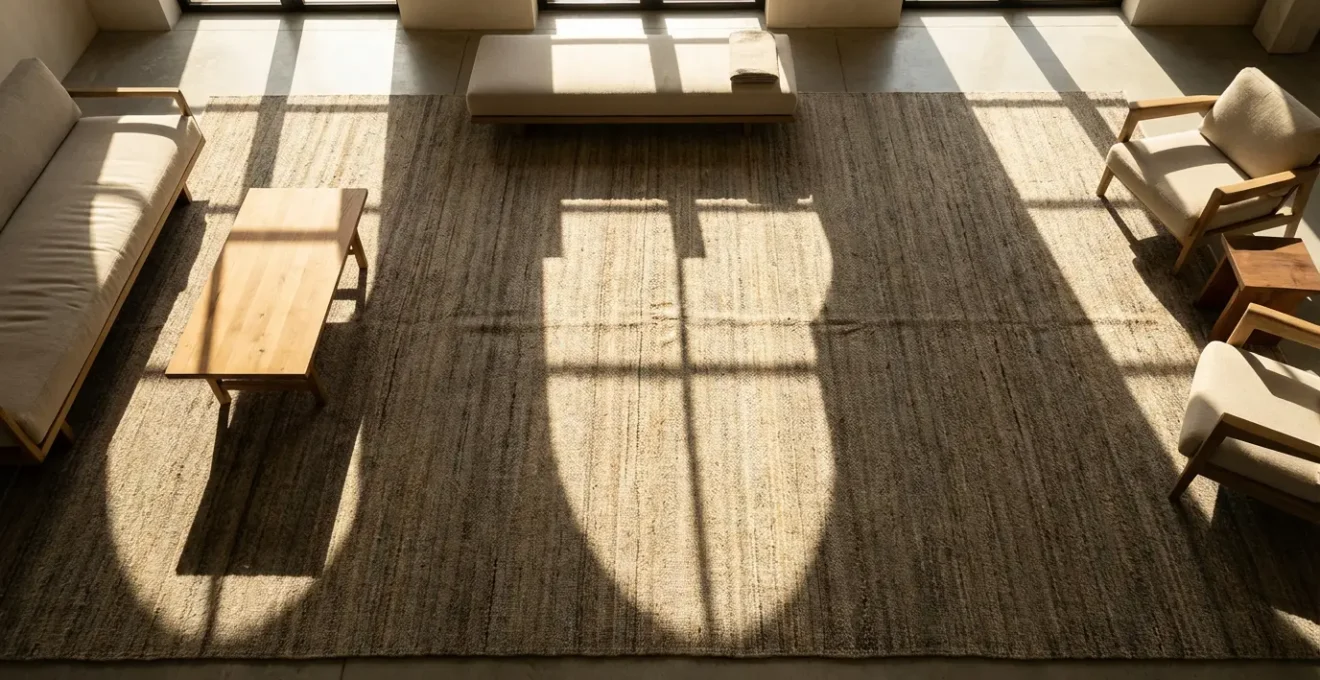
Rotation also addresses wear patterns. By turning the rug 180 degrees, you shift the primary traffic lanes. The area that was once under the sofa is now exposed, allowing its fibers to recover, while the previously high-traffic area gets a rest. This simple habit dramatically extends the plush, uniform appearance of your rug, protecting your investment for years to come.
Why Your Minimalist Decor Is Making Your Living Room Sound Like a Cafeteria?
Minimalist and modern interior design, with its emphasis on clean lines, hard surfaces like wood or concrete floors, and large windows, can create a visually stunning space. However, it often comes with an unintended side effect: poor acoustics. Sound waves bounce off these hard surfaces, creating echo and reverberation. This can make a living room feel cold, loud, and unwelcoming—more like a bustling cafeteria than a relaxing sanctuary. Conversations can sound harsh, and every footstep seems to clang.
This is where a wool rug does more than just anchor the decor; it performs a critical function of acoustic damping. The dense, three-dimensional structure of wool fibers is exceptionally effective at absorbing sound waves rather than reflecting them. The complex pile acts as a natural sound trap, softening footsteps, muffling ambient noise, and reducing the echo that makes a room feel cavernous. This effect is not minor; studies show that wool rugs can reduce noise by 30-40% in spaces with hard flooring.
The acoustic properties of wool are particularly valuable in open-plan homes or rooms where families gather. Wool acts as a broadband sound absorber, meaning it’s effective at dampening a wide range of frequencies, from the high-pitched sounds of children playing to the mid-range frequencies of adult voices. By absorbing this excess sound energy, a wool rug makes conversations clearer and the overall atmosphere more serene and comfortable. It’s an investment not just in the look of your room, but in its feel and function as a peaceful living space.
The Rug Size Mistake That Makes Your Living Room Look Tiny
One of the most common design mistakes in a living room is choosing a rug that is too small. A small “postage stamp” rug that floats in the middle of the floor, with all the furniture sitting around its edges, visually shrinks the space. It breaks the room into disconnected pieces, making the entire area feel cramped and disjointed. A generously sized rug, on the other hand, unifies the furniture into a cohesive group and makes the room feel larger and more intentional.
The golden rule is that the rug should be large enough to at least have the front legs of your sofa and all chairs resting on it. This physically connects the seating area and creates a defined, unified zone. For an even more luxurious and expansive feel, choose a size that allows all furniture pieces in the grouping to sit entirely on the rug. While it may seem counterintuitive, a larger rug makes a room look bigger, not smaller. In most standard living rooms, an 8×10 foot wool rug is one of the most popular sizes for achieving this unified look.
But how can you be certain before making such a significant purchase? The best method is to “beta test” the size in your space using a simple tool: painter’s tape. Measure out the dimensions of the rug you’re considering and outline it on your floor with the tape. Then, live with this outline for a few days. This allows you to physically see the rug’s footprint in relation to your furniture. You can test traffic flow, ensure doors can open freely, and confirm that it achieves the desired unifying effect. This simple, no-cost test eliminates guesswork and prevents the costly mistake of buying the wrong size.
Key Takeaways
- Natural Resilience: Wool’s coiled fiber structure (“crimp”) allows it to spring back from heavy furniture, preventing permanent indentations common in synthetics.
- Superior Cleanability: The natural lanolin coating on wool repels liquids, giving you time to blot stains effectively with cold water, while heat sets them permanently.
- Smart Maintenance: Match your vacuum to your pile type. Use suction-only on loop piles and a soft beater bar on cut piles to prevent damage and manage shedding.
Matte vs Satin Paint: Which Finish Hides Drywall Imperfections Best?
A premium wool rug is a significant textural and visual anchor in a room, but its impact can be diminished by its surroundings. The finish of your wall paint plays a surprisingly crucial role in complementing—or competing with—your rug. The choice between a matte and a satin finish is not just about durability; it’s about controlling light and minimizing “visual noise” that can distract from your home’s high-quality furnishings.
Satin and other glossy finishes have a higher sheen, meaning they reflect light more directly. While this makes them durable and easy to clean, it also has a major drawback: it highlights every single imperfection on the wall surface. Every minor bump, seam from the drywall, or slight ripple becomes instantly visible. This creates a subtle but persistent visual noise that can make a room feel busy and less refined. As market reports from firms like Grand View Research note, consumers are investing in high-quality textiles to enhance their home’s comfort and visual appeal, and the wrong paint finish can undermine this effort.
A matte finish, by contrast, is the perfect partner for a luxurious textile like a wool rug. It has a non-reflective, porous surface that scatters or diffuses light in all directions. This diffusion of light makes it exceptional at hiding minor wall imperfections, creating a smooth, velvety, and quiet backdrop. This lack of visual distraction allows the rich texture and color of the wool rug to take center stage. The softness of the matte wall enhances the perceived softness and quality of the rug.
| Property | Matte Finish | Satin Finish |
|---|---|---|
| Light Reflection | Diffuse (scatters light) | Specular (directional reflection) |
| Imperfection Visibility | Excellent at hiding flaws | Highlights every bump and seam |
| Durability | Least durable, hard to clean | More durable, scrubbable |
| Best Use Areas | Low-traffic walls, ceilings | High-traffic areas needing cleaning |
| Visual Noise Level | Creates quiet backdrop | Can create competing visual elements |
| Complement to Textiles | Enhances wool rug textures | May distract from premium furnishings |
While satin is more durable and suited for high-traffic hallways or kitchens, for a living room where ambiance and aesthetics are paramount, a matte finish is the superior choice. It creates a sophisticated canvas that allows your investment in a quality wool rug to truly shine.
Investing in a 100% wool rug is a decision that pays dividends in longevity, comfort, and timeless style. By understanding the science behind its performance, you can confidently maintain it and ensure it remains a beautiful centerpiece in your home for generations. To put these principles into practice, the next logical step is to assess your own space and choose a rug that not only fits your decor but is also built to handle your life.