Types of Verandas
Choosing the right veranda type transforms how you experience your home and garden. Whether you’re dreaming of a sun-drenched breakfast room, a protected space for tender plants, or a seamless indoor-outdoor living area, understanding the distinct characteristics of each veranda style is essential. Each type offers unique benefits in terms of light, thermal performance, architectural impact, and practical functionality.
The veranda landscape has evolved significantly, moving beyond the traditional glass conservatory to encompass lean-to extensions, luxurious orangeries, and cutting-edge structural glass designs. This variety means homeowners now face an exciting but complex decision: which type best suits their lifestyle, budget, architectural vision, and maintenance capacity? Let’s explore the defining features of each veranda type to help you make an informed choice.
Traditional Conservatories: The Horticultural Classic
The traditional conservatory remains the most recognizable veranda type, characterized by its predominantly glazed structure that maximizes natural light from all angles. With glass walls and roof panels supported by a framework of vertical posts and rafters, conservatories create a transparent pavilion that feels intimately connected to the surrounding garden.
Originally designed as horticultural sanctuaries for exotic plants requiring protection from frost, conservatories excel at capturing solar energy. This makes them ideal spaces for overwintering tender species, starting seedlings early in the season, or cultivating plants with specific light requirements. The biological needs of these plants—consistent warmth, high light levels, and controlled humidity—align perfectly with the conservatory’s transparent envelope.
However, this glazing-heavy design presents specific challenges. Temperature fluctuation can be dramatic, with spaces becoming uncomfortably hot during summer months and cold on winter evenings without supplementary heating. The risks of UV damage to interior furnishings are higher than in other veranda types, requiring careful consideration of glazing specifications with UV-filtering coatings. Additionally, cleaning maintenance for glass roofs demands regular attention, particularly in areas with heavy tree coverage or bird activity.
Modern conservatories increasingly incorporate automated ventilation systems with temperature sensors that open roof vents when internal temperatures rise, preventing the greenhouse effect while maintaining the connection to outdoor air. The timing of plant migration between conservatory and garden becomes a seasonal rhythm for enthusiastic gardeners, moving frost-sensitive specimens indoors as autumn approaches.
Lean-To Verandas: Simplicity and Practicality
The lean-to veranda represents the most straightforward extension type, featuring a single-pitch roof that slopes away from the house wall. Think of it as a sheltered terrace with a roof—maximizing space and embracing minimalism without the complexity of freestanding structures. This simplicity translates directly into cost-effectiveness, making lean-to designs the most budget-friendly veranda option.
The construction process offers significant advantages. The single-slope design means faster installation times, and the critical process for flashing against the house wall—ensuring a watertight seal where the veranda roof meets the existing structure—is more straightforward than with multi-faceted roof designs. For homeowners considering timing the build for speed, a lean-to can often be completed in a matter of days rather than weeks.
Selecting roof material for light remains crucial even in this simpler form. Many homeowners opt for polycarbonate panels or glass with a slight tint to balance light transmission with solar heat control. The single-slope design does introduce specific considerations:
- Snow load accumulation: In regions experiencing significant snowfall, the single pitch can allow snow to build up more heavily than on steeper or multi-faceted roofs, requiring appropriate structural calculations
- Water drainage: Proper gutter sizing and positioning is essential to handle the entire roof’s runoff at a single edge
- Aspect orientation: A south-facing lean-to captures maximum sunlight but may require shading solutions, while north-facing versions provide gentler, more consistent light
Despite its simplicity, a well-designed lean-to veranda creates a valuable transitional space—perfect for dining areas, home offices with garden views, or casual living spaces that extend your usable square footage without architectural complexity.
Orangeries: The Luxury Hybrid
Orangeries bridge the gap between solid home extensions and glass conservatories, blending contemporary luxury with substantial roof volumes and masonry elements. Historically designed to house citrus trees in European estates, modern orangeries maintain this sense of grandeur while offering superior year-round comfort.
Architectural Features That Define Orangeries
The distinguishing characteristic of an orangery is its solid perimeter structure—typically brick pillars or rendered columns—combined with large glazed sections between them. Rather than a fully glazed roof, orangeries feature a flat or pitched roof with a central glass lantern or skylight that floods the interior with natural light while providing better insulation than fully transparent roofs.
The aesthetic impact of roof lanterns cannot be overstated. These raised glazed structures create a stunning focal point, drawing the eye upward and adding architectural drama. The solid sections of roof and substantial pillars give orangeries a more permanent, integrated appearance with the main house, making them particularly suitable for period properties where a fully glazed conservatory might look incongruous.
When comparing orangery versus conservatory designs, the orangery’s solid elements offer greater flexibility for integrating electrical systems, speakers, and recessed lighting. Optimizing interior lighting becomes easier with solid ceiling sections that can accommodate downlights, creating a space that functions beautifully even after dark—something fully glazed conservatories often struggle with.
Insulation and Year-Round Comfort
The methodology for warm deck insulation in orangery roofs represents a significant advantage over traditional conservatories. By incorporating insulation above the structural deck, orangeries achieve thermal performance closer to conventional home extensions, making them genuinely comfortable throughout the year without excessive heating costs.
This superior insulation addresses one of the primary limitations of glass-heavy structures: the inability to retain heat effectively. The solid roof sections dramatically reduce heat loss upward, while substantial pillars provide thermal mass that moderates temperature swings. The risks of water pooling on flat orangery roofs are mitigated through careful drainage design and slight falls toward guttering systems.
For homeowners seeking a space that truly functions as an integral room rather than a seasonal addition, orangeries represent the premium choice—combining the light and garden connection of a veranda with the comfort and versatility of a traditional extension.
Structural Glass Extensions: Maximum Light and Views
At the cutting edge of veranda design sit structural glass extensions, where engineering innovation enables vast expanses of glass with minimal visible framework. These designs prioritize maximizing views and light, using structural glass walls that bear their own weight rather than relying on heavy posts and beams. The result is a nearly frameless experience that creates the impression of living within the landscape itself.
The physics of light intake in these spaces is remarkable. With floor-to-ceiling glazing and often sliding or folding glass doors that can completely open an entire wall, structural glass extensions achieve light levels and spatial openness that other veranda types cannot match. The mental health benefits of light in these environments are well-documented, with abundant natural illumination supporting circadian rhythms, mood regulation, and overall wellbeing.
However, this transparency introduces specific considerations. The risks of bird strikes increase with large glass expanses, requiring thoughtful specification of glass treatments that make panels visible to wildlife—subtle patterns or UV-reflective coatings that birds can detect while remaining nearly invisible to humans. Process for track maintenance becomes important when incorporating large sliding glass panels, as debris accumulation in floor tracks can compromise smooth operation.
Optimizing cleaning strategies for structural glass extensions requires planning from the design stage. With glass surfaces extending to roof level, consider how you’ll access exterior surfaces safely. Some designs incorporate self-cleaning glass coatings that use UV light and rain to break down and wash away organic deposits, significantly reducing maintenance demands.
When comparing frame materials for the minimal structure that does exist, many structural glass designs utilize slim aluminum profiles or even frameless glass-to-glass joints with structural silicone. The goal is to minimize visual interruption while maintaining structural integrity and weather-tightness.
Material Choices That Define Veranda Types
While architectural style distinguishes veranda types visually, the materials you select fundamentally determine long-term performance, maintenance requirements, and durability. Two primary material systems warrant careful consideration across all veranda types.
Aluminum Frames and Durability
Aluminum has emerged as the dominant framing material in modern garden architecture, and for compelling reasons. Understanding aluminum grading reveals why: marine-grade alloys resist corrosion even in coastal environments, while powder-coated finishes provide both aesthetic variety and protection that can last decades with minimal intervention.
The durability and maintenance advantages of aluminum become apparent over time. Unlike timber, aluminum won’t rot, warp, or require regular repainting. A simple maintenance routine for powder-coated finishes involves occasional washing with mild detergent—no sanding, treating, or refinishing. When comparing structural materials, aluminum’s strength-to-weight ratio allows for slimmer profiles that maximize glass area without compromising structural integrity.
However, optimizing thermal performance in metal frames requires attention to thermal breaks—insulating barriers within the aluminum profile that prevent heat transfer between interior and exterior faces. Without these, aluminum’s high conductivity can create cold bridges that compromise energy efficiency and lead to condensation. Additionally, be aware of the risks of galvanic corrosion with mixed metals if combining aluminum frames with steel fixings or other metals without proper isolation.
Glazing Specifications and Performance
The glass you select influences comfort, energy efficiency, and functionality as much as the frame material. Modern verandas almost universally employ double or triple glazing with specific performance characteristics tailored to the application. When comparing glazing specifications, consider these key factors:
- Solar control coatings: Reduce heat gain during summer while maintaining light transmission—particularly important for south-facing installations
- Low-emissivity (Low-E) coatings: Reflect heat back into the room during winter, improving insulation value
- Argon or krypton gas fills: Inert gases between panes reduce heat transfer more effectively than air
- Laminated glass for roofs: Holds together if broken, providing essential safety overhead
The risks of UV damage to interiors—fading fabrics, artwork, and furnishings—can be substantially reduced through UV-filtering glazing that blocks harmful wavelengths while allowing visible light through. For conservatories and glass extensions in particular, this specification can determine whether your veranda becomes a usable living space or a harsh, fading environment.
Selecting the Right Veranda Type for Your Home
Your ideal veranda type emerges from the intersection of practical requirements, aesthetic preferences, and budget realities. Consider timing construction for seasonal use if you primarily envision spring and summer enjoyment—a traditional conservatory might serve perfectly without the insulation investments required for year-round comfort. Conversely, homeowners seeking a true room extension used daily throughout the year will find orangeries or well-insulated glass extensions more satisfying despite higher initial costs.
Budget considerations extend beyond construction costs to long-term running expenses. Deciding on heating systems early in the design process influences both installation costs and ongoing energy bills. A large conservatory might require substantial heating capacity to be comfortable in winter, while an insulated orangery with a smaller glass-to-solid ratio maintains warmth more economically.
Architectural compatibility with your existing home matters significantly. A Victorian property might embrace a traditional conservatory or ornate orangery, while contemporary homes often suit the clean lines of structural glass extensions or minimalist lean-to designs. The goal is creating visual harmony that appears intentional rather than incongruous.
Ultimately, the best veranda type is the one that aligns with how you’ll actually use the space—whether that’s cultivating a horticultural sanctuary, creating a light-filled dining room, or establishing a quiet retreat with panoramic garden views. By understanding the defining characteristics, advantages, and considerations of each type, you’re equipped to make a choice that will enhance your home for decades to come.
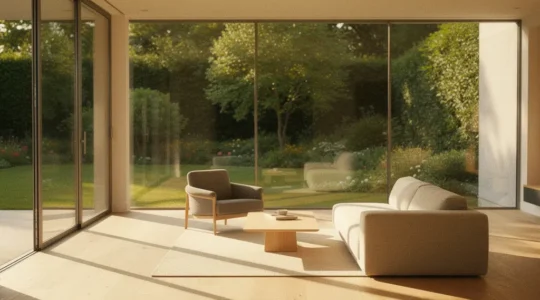
Why Floor-to-Ceiling Glass Walls Transform Small Rooms into Open Spaces?
The transformative effect of floor-to-ceiling glass on small spaces is not an aesthetic illusion but a direct outcome of applied structural and optical engineering. Maximizing glazing height directly increases the physical depth of daylight penetration, illuminating areas far from the…
Read more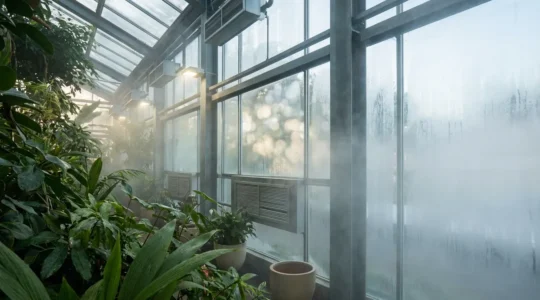
How to Maintain 60% Humidity in a Winter Garden Without Rotting the Structure?
Achieving the perfect tropical climate in your winter garden isn’t about constantly adding moisture; it’s about mastering the physics of dew point to prevent condensation from ever forming. High humidity is essential for plants, but it becomes destructive moisture the…
Read more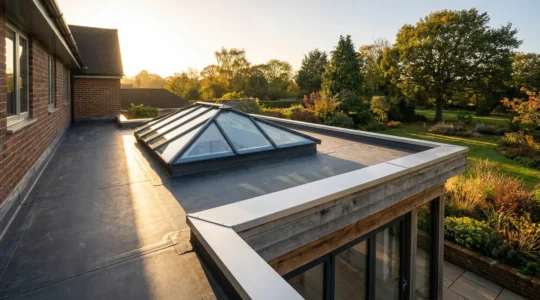
How to Waterproof a Flat-Roof Orangery for a Guaranteed 20-Year Lifespan
A 20+ year, leak-free orangery roof is not a matter of hope, but of superior engineering defined by a complete system, not just a single material. The ‘warm deck’ design is non-negotiable; it places all insulation above the structure, eliminating…
Read more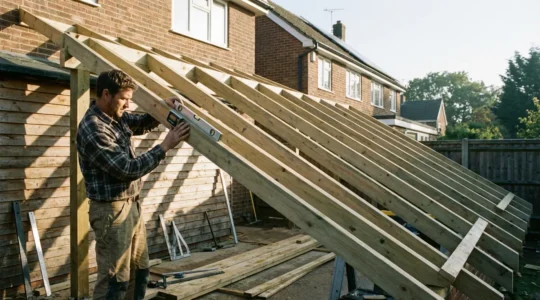
How to Calculate the Minimum Pitch for a Lean-To Roof to Avoid Leaks?
The belief that a single “minimum pitch” number guarantees a leak-proof lean-to roof is a critical misunderstanding. True long-term weatherproofing is not about one angle, but about designing a complete system integrity. This guide demonstrates that the roof’s pitch, materials,…
Read more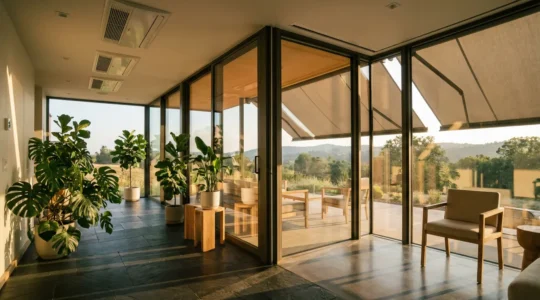
How to Control the Greenhouse Effect in a South-Facing Sunroom?
A south-facing sunroom becomes an unusable greenhouse not by default, but due to a failure to engineer it as an integrated climate system from the start. The most critical factor is not insulation (U-Value) but the Solar Heat Gain Coefficient…
Read more
Why High-Grade Aluminum Structures Outlast Wood in Coastal Environments
The longevity of an outdoor structure in a coastal area isn’t a simple choice between aluminum and wood; it’s a matter of choosing the *correct grade* of aluminum and understanding the science behind its installation. Cheap, recycled aluminum alloys will…
Read more