Interior Decoration
Interior decoration transforms empty rooms into living expressions of personality, comfort, and function. Far beyond simply choosing attractive furniture or coordating colors, effective interior decoration orchestrates every visual, tactile, and even acoustic element to create environments that feel intentional, harmonious, and uniquely suited to the people who inhabit them. Whether you’re starting from a blank canvas or refreshing an existing space, understanding the fundamental principles that govern successful interior design empowers you to make confident, purposeful decisions.
This comprehensive resource explores the core dimensions of residential interior decoration, from establishing a coherent visual identity and mastering the psychology of color and form, to addressing often-overlooked aspects like acoustic comfort and strategic storage planning. Each decision you make—from the direction of your flooring planks to the sheen of your paint—carries both aesthetic and functional implications. By understanding these interconnected elements, you’ll develop the expertise to create spaces that not only look beautiful but genuinely enhance daily living.
Building a Cohesive Design Identity
Creating a home that feels unified rather than haphazard begins with establishing a clear design identity—a visual and emotional thread that connects every room. Think of your home’s design identity as its personality: consistent enough to feel authentic, yet flexible enough to accommodate different functional needs across spaces.
Establishing Visual Continuity
Color continuity serves as one of the most powerful tools for creating flow between rooms. This doesn’t mean painting everything the same shade, but rather selecting a harmonious color palette of three to five hues that appear in varying proportions throughout your home. For example, a neutral base might dominate walls and large furniture pieces, while two complementary accent colors appear in textiles, artwork, and decorative objects. A fourth metallic tone in fixtures and hardware can tie everything together. This approach prevents the jarring disconnection that occurs when each room operates in complete chromatic isolation.
Mixing Furniture Styles Successfully
Contrary to popular belief, successful interiors rarely showcase furniture from a single style period or collection. The key to mixing styles lies in identifying a unifying element—perhaps a consistent wood tone, a repeated silhouette characteristic, or a shared level of visual weight. A mid-century modern sofa can coexist beautifully with a traditional wingback chair when both share similar scale proportions and a complementary color palette. The 60-30-10 rule offers useful guidance: allow one dominant style to occupy roughly 60% of the space, a secondary style 30%, and accent pieces the remaining 10%.
The Scale Mismatch Dilemma
Perhaps the most common pitfall in furniture selection involves scale inconsistency. A massive sectional sofa overwhelms a small living room, while delicate café chairs disappear in a spacious dining area. Before purchasing any significant piece, measure both the item and your room, then create a simple floor plan to scale. As a general guideline, furniture should occupy approximately two-thirds of available floor space, leaving adequate circulation paths of at least 30 inches for comfortable movement.
Understanding Visual Language Through Shape and Pattern
Every interior communicates through a visual vocabulary of shapes, lines, and patterns. Mastering this language allows you to manipulate spatial perception and create the atmosphere you desire, whether that’s energizing vibrancy or serene calm.
The Psychology of Geometric Forms
Shapes carry inherent psychological associations. Angular forms—sharp corners, geometric patterns, linear furniture—convey structure, modernity, and dynamic energy. They make spaces feel more formal and alert. Conversely, organic forms—curved furniture, rounded mirrors, flowing botanical patterns—introduce softness, approachability, and relaxation. Most successful interiors balance both: perhaps angular architectural elements softened by curved furnishings, or a predominantly soft space energized by geometric artwork. Rooms feeling too boxy and cold likely need curved elements; spaces lacking definition benefit from crisp geometric anchors.
Pattern Mixing Without Overwhelm
Pattern adds depth and visual interest, but too many competing designs create chaotic clutter. The classic formula combines three pattern types at different scales: one large-scale pattern as your focal point, one medium pattern in a complementary style, and one small-scale pattern or texture to add subtle detail. Ensure these patterns share at least one common color to maintain cohesion. For example, pair large floral curtains with medium geometric throw pillows and small herringbone upholstery, all incorporating shades of navy blue. When in doubt, limit bold patterns to approximately 20% of visible surfaces, balancing them with solid colors and subtle textures.
Strategic Art Placement
Artwork shouldn’t be an afterthought scattered randomly across walls. The center of any wall-hung art should sit at eye level—typically 57 to 60 inches from the floor. When hanging art above furniture, leave 6 to 8 inches between the furniture top and the frame bottom. For gallery walls, plan the entire arrangement on the floor first, maintaining 2 to 3 inches of consistent spacing between frames. Properly positioned art guides the eye through a room and reinforces your design narrative.
Acoustic Comfort in Modern Living Spaces
Open-plan layouts have become increasingly popular, but they often create acoustic challenges that undermine comfort. Sound bounces freely off hard surfaces—wood floors, glass windows, painted walls—creating echoes and amplifying noise. Addressing acoustics needn’t compromise aesthetics; in fact, many solutions enhance visual appeal.
Soft furnishings serve as your first line of acoustic defense. Upholstered furniture, area rugs, curtains, and cushions absorb sound waves that would otherwise reflect endlessly. A room feeling echo-prone likely lacks sufficient textile elements. Adding a substantial area rug can reduce noise reverberation by up to 30%. Similarly, replacing bare windows with lined curtains dramatically dampens sound transmission from outside while adding textural warmth.
For persistent acoustic issues, consider integrating decorative acoustic panels. Modern options include fabric-wrapped panels in custom colors, three-dimensional textured installations, and even acoustic artwork specifically designed to absorb sound. Strategic placement matters: position panels at primary reflection points, typically on walls facing main sound sources. Don’t overlook ceiling treatments—sound bounces upward and back down, so ceiling-mounted baffles or even a textured ceiling treatment can significantly improve acoustic comfort in spaces with hard flooring.
Layout optimization also influences sound dynamics. Create distinct zones within open plans using furniture placement, with upholstered pieces acting as partial sound barriers between areas. Position quiet zones—reading nooks, workspaces—away from high-traffic pathways and noisier functional areas like kitchens.
Wall Treatments That Perform and Transform
Walls represent your largest vertical canvas, and the treatments you select impact both aesthetics and practical performance. In high-traffic areas—hallways, children’s rooms, mudrooms—durability becomes paramount alongside appearance.
High-performance wall coverings include vinyl-backed wallpapers, solid vinyl options, and specialized paint formulations designed for washability. These materials withstand the inevitable scuffs, fingerprints, and impacts that characterize busy households. When selecting wallpaper, examine the backing type: fabric-backed vinyl offers superior durability and easier installation than paper-backed alternatives, as it resists tearing during application and allows some repositioning.
Wall coverings also cleverly camouflage imperfections. Textured wallpapers, grasscloths, and dimensional patterns disguise minor wall damage, previous repair patches, and surface irregularities that would show through flat paint. This makes them particularly valuable in older homes where achieving perfectly smooth walls would require extensive preparation.
Application quality determines longevity. Proper wall preparation—cleaning, priming, and addressing major defects—prevents future bubbling and peeling. For seamless results, plan your starting point in an inconspicuous location, as the final seam where your pattern meets may show slight mismatch. Consider removal strategy even during installation: strippable wallpapers remove cleanly when their time comes, while traditional papers require steaming and scraping. Future you will appreciate selecting strippable options, especially in rental situations or trend-forward spaces likely to evolve.
Paint Finishes: Function Meets Aesthetics
Paint sheen dramatically affects both appearance and practicality, yet it’s often selected almost arbitrarily. Understanding how different finishes interact with light and wear patterns empowers smarter choices.
Matte finishes absorb rather than reflect light, creating sophisticated, velvety surfaces that minimize glare and hide minor wall imperfections. This light absorption property makes matte ideal for low-traffic areas like bedrooms and formal living rooms, where its elegant depth can shine without facing constant cleaning demands. However, matte’s porous nature means lower washability—attempting to scrub marks often creates shiny spots called burnishing, where the finish becomes locally glossier through friction.
For high-traffic areas, eggshell or satin finishes offer better durability and cleanability while maintaining relatively subtle sheen. These finishes balance aesthetic appeal with practical maintenance, withstanding regular wiping without finish degradation. Reserve semi-gloss and gloss for trim, doors, and moisture-prone areas like bathrooms and kitchens, where maximum washability and moisture resistance outweigh the highlighting of surface imperfections.
Proper application technique varies by finish. Matte paints require careful cutting-in and consistent roller technique, as they show lap marks and application inconsistencies more readily than glossier alternatives. Allow adequate drying time between coats—rushing leads to roller drag that damages the developing film. For touch-ups, feather edges carefully and match application method to original technique, as localized repairs in matte finishes often remain visible despite color matching.
Smart Storage Solutions for Every Square Foot
Effective storage doesn’t merely hide belongings; it actively enhances both functionality and visual calm. Strategic storage planning prevents the accumulation of visible clutter that undermines even the most carefully designed interiors.
Vertical storage leverages often-wasted wall height. Floor-to-ceiling shelving, tall cabinets, and wall-mounted systems maximize capacity without consuming additional floor area—critical in compact spaces. Upper storage accommodates seasonal or rarely used items, while prime middle zones house everyday necessities. This vertical thinking proves especially valuable in small kitchens, home offices, and children’s rooms where floor space comes at a premium.
Underutilized spaces offer hidden storage potential. The area beneath stairs can accommodate custom-fitted drawers, pull-out shelves, or even a compact workspace. Window seats with lift-up tops, ottomans with internal storage, and bed frames with built-in drawers transform furniture into dual-purpose solutions. Wall recesses between studs become opportunities for shallow built-in shelving perfect for books, toiletries, or spices.
The built-in versus freestanding decision balances permanence against flexibility. Built-in storage maximizes space efficiency through custom sizing, creates architectural interest, and appears seamless within your design. However, it represents a larger initial investment and doesn’t relocate if you move. Freestanding furniture offers flexibility and portability but may fit less efficiently and create visual fragmentation. In rental situations or homes likely to evolve, prioritize quality freestanding pieces; in permanent residences with awkward dimensions, custom built-ins often justify their cost through superior space utilization.
Avoid overcrowding by implementing seasonal rotation. Store off-season clothing, sports equipment, and décor items away from primary living areas, swapping them as needs change. This rotation prevents closets and rooms from exceeding comfortable capacity while keeping current necessities accessible. A well-functioning home maintains approximately 20% empty space in storage areas, allowing easy access and future flexibility.
Interior decoration succeeds when aesthetic vision aligns with practical living requirements. By understanding how design elements—from color psychology and spatial perception to acoustic properties and storage logic—work together, you create homes that feel both beautiful and genuinely functional. Each principle explored here connects to countless specific applications, inviting deeper exploration based on your unique spaces and priorities. Armed with these foundational concepts, you’re equipped to make thoughtful, confident decisions that transform your residential environment into a true reflection of considered design.
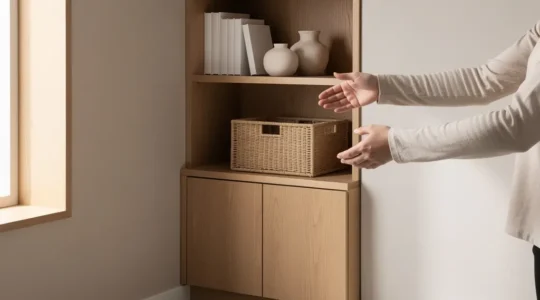
How to Reclaim Dead Corners and Gain 5m² of High-Utility Storage
In summary: Shift from a 2D floor plan mindset to 3D “volumetric thinking” to identify hidden storage potential. Utilize vertical space from floor to ceiling to dramatically increase storage without losing a single inch of floor area. Transform awkward voids,…
Read more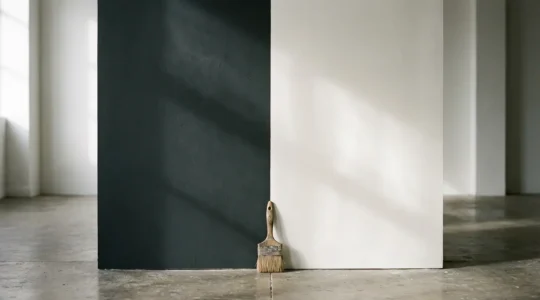
Matte vs. Satin Paint: The Definitive Guide to Hiding Wall Imperfections
Choosing a paint finish for imperfect walls isn’t a compromise; it’s a strategic design decision for achieving optical flawlessness. Matte paint’s power lies in its microscopic texture, which absorbs light to diffuse imperfections and enrich color depth. True success requires…
Read more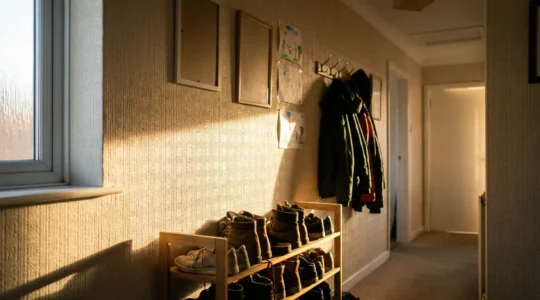
Why Is Textured Vinyl Wallpaper the Only Truly Viable Option for Busy Hallways?
For a busy home, conventional wisdom about using durable paint is flawed; it merely postpones inevitable scuffs and stains. Textured vinyl wallpaper is the only solution engineered for the high-friction reality of family life. It offers superior visual forgiveness, actively…
Read more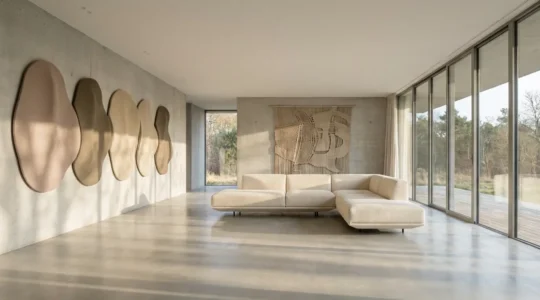
How to Eliminate Echo in Open-Plan Homes Using Decorative Acoustic Panels?
The excessive echo in your modern, open-plan home isn’t a design flaw you have to live with; it’s an engineering problem with a clear solution. This guide moves beyond simply adding rugs and curtains. It provides a technical framework for…
Read more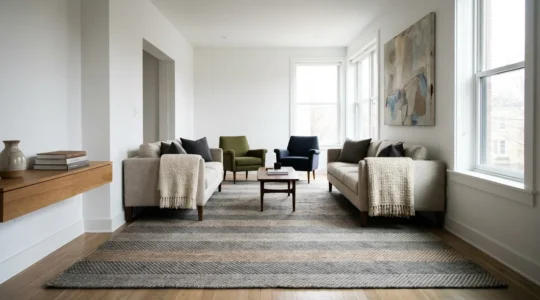
How to Use Geometric Rugs to Visually Widen a Narrow Living Room?
Widening a narrow room isn’t about simple tricks like horizontal stripes; it’s about mastering spatial manipulation with your geometric rug as the primary tool. Create a “visual vortex” with round or complex central patterns to draw the eye inward and…
Read more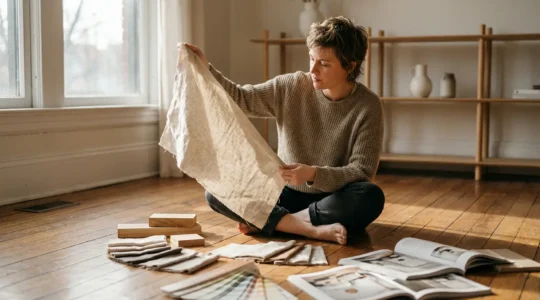
How to Define Your Home’s Design Identity Before Buying a Single Piece of Furniture?
A truly personal home isn’t built by collecting things you love; it’s orchestrated by first defining a strategic design identity that filters every choice. Translate digital inspiration into a physical ‘Reality Box’ of core materials, textures, and finishes. Prioritize timeless,…
Read more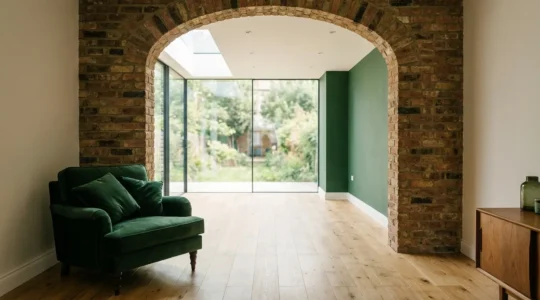
How to Create a Visual Flow Between Old House and New Extension?
The key to unifying a traditional home with a modern extension lies in creating a “design conversation” between the two spaces, rather than simply trying to make them match. Harmonize spaces using a single accent color and consistent textures as…
Read more