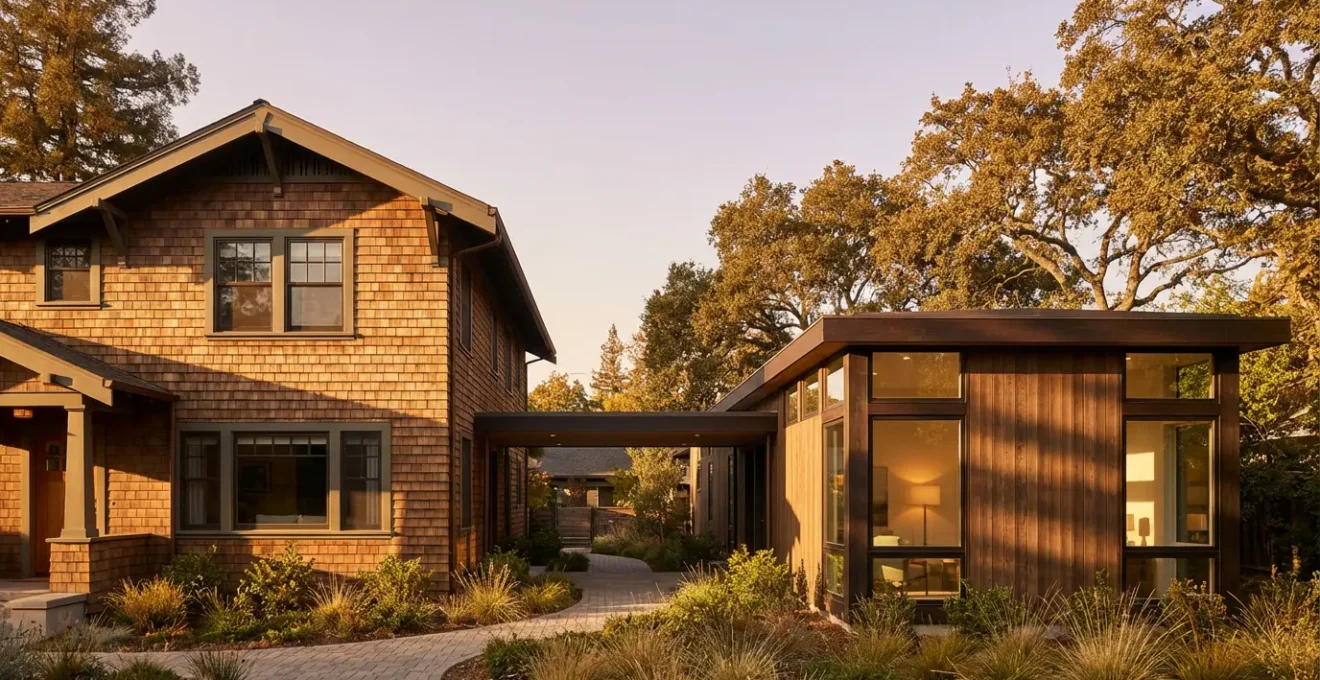
Planning a multigenerational home addition goes beyond simply adding space. It’s a strategic investment in your family’s future, focusing on adaptable design that serves evolving needs—from a home office today to an in-law suite tomorrow. The key is to prioritize long-term value and flexibility over short-term trends, ensuring the new space enhances both your property’s worth and your family’s quality of life for years to come.
The idea of multiple generations living under one roof is making a powerful comeback. Whether it’s welcoming aging parents or accommodating adult children returning to the nest, the modern family structure is becoming more fluid. For many homeowners, this shift raises a critical question: how do we make our home fit our evolving family? The immediate answer often seems to be moving to a larger house, a process fraught with high costs, emotional stress, and the upheaval of leaving a beloved neighborhood.
Common advice focuses on the basics: add a bedroom, ensure there’s a bathroom, and try to match the paint. But this surface-level approach misses the true opportunity. It treats the home as a static container rather than a dynamic environment for family life. What if the real solution isn’t just about adding more rooms, but about adding smarter, more flexible spaces? What if a well-planned addition could not only solve your immediate needs but also future-proof your home as a financial asset and a hub of family well-being?
This guide reframes the conversation. We will explore how a home addition, when viewed as a strategic investment in adaptability, becomes a far more powerful solution than simply moving. We will move past the platitudes to uncover how to design a space that truly works, ensuring it feels like an integrated part of your home’s story, not just a tacked-on chapter. From the financial logic of building versus buying to the design principles that create seamless, convertible spaces, you will gain the insights needed to plan an addition that serves your family today, tomorrow, and for generations to come.
This article will guide you through the key strategic decisions involved in creating a successful multigenerational home addition. Below is a summary of the core topics we will explore to help you plan effectively.
Summary: A Strategic Guide to Future-Proofing Your Home with an Addition
- Why Adding 20m² Is Often Cheaper Than Stamp Duty and Moving Costs?
- How to Ensure Your New Addition Doesn’t Look Like an Afterthought?
- Building Up vs Building Out: Which Is Less Disruptive to Daily Life?
- The “Dream Addition” That Cost $100k But Added Only $50k in Value
- How to Design a Home Office That Easily Converts to a Guest Bedroom?
- Why 30% of Renovation Permits Get Rejected on the First Application?
- Prefab vs Stick-Built: Which Holds Its Resale Value Better?
- How to Create a Visual Flow Between Old House and New Extension?
Why Adding 20m² Is Often Cheaper Than Stamp Duty and Moving Costs?
The decision to move or improve is one of the biggest financial choices a family can make. While the allure of a new, larger home is strong, the hidden costs of moving can be staggering. Stamp duty, real estate agent commissions, legal fees, and moving expenses can easily add up to tens of thousands of dollars—money that disappears without adding a single dollar of equity to your asset. This is where the financial arbitrage of a home addition comes into play. By investing that same capital into your existing property, you not only gain the space you need but also directly increase your home’s value.
The cost of an addition varies widely based on location and complexity. While some high-cost areas see prices of $350–$450 per square foot, a more general national average provides a useful baseline for calculation. A recent construction cost analysis shows that a basic addition can start from around $125 per square foot. For a 20m² (approximately 215 sq ft) addition, this translates to a starting cost of around $27,000. When you compare this figure to the “sunk costs” of moving, the financial case for staying put becomes compelling.
Furthermore, this isn’t just about avoiding expenses; it’s about smart investment. A well-designed addition, particularly one that adds a legal bedroom and bathroom, provides a strong return on investment (ROI). You get to stay in the community you love, avoid the disruption of uprooting your family, and channel your funds into an asset that grows in value. The choice isn’t just about space; it’s about making your money work for you in the most efficient and value-adding way possible.
How to Ensure Your New Addition Doesn’t Look Like an Afterthought?
The greatest fear for any homeowner undertaking an extension is creating a disjointed space that screams “add-on.” As experts from Cloud Nine Construction note, “The most successful home additions look and feel like they’ve always been part of the original structure.” Achieving this seamless integration is not about mimicry but about creating a thoughtful architectural dialogue between the old and the new. It requires a strategic approach that respects the home’s original character while introducing new elements that complement it.
This process begins with the exterior. The goal is to achieve architectural consistency so that the home presents a unified and appealing facade from the street. Key strategies include:
- Material Harmony: Match fundamental exterior materials like roofing, siding, and trim. If an exact match isn’t possible, choose complementary materials that create a deliberate and pleasing contrast.
- Structural Cohesion: Align new rooflines, window styles, and proportions with the existing architecture. This maintains visual balance and ensures the addition doesn’t overpower the original structure.
- Thoughtful Connections: Use transitional elements like a breezeway or a subtle change in material to bridge the old and new sections, making the connection an intentional design feature.
This concept of a material bridge is a powerful tool for creating a sophisticated and unified aesthetic, where the meeting point of the two structures becomes a highlight rather than something to hide.
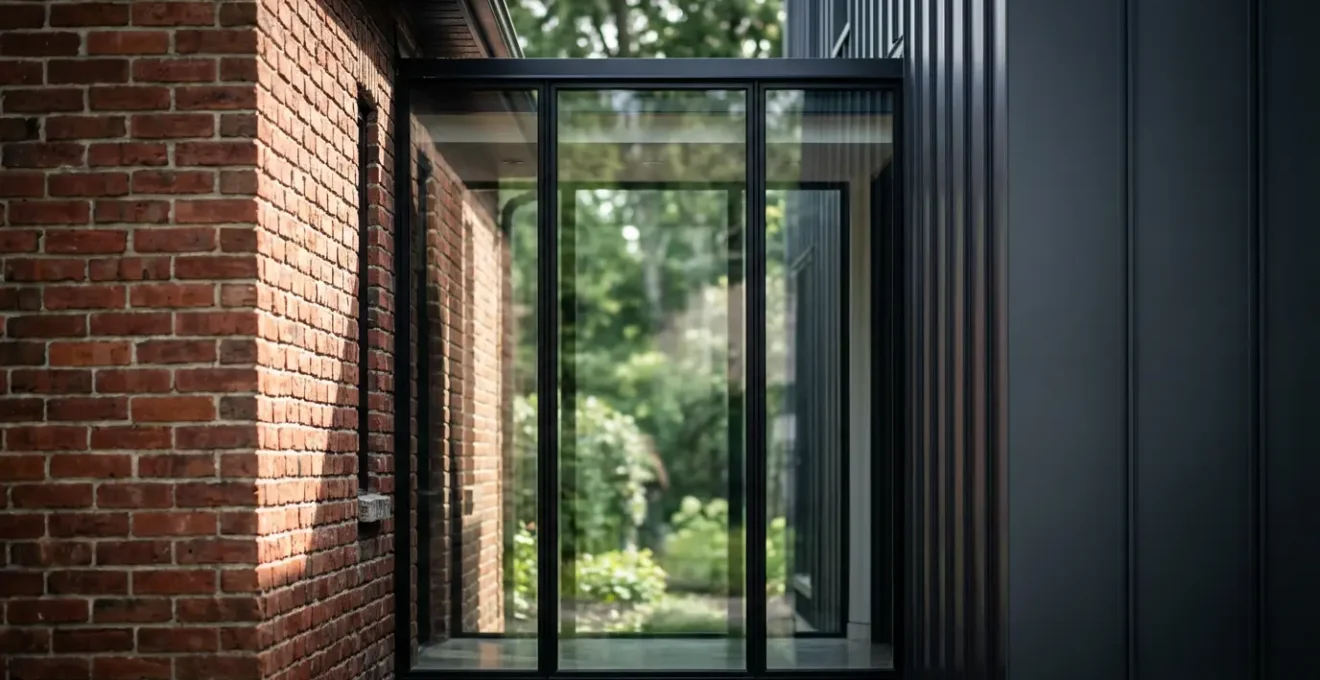
As the illustration demonstrates, the junction between original brick and modern cladding can be a beautiful architectural statement. This level of design requires careful planning, often with the guidance of an architect who can translate your vision into a cohesive reality. By focusing on this architectural dialogue, your new addition will not only meet your family’s needs but also enhance your home’s overall curb appeal and value, ensuring it looks and feels like it was always meant to be there.
Building Up vs Building Out: Which Is Less Disruptive to Daily Life?
Once you’ve decided to add on, the next major question is direction: should you build up or build out? The answer depends on your property’s constraints, your budget, and, crucially, your tolerance for disruption. Each approach has a profoundly different impact on what can be termed the “lifecycle disruption”—the effect on your family’s day-to-day routine from the first day of construction to the last. Building out, or extending on the ground level, is often contained to one side of the house, allowing family life to continue with a degree of normalcy.
In contrast, building up by adding a second story is inherently more invasive. It involves removing the roof, which exposes your home to the elements and often requires the family to move out for a significant portion of the project. The structural work affects the entire house, creating noise, dust, and access issues throughout. While it’s an excellent solution for homeowners with limited yard space, it comes at a higher cost in both dollars and disruption. According to some industry analyses, prefab and modular additions can significantly reduce construction time and on-site disruption, offering a middle ground for families sensitive to prolonged chaos.
To make an informed decision, it’s crucial to compare the two methods across key factors. The following analysis from Frei Remodeling provides a clear overview of the trade-offs involved.
| Factor | Building Up (Second Story) | Building Out (Ground Level) |
|---|---|---|
| Cost Impact | More expensive due to structural reinforcement | Often the cheaper option |
| Disruption Level | High – affects entire home structure | Moderate – contained to one side |
| Duration | 3-6 months typical | 2-4 months typical |
| Weather Protection | Compromised during roof work | Main home remains sealed |
| Best For | Homeowners with limited yard space | Properties with adequate lot size |
Ultimately, choosing between building up or out is a balance between gaining space and preserving peace. For most families planning a multigenerational addition, building out is the less disruptive path, provided you have the lot size to accommodate it. It allows for a more controlled construction environment and minimizes the impact on the main living areas, which is a critical consideration when multiple generations are sharing the home.
The “Dream Addition” That Cost $100k But Added Only $50k in Value
The cautionary tale of the over-capitalized renovation is a common fear. Homeowners invest a fortune in a highly personalized “dream addition,” only to find at resale that it added a fraction of its cost to the property’s value. This happens when the focus is on personal taste rather than on strategic value. As Black Pearl Custom Homes wisely states, “Your home addition plans do not need to be elaborate or complex to see a return on your investment.” The key to avoiding this pitfall is to distinguish between cost and value, and to design for broad appeal and future flexibility.
The most common mistake is over-personalization. A high-tech home theater or a niche hobby room might be perfect for you, but it can limit the pool of future buyers. A far better strategy is to focus on additions that are universally valued, such as legal bedrooms and full bathrooms. Furthermore, the method of construction can play a huge role. For instance, it’s possible to have a room addition prefabricated and added for $20,000 to $30,000, a cost that is significantly easier to recoup than a six-figure custom build. This highlights that smart choices in both function and construction method are crucial for a positive ROI.
To ensure your investment pays off, you must think like a future buyer from day one. This means prioritizing features that add measurable, widely recognized value to any home. Adhering to a clear set of principles can protect you from creating an addition that is an expensive liability rather than a valuable asset.
Action Plan: Designing an Addition for Maximum ROI
- Focus on Core Value: Prioritize adding legal bedrooms and full bathrooms over specialized spaces like gyms or media rooms, as these have the highest and most predictable ROI.
- Design for Flexibility: Create spaces that can serve multiple purposes. Ensure a home office can easily convert to a bedroom, or a playroom can become a den, broadening its appeal.
- Avoid Niche Customization: Resist the urge to install highly specific finishes or layouts that appeal only to your unique taste. Opt for classic, high-quality materials with timeless appeal.
- Incorporate Universal Design: Integrate features for aging-in-place, such as wider doorways, a main-floor bedroom, or a curbless shower. These add immense value for multigenerational buyers.
- Maintain Proportionality: Ensure the size and scale of your addition are in keeping with your home and the standards of your neighborhood to avoid pricing your property out of the local market.
By following these guidelines, you shift your mindset from simply building for your needs to investing in your property’s future. An addition planned with value in mind will not only serve your family beautifully but also become a smart financial legacy.
How to Design a Home Office That Easily Converts to a Guest Bedroom?
In a multigenerational home, flexibility is the ultimate luxury. A room that serves only one purpose is a liability; a room that can adapt to changing needs is a powerful asset. The home office that can seamlessly transform into a private guest bedroom is the epitome of this adaptable design philosophy. This isn’t about simply placing a desk in a spare room; it’s about intentional design that anticipates a dual function from the very beginning.
The key to success is integrated, built-in solutions that hide one function while the other is in use. A high-quality Murphy bed system concealed within a custom cabinetry unit is the cornerstone of this design. During the day, it’s a professional workspace with shelving, storage, and a clean aesthetic. At night, the bed folds down to create a comfortable, private sleeping area. This approach maximizes floor space and maintains a clutter-free environment, which is essential for both productivity and relaxation.
Beyond the bed, several other features are critical for making the conversion truly seamless. Soundproofing materials in the walls are vital to ensure the space is a quiet office for focused work and a peaceful bedroom for restful sleep. Installing separate HVAC controls allows for personalized temperature settings, accommodating the different comfort levels of a person working and a person sleeping. Smartly placed electrical outlets, designed to serve both a desk setup and bedside needs, are another small detail that makes a huge difference. Finally, pre-plumbing a wall for a future en-suite bathroom is a forward-thinking move that can dramatically increase the space’s value and utility down the line.
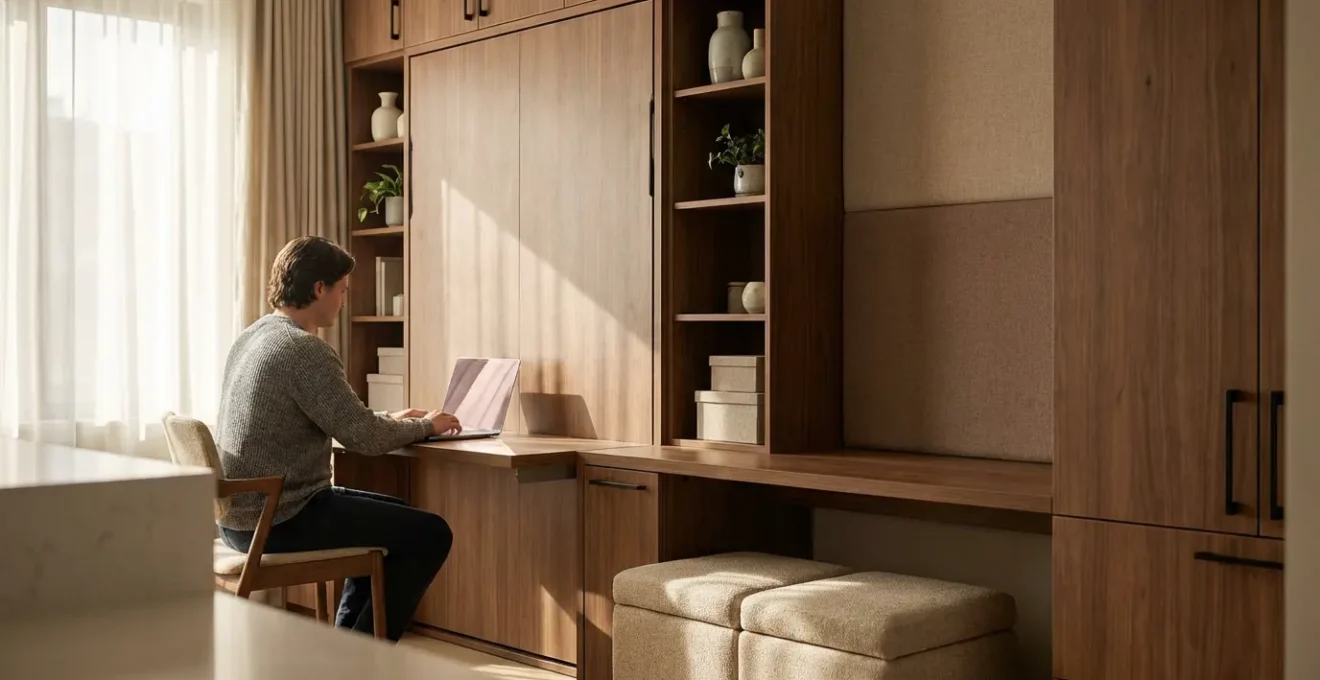
As this image shows, a convertible space doesn’t have to compromise on style. By investing in clever, built-in solutions, you create a room that is not just a temporary compromise but a fully-realized, highly functional space in both its forms. This is the essence of future-proofing your home: building for the life you have now, and the life you might have in the future.
Why 30% of Renovation Permits Get Rejected on the First Application?
Navigating the world of building permits can be one of the most frustrating aspects of a home addition project. The statistic that a significant portion of applications are rejected on the first attempt is not surprising to those in the industry. The rejections rarely stem from a single, obvious error. Instead, they are often due to a complex web of local zoning codes and building regulations that homeowners (and even some contractors) are unaware of, especially when planning a multigenerational addition.
One of the most common pitfalls is triggering a different property classification. When you add what could be considered a second dwelling unit—like an in-law suite with its own kitchen and entrance (an Accessory Dwelling Unit or ADU)—you may push your property into the “multi-family” category. According to a report on multigenerational design features, this change can bring on much more stringent standards. Suddenly, you may be required to install fire sprinklers, build a firewall separation between units, and meet higher seismic or wind load classifications, all of which can significantly increase costs and complexity.
Zoning codes, which vary dramatically by jurisdiction, are another major hurdle. While many localities are updating their codes to be more friendly towards ADUs and in-law suites, specific rules about setbacks, lot coverage, and unit size must be followed to the letter. A frequent cause for rejection is the failure to account for increased parking requirements. Local authorities often mandate additional off-street parking spots for any addition that implies more residents, an easily overlooked detail that can halt a project in its tracks. Successfully navigating this bureaucratic maze requires meticulous research and, often, the help of a local architect or designer who is fluent in the specific codes of your municipality.
Prefab vs Stick-Built: Which Holds Its Resale Value Better?
The debate between prefabricated (or modular) and traditional stick-built additions often centers on cost and speed, but the long-term impact on resale value is a crucial, and often misunderstood, factor. Historically, there was a stigma against prefab construction, but modern modular additions are built to exceptionally high standards in factory-controlled environments, often exceeding the quality of on-site construction. When it comes to resale value, the two methods are increasingly seen as comparable, with the “better” option depending on what a future buyer values most: customization or predictability.
A stick-built addition offers nearly limitless customization, which can lead to a higher value premium if the design is timeless and the quality is superb. However, it also comes with the risk of budget overruns and timeline delays, which can be a red flag for some buyers. On the other hand, a modular addition’s greatest strength is its predictability. The cost is fixed upfront, and the construction timeline is drastically shorter with minimal disruption. For many future buyers, this lower-risk profile is a significant value-add. Knowing an addition was built to precise factory standards without on-site weather exposure or contractor variability can provide powerful peace of mind.
A direct comparison reveals that both methods effectively increase property value by adding living space. The choice between them impacts the process and cost certainty far more than the final appraisal value, assuming quality is high in both cases.
| Factor | Prefab/Modular Addition | Stick-Built Addition |
|---|---|---|
| Initial Cost | Different sizes fit your budget, upfront cost does not change | Estimated quote can change when construction begins |
| Construction Time | Much faster with minimal disruption to daily life | Takes longer and will disrupt daily routine |
| Resale Value Impact | Increases property value due to expanded living space | Similar value increase with potential for higher customization premium |
| Cost Predictability | Fixed pricing due to factory production | Variable costs due to on-site conditions |
| Quality Control | Factory-controlled environment ensures consistency | Dependent on local contractor and weather conditions |
In essence, a well-built addition is a well-built addition, regardless of method. The idea that modular structures are inherently less valuable is outdated. Today, the choice is less about final value and more about the journey. For a homeowner planning a multigenerational space, the speed, cost certainty, and reduced disruption of a modular addition often make it the more strategic choice, delivering comparable resale value with far fewer headaches.
Key Takeaways
- A home addition is often a smarter financial move than moving, as it avoids sunk costs like stamp duty and directly builds equity.
- Successful additions create an “architectural dialogue” with the original home, using consistent materials and proportions to look intentional, not tacked-on.
- Designing for adaptability, such as an office that converts to a bedroom, is crucial for future-proofing your home and maximizing its long-term utility and value.
How to Create a Visual Flow Between Old House and New Extension?
Creating a home that encourages family togetherness is a primary goal of multigenerational living. As Architectural Designs points out, this is often achieved by emphasizing “shared common areas like kitchens, dining spaces, and family rooms.” For these shared spaces to truly work, especially when they span both the original house and a new extension, a seamless visual flow is not just a design choice—it’s essential. This flow is what transforms two separate zones into one cohesive, welcoming home. It’s the invisible thread that stitches the old and new together.
The most powerful tool for creating this continuity is consistent flooring. Running the same material, such as hardwood planks, uninterrupted from the existing living area through the threshold and into the new addition, visually erases the boundary between the spaces. It draws the eye forward and creates a sense of expansion and unity. This effect is magnified when the threshold is perfectly flush, with no change in height to trip the foot or interrupt the visual line.
Beyond flooring, visual flow is reinforced through a consistent palette of colors and materials. Using the same wall color, trim style, and lighting temperature throughout the connected areas creates a sensory continuity that makes the entire space feel like a single, thoughtfully designed environment. This doesn’t mean every room must be identical, but there should be a common design language that ties them together. It’s about creating a harmonious journey as you move from a room in the original structure to a space in the new extension.
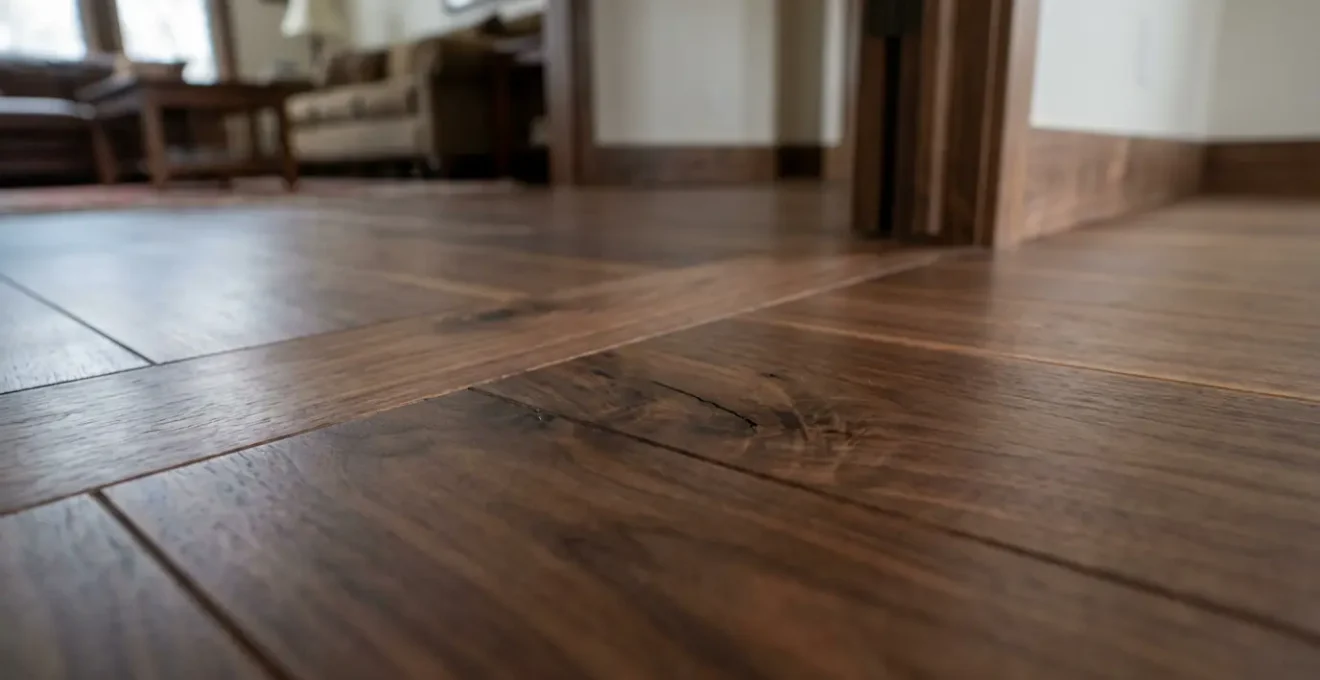
As this detailed view shows, the seamless transition of flooring is a tactile and visual signal that you are in one unified home. It’s a testament to craftsmanship and careful planning. By focusing on these connective elements—flooring, color, and light—you create more than just an addition; you build a larger, more integrated home where every generation feels connected and welcome.
Planning a multigenerational home addition is a journey of foresight and empathy. It requires you to think not only as a homeowner but as a family architect, designing a future where your home can gracefully adapt to the evolving chapters of your family’s life. By focusing on strategic financial decisions, integrated architectural design, and ultimate flexibility, you create an environment that nurtures connection and provides lasting value. This is the true measure of a successful addition.