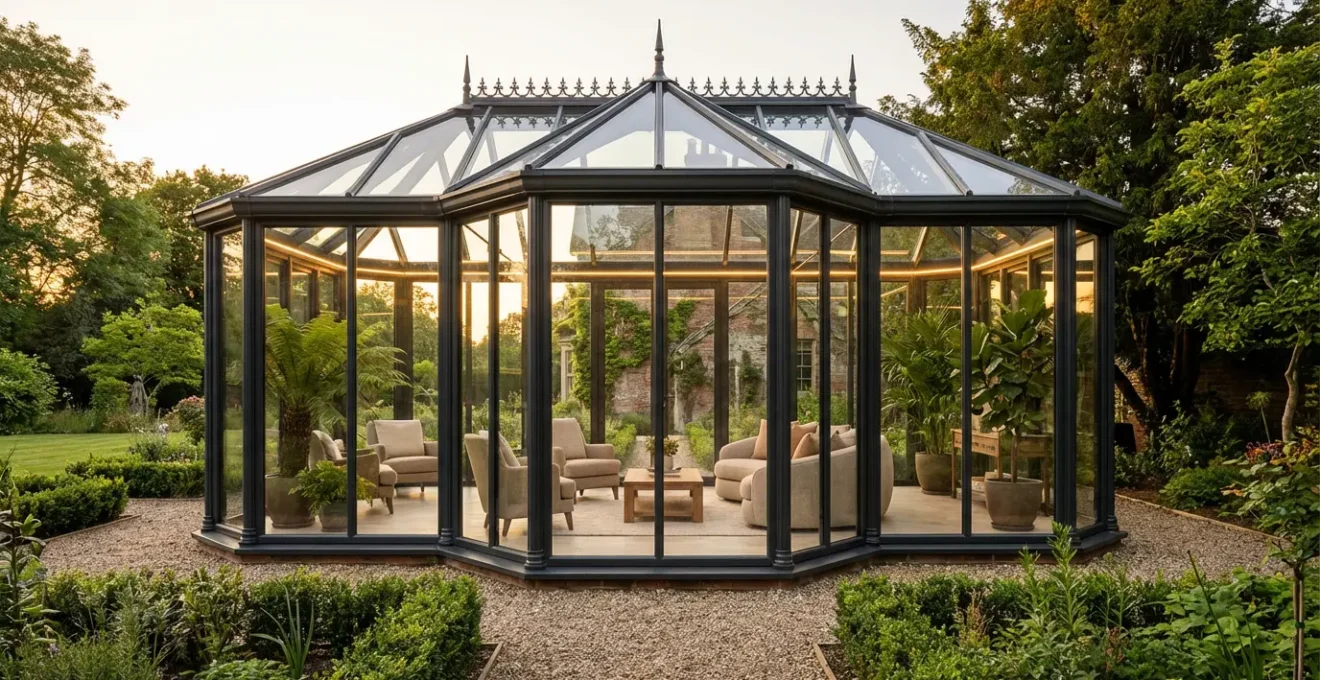
The key to a successful Victorian conservatory is not replicating 19th-century flaws, but translating its elegant spirit into a high-performance structure using modern technology and design principles.
- Prioritise proportional harmony with the main house over exact historical replication to avoid an inauthentic look.
- Utilise modern materials like performance composites and low-emissivity glass to achieve classic aesthetics without the traditional drawbacks of high maintenance and heat loss.
- Focus on seamless integration through thoughtful transitions, turning the conservatory into a valuable, year-round living space rather than a seasonal afterthought.
Recommendation: Begin your project by analysing your home’s architectural language to inform the conservatory’s scale, shape, and material choices, ensuring the new addition feels like a natural extension of the original property.
For owners of period homes, the allure of a Victorian conservatory is undeniable. It evokes images of elegant afternoon teas, sun-drenched reading nooks, and a seamless connection to the garden. Yet, this dream is often haunted by the well-known reality of older conservatories: freezing in winter, boiling in summer, and plagued by condensation. Many believe the choice is between historical accuracy and modern comfort. The common advice revolves around basic solutions like adding double glazing or choosing a specific frame material, but these often miss the larger point. Distinctions are made between conservatories and orangeries, but the fundamental challenge of thermal performance remains.
What if the conventional approach is flawed? The goal should not be to build a perfect replica of a 19th-century structure, complete with its inherent energy inefficiencies. Instead, the true art lies in achieving proportional harmony and translating the *spirit* of Victorian design into a modern, high-performance envelope. This means embracing advanced material science, understanding the subtle language of architecture, and making deliberate design choices that respect the past while fully embracing the present. It’s about creating an extension that is not only beautiful but also a genuinely usable and valuable addition to your home, 365 days a year.
This guide will explore how to navigate this balance. We will deconstruct the key elements of Victorian design, from decorative finials to overall shape, and reveal how modern techniques can deliver authentic style without compromising on energy standards. We will analyse common design errors that devalue a property and provide actionable strategies for creating a seamless flow between your old house and your new extension. The result is a conservatory that honours its heritage while meeting the demands of contemporary life.
Summary: How to Design a Victorian Conservatory That Meets Modern Energy Standards?
- Why a Victorian Conservatory Can Increase Curb Appeal for Historic Homes?
- How to Replicate Victorian Finials Using Modern Composite Materials?
- Facet vs Gable Front: Which Shape Suits Your Cottage Best?
- The Design Error That Makes a Victorian Conservatory Look Fake on a 1980s House
- How to Arrange Furniture in a Bay-Front Conservatory to Maximize Flow?
- The Material Clash Mistake That Lowers Your Home’s Resale Value
- Why Spending 1 Hour in a Sunroom Can Alleviate Winter Blues?
- How to Create a Visual Flow Between Old House and New Extension?
Why a Victorian Conservatory Can Increase Curb Appeal for Historic Homes?
A well-designed Victorian conservatory does more than just add square footage; it enhances a historic home’s architectural narrative. When thoughtfully executed, it appears as a natural, elegant extension of the original structure, boosting its curb appeal and overall character. This is not merely an aesthetic opinion; industry data shows that character properties can attract up to a 10% premium when featuring a conservatory that is well-integrated with the home’s style. The key to unlocking this value lies in sympathetic design that respects the host building’s materials, scale, and period details.
A successful integration avoids looking like a generic, “off-the-shelf” addition. Instead, it involves a careful study of the home’s existing lines and proportions. For instance, the roof pitch of the conservatory should echo that of the main house, and the brickwork of the dwarf wall should match the original masonry in colour, texture, and bond pattern. This creates a visual dialogue between the old and the new, suggesting the conservatory has always been part of the property’s story.
The Kittery Point project provides an excellent case study. Here, a historic train station was expanded with a Victorian conservatory. The owners’ goal was a seamless flow from a bedroom out towards a pond. To achieve this, they didn’t simply attach a glass box; they built the conservatory using solid conventional walls and customised Marvin window units that complemented the station’s original structure. This robust construction, combined with modern performance elements like Fiberglass R-21 insulation and low-e roof glass, ensured the space was both historically appropriate and comfortable year-round, proving that authenticity and performance can coexist.
How to Replicate Victorian Finials Using Modern Composite Materials?
The ornate ridge cresting and decorative finials are signature elements that give a Victorian conservatory its distinctive, elegant skyline. Traditionally crafted from heavy cast iron, these features were prone to rust and required regular, painstaking maintenance to prevent decay. Today, the challenge for heritage-conscious homeowners is to retain this intricate aesthetic without inheriting the associated upkeep. The solution lies in performance composites, which offer an ideal blend of historical accuracy and modern resilience.
Materials such as GRP (Glass Reinforced Plastic) and advanced resins allow for the creation of lightweight, durable, and maintenance-free replicas. Molds can be cast from original Victorian examples, capturing every detail with perfect fidelity. These modern composites are fully weatherproof, resistant to corrosion, and can be finished to precisely mimic the appearance of traditional painted iron. This approach not only preserves the authentic character but also significantly reduces the long-term maintenance burden and cost, a crucial consideration for any modern building project.
The advantages of using modern composites over traditional cast iron are clear, especially when considering the practicalities of installation and longevity. The following comparison highlights the key differences in performance.
| Aspect | Traditional Cast Iron | Modern Composite (GRP) |
|---|---|---|
| Weight | Heavy (10-20kg per finial) | Lightweight (2-5kg per finial) |
| Maintenance | Annual repainting required | Maintenance-free |
| Lifespan | 50+ years with maintenance | 30-40 years |
| Cost | High initial + ongoing | Moderate initial, minimal ongoing |
| Weather Resistance | Susceptible to rust | Fully weatherproof |
Beyond simple replication, these materials offer new possibilities. Hollow composite finials can cleverly conceal modern technology, such as security cameras or weather sensors, integrating smart home features without disrupting the period aesthetic. This demonstrates a core principle of modern heritage design: using contemporary innovation to support, rather than compromise, historical elegance.
Facet vs Gable Front: Which Shape Suits Your Cottage Best?
The silhouette of a Victorian conservatory is largely defined by its front elevation. The two most classic styles are the faceted bay front and the gabled front, each offering a distinct aesthetic and spatial experience. A faceted front, typically with three or five sides, creates a panoramic, curved effect that softens the structure’s appearance and provides wide garden views. This rounded “bay” is often considered the quintessential Victorian look, ideal for wrapping around the corner of a property or creating a romantic, sun-drenched alcove.
In contrast, the gable-front design features a flat-fronted, triangular gable that often mirrors the roofline of the main house. This creates a more formal, stately impression with a strong vertical emphasis. The resulting internal space is rectangular, which can be easier to furnish and often feels more like a conventional room. For a cottage with a prominent existing gable, echoing this feature in the conservatory can create a powerful sense of architectural symmetry and belonging.
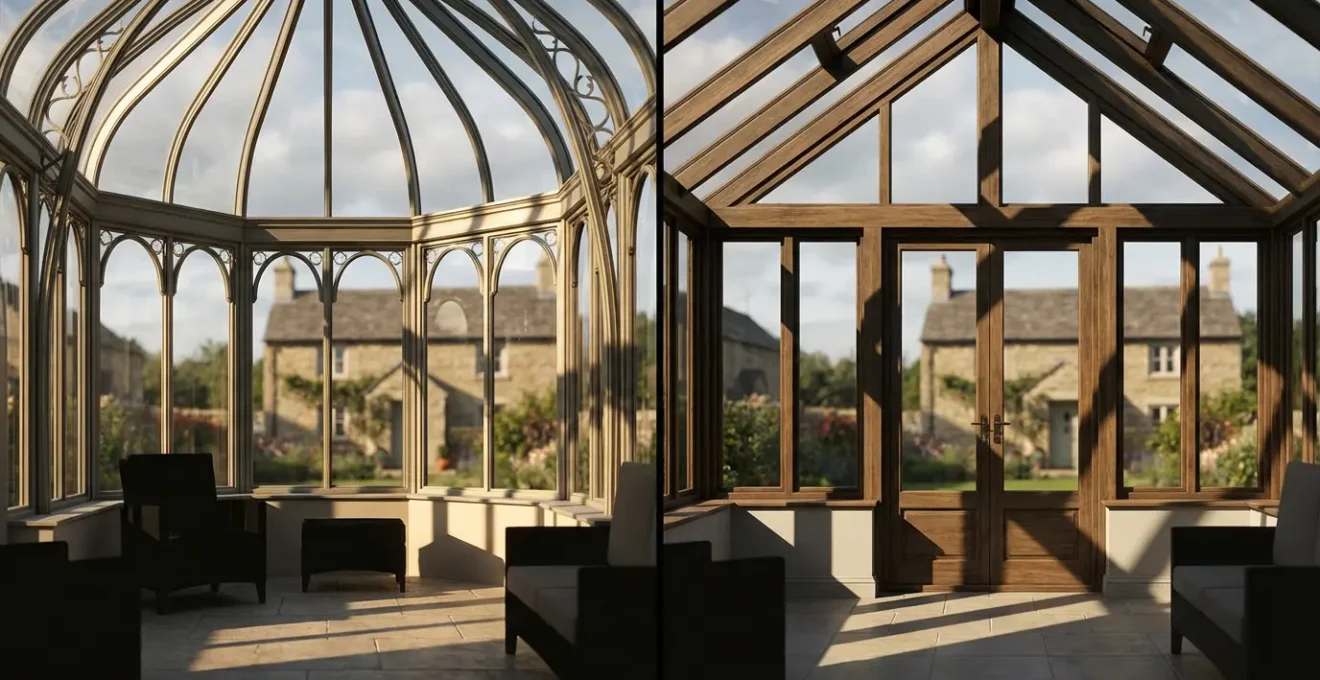
While the choice is often driven by aesthetics, it also has significant implications for energy performance. The complex roof geometry of a five-faceted bay results in more joints and ridges, which can be potential points for heat loss. According to thermal performance studies, the simpler structure of gable-front designs can achieve up to 15% better thermal efficiency due to fewer roof junctions. This is a critical consideration for anyone aiming to create a conservatory that is comfortable and cost-effective to heat through the winter months, making the gable-front a strong contender for performance-led projects.
The Design Error That Makes a Victorian Conservatory Look Fake on a 1980s House
One of the most jarring architectural mistakes is the careless application of a period style onto a house from a completely different era. Attaching a Victorian-style conservatory to a 1980s home, for example, can instantly look “fake” and devalue the property if not handled with extreme care. The fundamental error is not the mixing of styles itself, but the failure to achieve proportional harmony. A direct copy-and-paste of Victorian features—tall, narrow windows, a steeply pitched roof, and delicate framing—often clashes violently with the lower rooflines, wider window apertures, and simpler forms of a late 20th-century house.
The conservatory ends up looking like a decorative afterthought rather than an integrated part of the home. This disconnect signals a lack of design consideration, which can be a major red flag for potential buyers and detract from the property’s overall appeal. The solution is not to abandon the Victorian style, but to adapt its motifs to the proportions of the host building. This means using the *essence* of the style—the faceted shape, the roof cresting—but adjusting the scale, window dimensions, and roof pitch to complement the existing structure.
An expert analysis of Victorian conservatory design principles confirms this critical point. As one specialist notes, the most common mistake is a matter of scale:
The most common mistake is not the style itself, but applying Victorian proportions (tall, narrow windows, steep roof pitch) to a house with modern proportions.
– Design Expert Analysis, Victorian Conservatory Design Principles
This insight is crucial. By creating a design with a gentler roof pitch and windows that align with the home’s existing datums (such as sill and lintel heights), the conservatory can feel like a respectful, contemporary interpretation of a classic style. It acknowledges its modern context while borrowing the elegance of the Victorian era, resulting in a far more sophisticated and valuable addition.
How to Arrange Furniture in a Bay-Front Conservatory to Maximize Flow?
The faceted bay of a Victorian conservatory is its most defining and beautiful feature, but it can also present a significant interior design challenge. Placing conventional, rectangular furniture within this curved space often leads to awkward, unused corners and obstructed pathways, defeating the purpose of creating a relaxing, light-filled room. The key to success is to work *with* the architecture, not against it, by creating distinct zones for seating and movement that honour the room’s unique geometry.
The primary goal is to establish a natural and unimpeded flow from the house into the conservatory and out to the garden. This is typically achieved by keeping the back wall, where the doors to the house are located, clear of any large furniture. This “thoroughfare zone” ensures the room feels accessible and connected. The seating area should then be nestled within the bay itself, creating an intimate “conversational cockpit”. Using curved or angled sofas that follow the line of the windows enhances this effect, making the space feel deliberate and cohesive. A round rug can further anchor this zone, visually separating it from the main walkway.
Material choice is also paramount given the intense sun exposure. Light-coloured, UV-resistant fabrics are essential to prevent fading and sun damage. Similarly, delicate or antique wooden furniture should be positioned away from areas of direct, prolonged sunlight to avoid warping or discolouration. Following a clear plan ensures the space is as functional as it is beautiful.
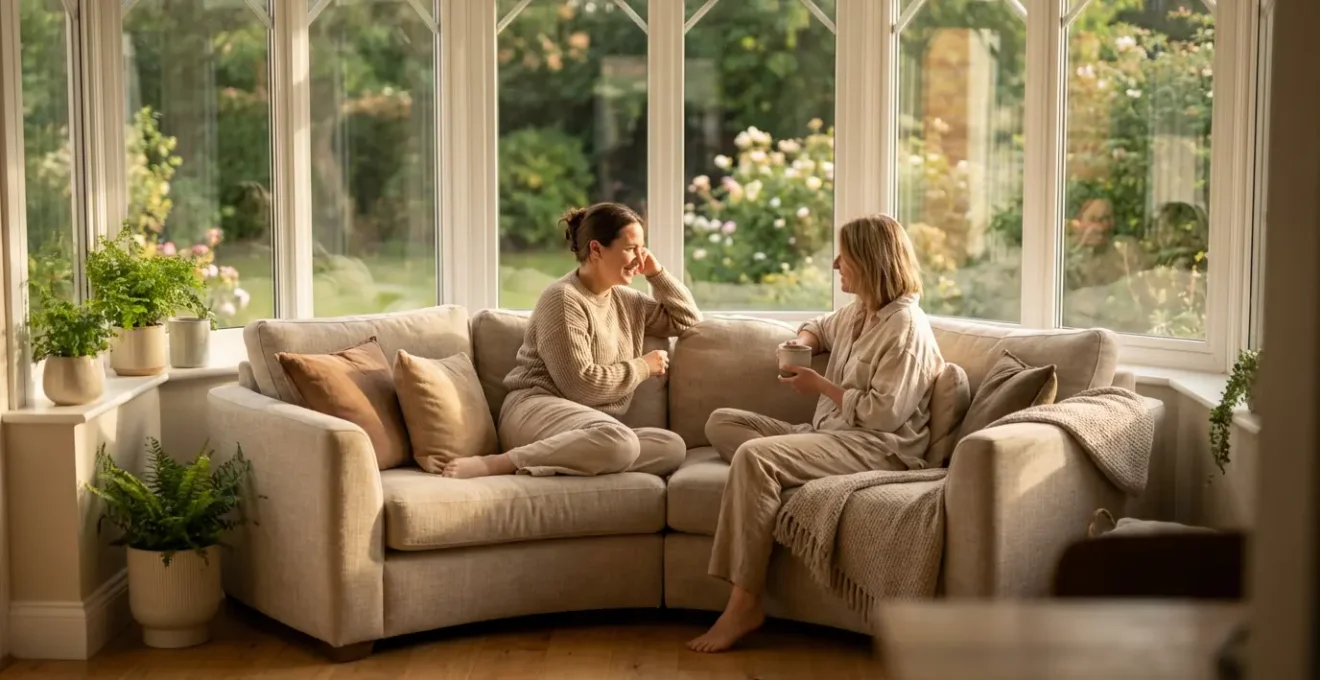
Action Plan: Arranging Your Bay-Front Conservatory
- Position curved or angled seating to follow the bay’s natural curve, creating a conversational ‘cockpit’.
- Keep the back wall clear as a thoroughfare zone for unobstructed movement between the house and garden.
- Place a round or semi-circular rug within the bay area to anchor the seating zone and define the space.
- Use light-colored, UV-resistant fabrics for all upholstery to prevent sun damage and keep the space feeling bright.
- Position delicate wooden furniture, like side tables or bookcases, away from direct sunlight exposure to prevent damage.
The Material Clash Mistake That Lowers Your Home’s Resale Value
While a well-executed conservatory can add significant value to a home, a poorly considered one can actively detract from it. One of the most damaging and common mistakes is a material clash, where the conservatory’s materials are completely out of sync with the main house. A classic example is installing a standard white uPVC conservatory onto a historic red-brick Victorian property. This choice often reads as a cost-cutting measure and creates a jarring visual disconnect that can reduce the home’s perceived quality and market value.
The impact is not just aesthetic; it’s financial. While modern glazing is a clear value-add, with property valuation studies showing up to a 10% increase in home value when upgrading from single to modern double glazing, this gain can be completely erased by poor frame choices. Buyers of period properties are typically seeking character and authenticity, and a cheap-looking plastic extension undermines both. The goal should be to select materials that are either authentic (like hardwood) or are designed to sympathetically mimic period aesthetics (like colour-matched aluminium or timber-effect composites).
Investing a little more in appropriate materials pays significant dividends in terms of property value and buyer perception. A higher initial outlay for powder-coated aluminium frames that match the home’s window colours, or for high-quality timber, is an investment in the property’s overall architectural integrity.
| Material Choice | Initial Cost Difference | Property Value Impact | Buyer Perception |
|---|---|---|---|
| White uPVC on red brick Victorian | Baseline | -5% to -10% | Clash/Cost-cutting |
| Color-matched powder-coated aluminum | +20% | +3% to +5% | Quality/Sympathy |
| Timber-effect composite | +15% | Neutral | Acceptable compromise |
| Authentic hardwood | +40% | +5% to +8% | Premium/Authentic |
This data clearly shows that while uPVC is the cheapest option, it can have a negative return on investment. In contrast, sympathetic materials, while more expensive initially, contribute positively to the home’s value, making them a much wiser long-term choice.
Why Spending 1 Hour in a Sunroom Can Alleviate Winter Blues?
A modern, thermally efficient conservatory is more than just an extra room; it’s a dedicated wellness space that can have a profound impact on mental and physical health, particularly during the dark winter months. The primary benefit comes from exposure to natural light. Seasonal Affective Disorder (SAD), or “winter blues,” is strongly linked to a lack of sunlight, which disrupts our circadian rhythms and serotonin levels. A glass-roofed conservatory acts as a light funnel, bathing the interior in daylight even on overcast days.
The intensity of this light is far greater than what we receive through standard windows. In fact, research on natural light exposure in home extensions shows that glass conservatories can provide up to three times higher lux levels. Spending just an hour in such an environment can help reset the body’s internal clock, boost mood, and increase energy levels, offering a powerful antidote to winter lethargy. This makes the conservatory a perfect space for a morning coffee, a home office, or simply a quiet place to read and recharge.
Of course, this is only possible if the conservatory is a comfortable, year-round space. This is where modern design and materials transform the traditional concept. A project by Gloucester Conservatory & Window Warehouse illustrates this perfectly. They upgraded a 19-year-old Victorian conservatory, which was unusable in cold weather, by replacing its old polycarbonate roof with a fully insulated SupaLite tiled roof. This single change turned an outdated, seasonal room into a warm, quiet, and stylish living space that the homeowners could enjoy throughout the year. By preventing heat from escaping, modern roofing and glazing solutions reduce the need for aggressive heating and ensure the conservatory remains a welcoming retreat, even on the coldest days.
Key Takeaways
- True heritage design is about translating the spirit of Victorian architecture, not just copying its form and flaws.
- Proportional harmony between the conservatory and the main house is more critical than exact historical replication to ensure a visually cohesive result.
- Modern materials like performance composites and advanced glazing are essential for achieving classic aesthetics alongside contemporary energy efficiency standards.
How to Create a Visual Flow Between Old House and New Extension?
The final, master-level challenge in conservatory design is achieving a seamless transition between the original house and the new extension. A clunky, abrupt connection can make the conservatory feel like a separate, detached entity. The most sophisticated solution is to create what is known as an “architectural hyphen”—a deliberate, often glazed, link that elegantly bridges the old and the new. This could be a short glass corridor or a structural glass lobby that acts as a transparent buffer, clearly defining the two structures while connecting them visually.
This visual flow is reinforced by several key design strategies. Aligning the conservatory’s glazing bars with the existing window mullions of the house creates strong horizontal and vertical sightlines, tricking the eye into seeing one continuous design. Using matching materials in different formats—for example, the same stone as the house foundation for the conservatory’s dwarf wall—also helps to weave the two parts together. Finally, matching the exterior paint colour of the conservatory frames to the house’s existing trim is a simple but highly effective way to create a unified palette.
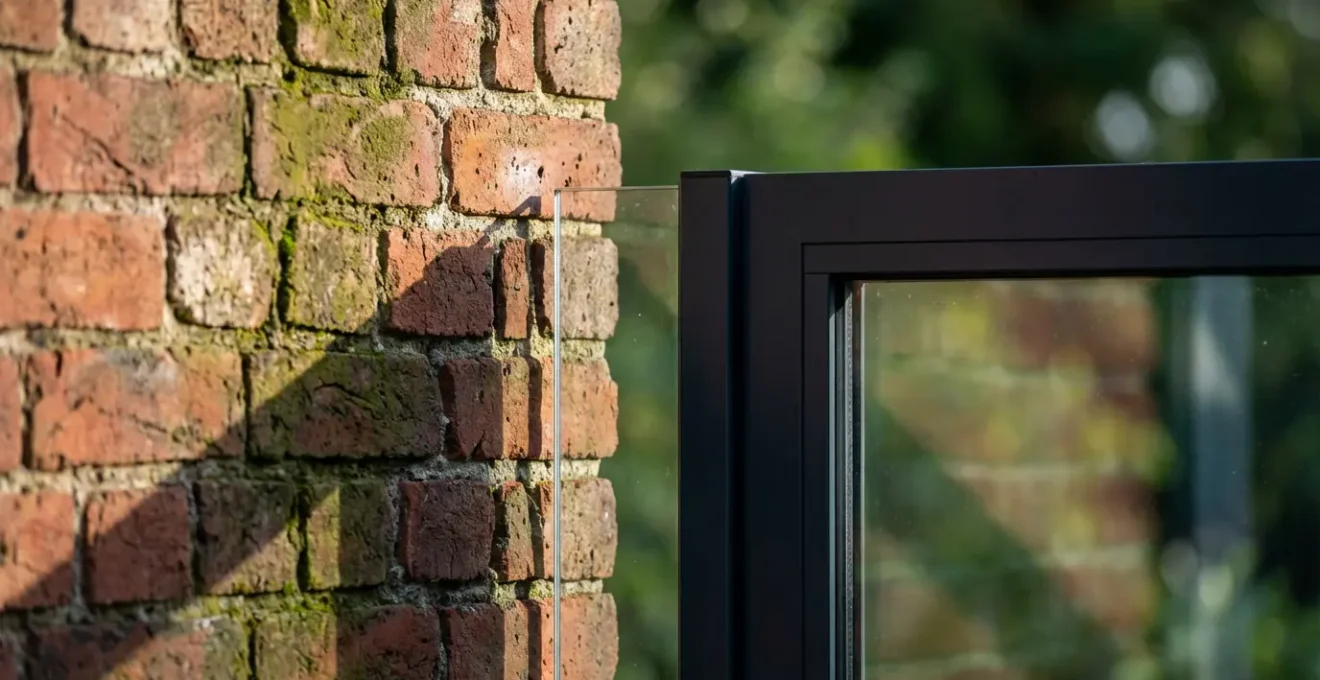
This integration is not just about aesthetics; it’s also governed by strict technical requirements. Building regulations mandate a thermal separation between the house and the conservatory unless the conservatory meets the same energy standards as a full extension. This is where high-performance doors act as a “thermal valve”. Large bifold or pocket doors can be opened wide to create a huge, flowing space in good weather, but can be closed to isolate the conservatory thermally when needed. To be considered an integral part of the home without thermal separation, the structure must meet stringent performance targets. For example, according to updated UK Building Regulations Document L, a U-value of 1.6 W/m²K or better is required for conservatory roofs and windows, ensuring the extension does not compromise the overall energy efficiency of the home.
By synthesising historical respect with modern engineering, a Victorian conservatory becomes more than an addition; it becomes a timeless, high-performance enhancement to your home. It’s an investment in beauty, comfort, and value that honours the past while looking firmly to the future. To bring these principles to life, the next logical step is to seek a design consultation that begins with a thorough analysis of your property’s unique architectural character.