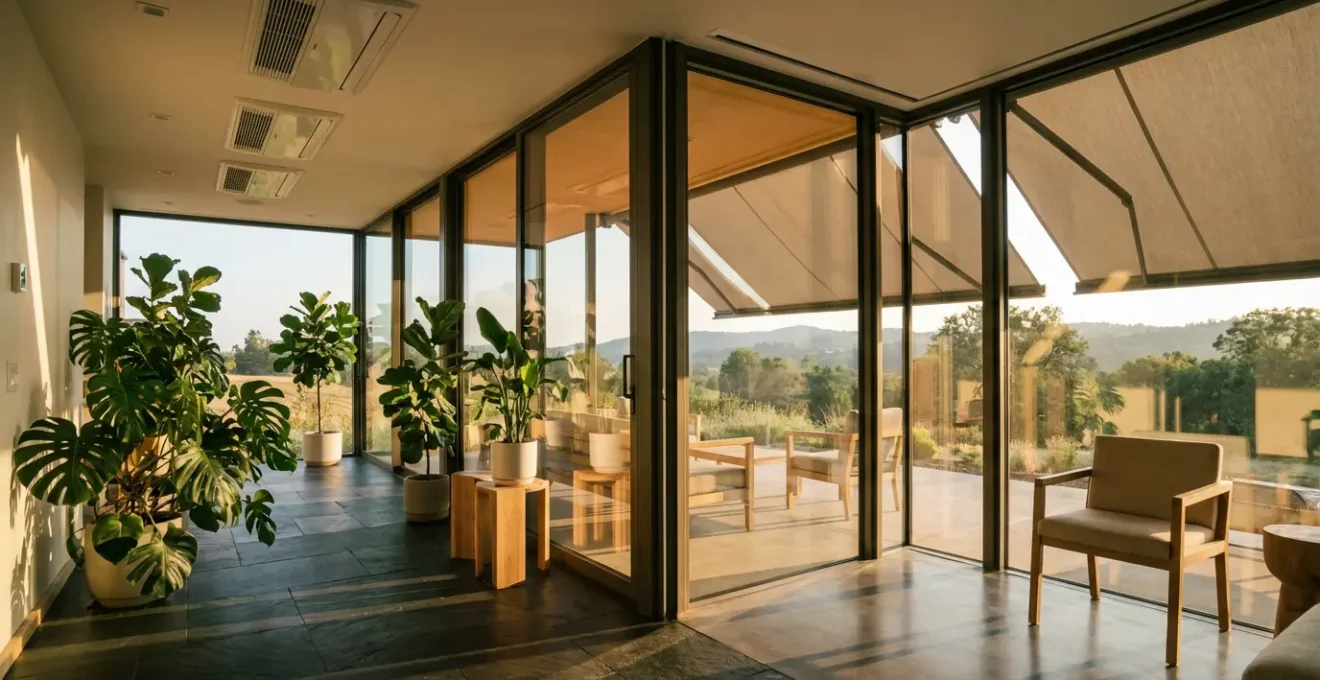
A south-facing sunroom becomes an unusable greenhouse not by default, but due to a failure to engineer it as an integrated climate system from the start.
- The most critical factor is not insulation (U-Value) but the Solar Heat Gain Coefficient (SHGC) of your glazing, which dictates how much solar heat enters the space.
- Passive strategies like thermal mass flooring and automated ventilation are as important as the active HVAC system, which must be calculated using a specialized Manual J method for glazed structures.
Recommendation: Prioritize specifying high-performance, low-SHGC glass (0.25-0.40) and consult with a specialist who understands Manual J calculations for highly glazed extensions to avoid costly and uncomfortable mistakes.
The dream of a sun-drenched extension, a luminous space connecting your home to the garden, is a powerful one. For homeowners with south-facing properties, the potential for a room bathed in natural light year-round seems like the ultimate prize. Yet, the reality for many is a sweltering, unusable “hotbox” from May to September, a classic example of the greenhouse effect running rampant. Many articles will advise simple fixes like blinds or ceiling fans, but these are merely bandages on a poorly designed structure.
The fundamental flaw in most sunroom projects is treating the addition as a standard room with more windows. This perspective ignores the core principles of building envelope science. A highly glazed structure is a unique thermal engine, and controlling it requires a holistic, engineering-led approach from the very first design sketch. It involves a sophisticated interplay between the properties of the glass, the management of airflow, the thermal storage capacity of your materials, and a correctly sized HVAC system.
The truth is, you can have a comfortable south-facing sunroom, but it cannot be an afterthought. This guide moves beyond the platitudes and dives into the technical specifics. We will dissect the critical variables you must master, from the invisible rays that fade your furniture to the complex calculations that determine your comfort. By understanding the sunroom as an integrated system, you can transform a potential liability into your home’s most cherished asset, enjoyable in all seasons.
This article will guide you through the key engineering and design decisions that separate a comfortable, year-round living space from a seasonal sauna. We will explore everything from the science of glazing to the practicalities of construction timelines, providing a complete roadmap for your project.
Summary: A Technical Guide to Engineering a Comfortable South-Facing Sunroom
- Why Spending 1 Hour in a Sunroom Can Alleviate Winter Blues?
- How to Design a Glass Roof That Is Safe and Easy to Clean?
- Double vs Triple Glazing: Is the Extra Cost Worth It for a 3-Season Room?
- The Invisible Ray That Fades Your Sofa Fabric in 6 Months
- When to Start Building Your Sunroom to Enjoy It by Christmas?
- Why a Victorian Conservatory Can Increase Curb Appeal for Historic Homes?
- How to Set Up Automatic Vents to Prevent Overheating at Noon?
- How to Calculate the HVAC Tonnage Needed for a Highly Glazed Extension?
Why Spending 1 Hour in a Sunroom Can Alleviate Winter Blues?
Before diving into the technical challenges of heat management, it’s crucial to understand why a well-designed sunroom is worth the effort. Its primary benefit, especially during colder, darker months, lies in its ability to act as a personal light therapy box. The feeling of “winter blues,” or its more severe form, Seasonal Affective Disorder (SAD), is directly linked to a lack of exposure to natural sunlight, which disrupts our circadian rhythms and serotonin levels.
A sunroom provides a protected, comfortable environment to soak in this vital light, even on a frigid day. The large glass panes allow for maximum light exposure, mimicking the effects of being outdoors without the cold. This exposure can be a powerful, non-pharmacological tool for improving mood, energy, and focus. In fact, a recent meta-analysis shows bright light therapy achieves a significant remission rate, with some studies reporting up to a 41% remission rate for non-seasonal depression. Creating a space that facilitates this naturally is a profound investment in your well-being.
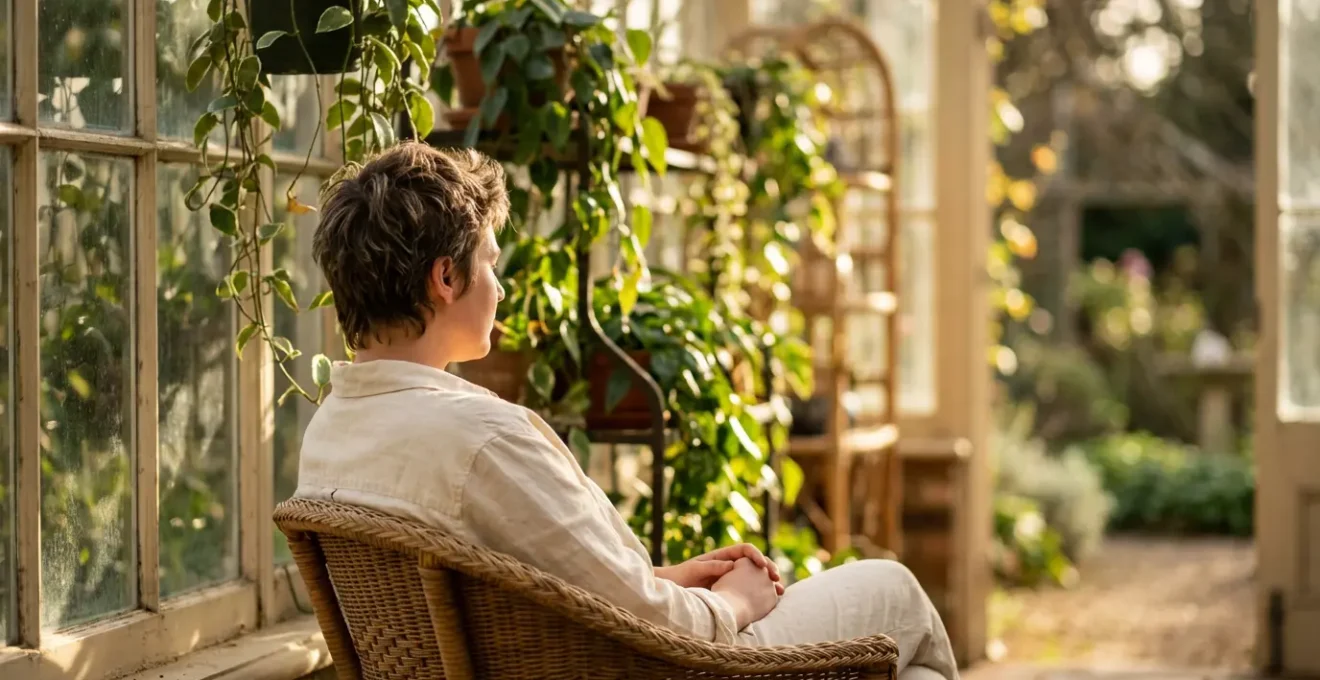
This biophilic sanctuary becomes a refuge, a place to connect with the daylight cycle, surrounded by plants that thrive in the abundant light. The goal of proper climate engineering, therefore, is to preserve this essential benefit year-round, ensuring the space remains a haven of well-being and not a source of thermal stress. The challenge is to welcome the light while managing its thermal energy.
How to Design a Glass Roof That Is Safe and Easy to Clean?
The roof is the most critical surface of a sunroom, bearing the brunt of solar radiation, weather, and potential impacts. Its design dictates not only the room’s safety but also its long-term usability and maintenance burden. From a climate control specialist’s perspective, the material choice for overhead glazing is non-negotiable: it must be laminated safety glass, not tempered glass.
While tempered glass is strong, it shatters into thousands of small, granular pieces upon a significant impact, which would rain down on occupants. Laminated glass, conversely, consists of two layers of glass bonded with a tough plastic interlayer (PVB). If it breaks, the fragments adhere to the interlayer, cracking in a spider-web pattern but remaining in the frame. This is an essential overhead safety feature. Furthermore, this interlayer provides superior acoustic insulation and blocks nearly all UV radiation, a topic we’ll explore later.
The following table, based on information from industry specialists at Solar Innovations, compares the key safety and performance features of these two glass types for roofing applications.
| Feature | Laminated Glass | Tempered Glass |
|---|---|---|
| Break Pattern | Spiral crack, stays in frame | Small squares, collapses |
| UV Protection | Removes 99% of harmful UV rays | Standard UV protection only |
| Acoustic Insulation | Superior due to inner layer | Standard |
| Best Use | Ceilings and impact areas | Vertical installations |
Beyond safety, designing for cleanability is crucial for maintaining light quality. A dirty glass roof can significantly reduce the amount of light entering the space, defeating its primary purpose. Smart design can drastically reduce the need for precarious ladder work.
Action Plan: 5 Principles for a Low-Maintenance Glass Roof
- Calculate the optimal roof pitch to be between 20-30 degrees; this angle is steep enough for rainwater to effectively self-clean the surface but not so steep as to maximize summer solar heat gain.
- Specify walkable glass panels (minimum 8mm laminated) within the first three feet of the roof’s edges, providing a safe, designated zone for any required maintenance access.
- Install permanent, concealed anchor points rated for fall protection harnesses at 10-foot intervals along the ridge line during construction for future safe access.
- Apply a photocatalytic titanium dioxide coating during the glass manufacturing process. This advanced surface uses UV light to break down organic dirt, which is then washed away by rain.
- Design an integrated gutter system with easily removable covers to allow for simple debris cleanout from a safe position, preventing blockages and water overflow.
Double vs Triple Glazing: Is the Extra Cost Worth It for a 3-Season Room?
When discussing glazing, the conversation often defaults to insulation, measured by U-Value (heat loss). Homeowners assume “more is better,” leading them to consider expensive triple glazing. However, for a south-facing sunroom, this is a critical misunderstanding of the core thermal challenge. The primary problem is not heat loss in winter, but overwhelming solar heat gain in summer. Therefore, the most important metric is the Solar Heat Gain Coefficient (SHGC).
SHGC is a value between 0 and 1 that represents the fraction of solar radiation admitted through a window. A lower SHGC means less solar heat is transmitted, keeping the room cooler. Standard clear double-glazing can have an SHGC as high as 0.7-0.9, meaning it lets in 70-90% of the sun’s heat—a recipe for a greenhouse. In contrast, high-performance double-glazing with modern Low-E (low-emissivity) coatings can have an SHGC between 0.25 and 0.4. This is the crucial battleground for comfort.
As the Building Performance Institute notes in its guidelines, this is a frequent point of confusion for consumers. A quote featured on Energy.gov’s guide to energy ratings highlights this perfectly:
For a 3-season room, focusing on U-Value (heat loss) is a mistake. The critical, yet often ignored, number is the Solar Heat Gain Coefficient (SHGC) which governs overheating.
– Building Performance Institute, Energy Performance Ratings Guide
Triple glazing typically offers a superior U-Value but may not necessarily have a lower SHGC than a specialized double-glazed unit. For a south-facing sunroom, investing in a high-performance double-glazed unit with the lowest possible SHGC is far more effective and cost-efficient for managing summer heat than opting for a standard triple-glazed unit. According to fenestration industry standards, SHGC values can range from 0.7-0.9 for basic clear double-glazing down to 0.25-0.4 for advanced Low-E coatings.

The image above visualizes this principle, showing how different glazing assemblies transmit heat. The goal is to find the sweet spot that allows visible light to pass through while reflecting the invisible infrared radiation (heat). Choosing the right glazing is the single most impactful decision for controlling the greenhouse effect.
The Invisible Ray That Fades Your Sofa Fabric in 6 Months
Beyond heat, uncontrolled sunlight brings another destructive element into your home: ultraviolet (UV) radiation. This is the “invisible ray” responsible for the rapid fading and degradation of furniture, rugs, artwork, and hardwood floors. A standard glass sunroom can act like a magnifying glass for UV damage, with homeowners shocked to find their new sofa looking bleached and worn in a matter of months.
The solution to this problem lies, once again, within the science of modern glazing. The same Low-E coatings that are instrumental in controlling solar heat gain (SHGC) are also incredibly effective at blocking UV radiation. Laminated glass, required for overhead safety, inherently blocks over 99% of UV rays due to its PVB interlayer. For vertical panes, specifying glass with advanced coatings is essential. For instance, some advanced Low-E coatings can block up to 95% of damaging UV rays without noticeably reducing the amount of visible light entering the room.
However, glass alone is only part of an integrated protection strategy. The choice of interior furnishings plays an equally important role. Some materials are inherently more resistant to fading than others. Combining UV-blocking glass with fade-resistant fabrics creates a robust, multi-layered defense. The most fade-resistant options are solution-dyed acrylics and polyesters with UV inhibitors built directly into the fiber. In contrast, natural materials like silk and untreated linen are highly susceptible to fading and should be avoided for furnishings in direct sun exposure.
A smart protection strategy combines a preventative material choice (Low-E glass) with proactive measures. This includes selecting appropriate fabrics and considering automated shades programmed to deploy during the hours of most intense, direct sunlight (typically between 10 a.m. and 4 p.m.). This system approach ensures your sunroom’s interior remains as beautiful as the day it was installed.
When to Start Building Your Sunroom to Enjoy It by Christmas?
Engineering a high-performance sunroom is a complex process that cannot be rushed. A common homeowner mistake is underestimating the lead times involved, especially for custom components. If you have a target completion date, such as enjoying your new space by Christmas, you must reverse-engineer the timeline with realistic buffers.
The critical path for a sunroom project involves several sequential phases, many of which have dependencies. Permitting, for example, can be a significant bottleneck and varies widely by municipality. Foundation work is weather-dependent and can be delayed by rain or frost. Most importantly, the high-performance glazing and custom-fabricated frames that are central to a successful project are not off-the-shelf items; they have significant manufacturing lead times.
A well-managed project requires locking in all design decisions and material specifications early to allow for these long lead times. Changing your mind on the glazing type or frame color mid-process can trigger cascading delays and cost overruns.
Case Study: Realistic Timeline for a Custom Sunroom Project
A typical custom sunroom project requires a total of 12 to 16 weeks from the initial permit application to final completion. The timeline breaks down as follows: 2-4 weeks for permit approval by the local building authority, 2-3 weeks for foundation and site preparation (highly weather dependent), 4-6 weeks for the manufacturing and delivery of custom glass and frames, 2 weeks for on-site assembly and installation, and 1 final week for interior finishing work. Therefore, to ensure a completion by the holidays, the process must be initiated in late summer. For a Christmas completion, all design decisions must be finalized by late August, with permits submitted no later than early September to absorb any potential delays.
To make this actionable, you must work backward from your desired move-in date. If December 15th is your goal, the permit application with complete architectural drawings should ideally be submitted to your local authority by mid-July. This allows for the average 4-week permit processing time and creates a buffer before the critical “design freeze” milestone in mid-to-late August, which triggers the ordering of long-lead items like your custom glazing units.
Why a Victorian Conservatory Can Increase Curb Appeal for Historic Homes?
While the technical principles of climate control are universal, their application must be stylistically sensitive, especially when dealing with historic homes. A generic, aluminum-framed sunroom attached to a period property can look jarring and may even detract from its value. A well-designed Victorian-style conservatory, however, can be a seamless extension that enhances both curb appeal and market value.
The key is architectural harmony. A successful conservatory addition on a historic home feels as though it has always been there. This is achieved by meticulously echoing the architectural language of the main house. This includes matching the roof pitch, replicating the window muntin patterns, and incorporating period-appropriate ornamental details like finials and cresting. The materials should also be chosen to age gracefully, such as timber or high-quality cast aluminum frames that can be painted to match the home’s existing trim.
This attention to historical detail is recognized in property valuation. As an expert source cited by industry leader Solar Innovations notes:
A historically-sensitive and well-integrated conservatory is appraised differently from a generic sunroom, often contributing more significantly to the home’s unique market value.
– National Association of Realtors, Historic Home Valuation Guidelines
Achieving this harmony requires careful planning and adherence to specific design principles:
- Match Roof Pitch: The conservatory roof pitch should align with that of the main house, typically between 30-45 degrees for Victorian architecture, to ensure visual continuity.
- Replicate Muntin Patterns: Use true divided lights or high-quality Simulated Divided Light (SDL) grids that match the existing window patterns on the home.
- Incorporate Ornamental Details: Finials, cresting, and decorative brackets should echo the style and scale of the home’s original architectural elements.
- Document Historical Precedents: For homes in historic districts, presenting design choices supported by historical examples can be crucial for gaining approval from preservation boards.
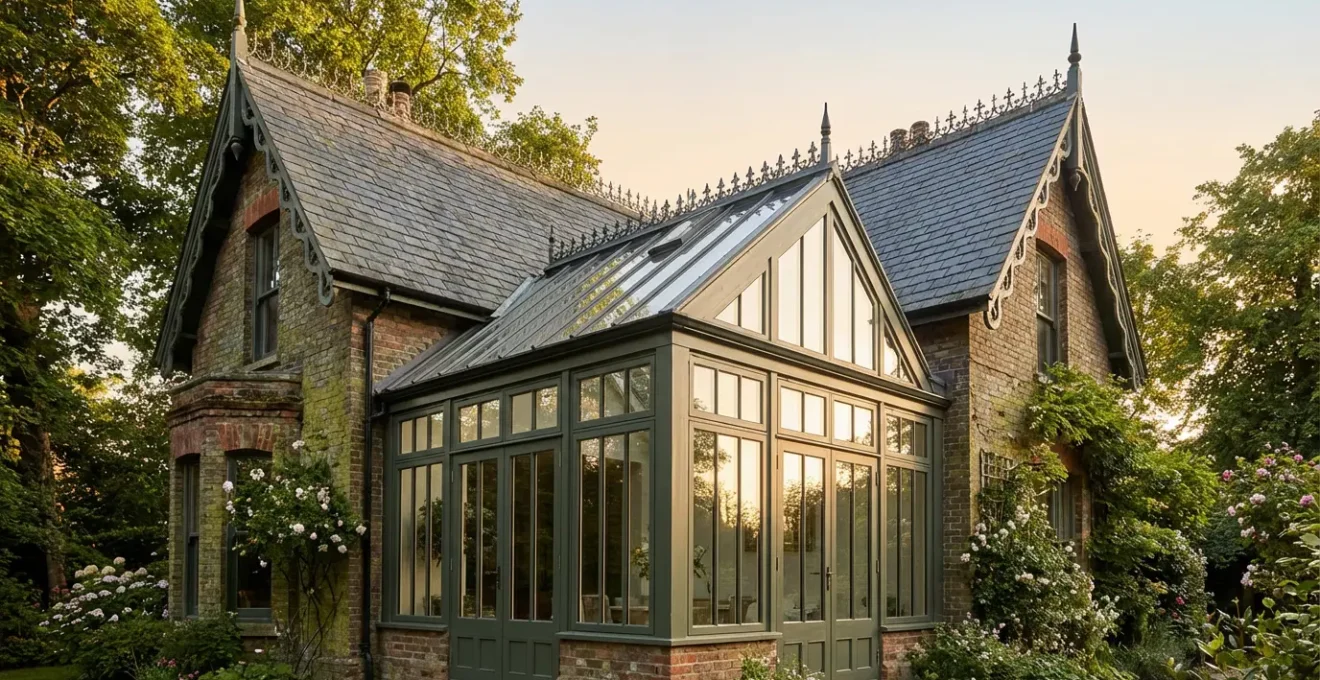
Ultimately, a Victorian conservatory succeeds when it marries modern performance—using the same advanced glazing and ventilation techniques discussed—with a deep respect for historical aesthetics. It becomes a bridge between past and present, adding functional, light-filled space without compromising the home’s character.
How to Set Up Automatic Vents to Prevent Overheating at Noon?
Even with the best glazing, a south-facing sunroom will experience some solar gain. The key to managing this is effective ventilation, which creates airflow to exhaust hot, stale air and draw in cooler, fresh air. Relying on manually opening windows is inefficient and unreliable. An automated ventilation system is a core component of a high-performance sunroom’s climate control system.
The principle is simple: hot air rises. Vents placed high up on the roof or near the ceiling allow the hottest air to escape, while lower vents allow cooler air to enter, creating a natural convection current known as the stack effect. Automating this process ensures the sunroom regulates its own temperature without constant human intervention. The two main technologies for this are passive wax cylinder vents and modern smart motorized systems.
Wax cylinder vents are a clever, non-electric solution. A cylinder filled with a special wax expands as it heats up, pushing a piston that opens the vent. As the air cools, the wax contracts, and a spring closes it. They are simple and reliable but have a slow response time and a fixed temperature threshold. Smart motorized vents, while more expensive, offer precise, programmable control. They can be linked to a thermostat and integrated with weather sensors to automatically close when it rains, providing a much more sophisticated level of control.
This comparative table, with data informed by specialists like Sunrooms by Brady, breaks down the key differences.
| Feature | Wax Cylinder Vents | Smart Motorized Vents |
|---|---|---|
| Response Time | 15-30 minutes lag | Immediate |
| Power Required | None (passive) | Electric/Solar |
| Temperature Control | Fixed threshold | Programmable |
| Rain Protection | Manual override only | Automatic sensor |
| Cost | $50-150 per vent | $300-600 per vent |
| Maintenance | Annual wax check | Software updates |
For a truly comfortable and responsive sunroom, a smart motorized system is the superior choice. It allows you to program a target temperature, ensuring vents open proactively before the room becomes uncomfortably hot. This active management is a critical part of the integrated system, working in concert with the high-performance glazing to maintain a stable interior climate.
Key Takeaways
- The comfort of a sunroom depends on engineering it as a system, not just a room with windows.
- The Solar Heat Gain Coefficient (SHGC) is the most critical glazing metric for preventing summer overheating, more so than U-Value.
- An integrated approach combining low-SHGC glass, automated ventilation, and proper HVAC sizing is the only way to ensure year-round usability.
How to Calculate the HVAC Tonnage Needed for a Highly Glazed Extension?
The final piece of the climate control puzzle is the active heating and cooling system. A common and costly mistake is to apply standard residential HVAC calculations to a sunroom. These calculations, typically based on a “Manual J” load analysis, assume a normal window-to-wall ratio of 15-20%. A sunroom can easily exceed 75% glazing, rendering a standard calculation completely inaccurate and leading to an undersized—or inefficiently oversized—HVAC unit.
A specialized Manual J calculation for a highly glazed extension is required. This analysis must move beyond simple square footage and heavily factor in the specific performance of the building envelope. The two most important non-standard inputs are the exact SHGC of the chosen glazing and the orientation of each glass wall. For instance, windows with 0.30 SHGC rating allow 30% of solar heat to be transmitted, a massive heat load that must be precisely accounted for in the cooling calculation.
Another advanced concept that a specialist will incorporate is thermal mass. This refers to the ability of materials like a concrete slab or tile floor to absorb and store heat. A floor with high thermal mass can absorb solar heat during the day and slowly release it in the evening. As noted in a detailed guide from Energy.gov, this effect can shift the peak cooling load by 2-3 hours and potentially reduce the required HVAC tonnage by up to 20%, as the system doesn’t have to fight the sun’s heat in real-time.

The image above captures this dynamic at a micro level, showing how a material’s texture and color influence its ability to absorb thermal energy. A dark, dense tile will have a much greater impact on managing heat loads than a light-colored carpet. Ignoring these factors—glazing performance, orientation, and thermal mass—is a guarantee for an uncomfortable room and high energy bills. Insisting on a proper Manual J calculation from your HVAC contractor is non-negotiable.
By approaching your sunroom as a complete, integrated system—from the molecular coating on the glass to the thermodynamic properties of your floor—you move from hoping for comfort to engineering it. This technical, front-loaded approach is the only reliable path to creating a beautiful and functional south-facing extension that you can truly enjoy every day of the year. For a personalized analysis of your project, consulting with a firm specializing in glazed structures is the logical next step.