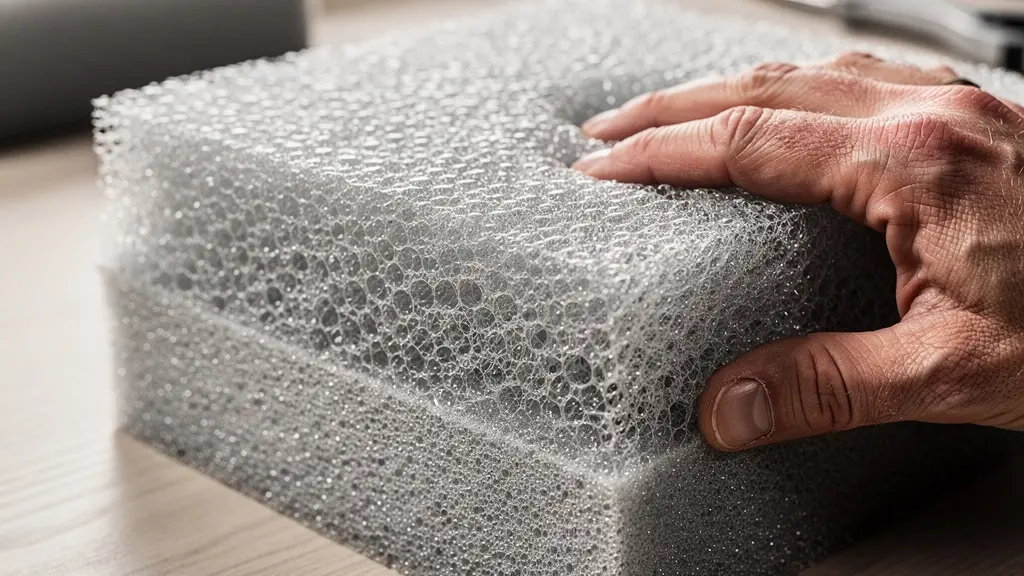
Sofa sagging isn’t bad luck; it’s predictable material failure driven by low-density foam, which often collapses around the two-year mark.
- The most critical factor for a sofa’s lifespan is its foam density (measured in kg/m³ or PCF), not its initial firmness.
- High-density (HD) and High-Resilience (HR) foams provide the structural support needed to resist compression and last for a decade or more.
Recommendation: Before buying any sofa, ignore comfort-based marketing and demand the foam’s technical density specification. Aim for a minimum of 2.0 PCF (32 kg/m³) for cushions that will see daily use.
The experience is frustratingly common for buyers of upholstered furniture. You invest in a new sofa that feels perfect in the showroom, only to watch it develop noticeable dips and sags within a couple of years. The cushions lose their shape, the support vanishes, and what was once a comfortable centerpiece becomes a source of daily disappointment. Many assume this is an unavoidable part of a sofa’s life or that the key was choosing a “firmer” model. This is where most purchasing decisions go wrong.
From a material engineering perspective, premature sagging is not a mystery—it’s a calculated outcome of using inadequate materials. The furniture industry often prioritizes initial showroom “feel” over long-term structural integrity. The secret to avoiding this two-year failure point lies not in how firm the foam feels initially, but in its underlying physical properties. The true measure of a cushion’s ability to resist long-term collapse is its density, a metric that quantifies the amount of material packed into a given volume.
This guide moves beyond generic advice. We will dissect the material science behind foam durability. Instead of telling you what feels good, we will explain why certain materials fail and others endure. You will learn to think like a foam engineer, understanding the critical difference between density and firmness, how to perform a simple physical test to judge quality, and what to look for in different foam types like memory foam and latex. By the end, you won’t just be choosing a sofa; you’ll be making an informed investment in a piece of furniture built to withstand years of use.
This article breaks down the essential technical knowledge needed to select a durable sofa. The following sections will guide you through the key concepts and practical tests to ensure your next furniture purchase is a lasting one.
Summary: How to Choose the Right Foam Density to Avoid Sofa Sagging After 2 Years?
- Why Density (kg/m³) Matters More Than Firmness for Durability?
- How to Perform the “Push Back” Test to Judge Foam Quality?
- Memory Foam vs Latex: Which sleeps Cooler for Sofa Beds?
- The Heat Trap Problem with Low-Quality Memory Foam in Summer
- When Will My New Stiff Sofa Finally Soften Up?
- The “Hammocking” Effect That Destroys Lumbar Support in Old Sofas
- Why Wool Springs Back After Furniture Compression Unlike Synthetics?
- How to Position a Sectional Sofa Without Blocking Room Flow?
Why Density (kg/m³) Matters More Than Firmness for Durability?
In the world of foam engineering, density and firmness are two fundamentally different properties. Firmness, often measured by Indentation Load Deflection (ILD), describes how much force is needed to compress the foam. It’s a measure of comfort and initial feel. Density, measured in pounds per cubic foot (PCF) or kilograms per cubic meter (kg/m³), is the mass of the foam material per unit of volume. This is the single most important indicator of a foam’s durability and ability to resist long-term compression.
A low-density foam can be made to feel very firm initially, but its cellular structure is sparse. Think of it like a bridge built with insufficient steel. Under repeated stress (i.e., you sitting on it), the cell walls break down, and the foam loses its ability to bounce back. This is what causes sagging. High-density foam, conversely, has more material and a more robust cellular structure, allowing it to withstand years of compression without significant loss of height or support.
The difference in lifespan is stark. According to furniture industry research, standard 1.8 PCF foam, common in mid-to-low-priced furniture, may only last 3 to 5 years before showing significant sagging. In contrast, a higher quality 2.4 PCF foam can easily last for 10 years or more under the same conditions. This is why a sofa that feels great in the store can fail so quickly; its low-density foam was designed for initial feel, not for enduring performance.
Checklist: How to Vet Sofa Foam Before You Buy
- Demand the Density Rating: Ask the salesperson for the foam’s density in PCF or kg/m³. A rating of 1.8 PCF is a common point where cushions begin losing their shape within a year. Aim for 2.0 PCF or higher.
- Verify Core Thickness: For a given density, thickness matters. A 4-inch core with 1.8 PCF foam may fail in under 2 years, whereas a thicker 5-inch core can extend that to 3-5 years.
- Assess Cushion Weight: If specs aren’t available, pick up a cushion. A heavier cushion is a strong indicator of higher density and a longer potential lifespan.
- Look for the “HR” Designation: High Resilience (HR) foam is a premium grade with a higher support factor and quicker recovery. If a sofa uses HR foam, it’s a mark of quality.
- Calculate an Expected Lifespan: As a rough guide, you can multiply the density rating (e.g., 1.8 PCF) by 2-3 to estimate the number of years of average use before significant sagging occurs.
How to Perform the “Push Back” Test to Judge Foam Quality?
While density specifications are the most reliable metric, you can perform a simple physical test in the showroom to gauge foam quality. This is the “Push Back” test, which evaluates the foam’s resilience or its ability to return to its original shape after compression. High-quality foam exhibits a strong, fast rebound, while low-quality foam recovers slowly and weakly.
To perform the test, press your hand firmly into the center of a cushion, pushing down as far as you can, and then release it quickly. Observe how the foam reacts. High-Resilience (HR) foam will spring back almost immediately, filling the impression your hand made with noticeable force. You can almost feel it pushing your hand back out. This rapid recovery indicates a strong, interconnected cellular structure. In contrast, low-density foam will be slow to recover. The indentation will linger for a few moments, and the return to form will feel sluggish and weak. This “hysteresis lag” is a red flag, signaling that the foam will be prone to developing permanent body impressions and sagging.
This test reveals the foam’s “support factor”—its ability to continue supporting weight as it’s compressed further. A good cushion shouldn’t just be soft on the surface; it should feel progressively firmer as you push deeper. It’s also important to remember that the same foam will feel different depending on its use. As foam experts note, a 6-inch seat cushion needs an ILD of 30-35 for comfortable sitting, but when you lie down, your weight is distributed more widely, requiring less firmness for the same level of comfort. A quality sofa accounts for these different uses in its design.
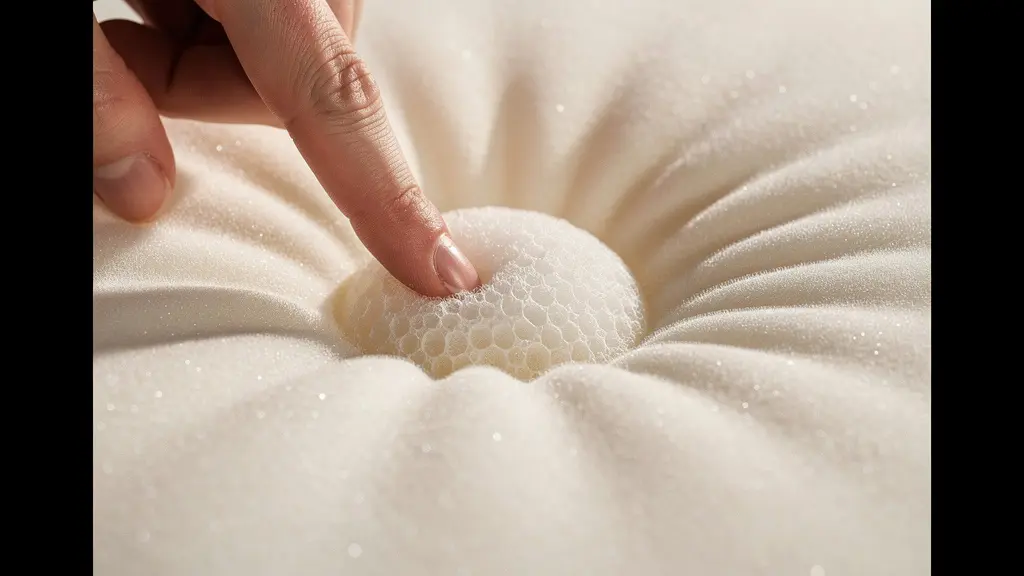
The visual and tactile feedback from this test provides a tangible clue to the foam’s underlying quality. A quick, forceful rebound is a sign of a durable cellular structure, one that is built to withstand the repeated cycles of compression and release that define the life of a sofa cushion.
Memory Foam vs Latex: Which sleeps Cooler for Sofa Beds?
When a sectional or sofa doubles as a bed, the thermal properties of the foam become a critical factor for comfort. The choice between memory foam and latex is not just about feel; it’s about temperature regulation. Traditional memory foam is notorious for trapping body heat, which can lead to an uncomfortably warm and sweaty night’s sleep, especially for hot sleepers or during warmer months. This is due to its dense, closed-cell structure, which restricts airflow.
Latex foam, on the other hand, is naturally more breathable. Its open-cell structure allows for continuous air circulation, which helps dissipate body heat and moisture away from the sleeping surface. This makes latex a far superior choice for those who prioritize a cool sleeping environment. While memory foam offers excellent pressure relief by contouring to the body, this same property reduces air exposure around the skin, exacerbating the heat issue.
In response to this problem, manufacturers have developed gel-infused memory foam. These products incorporate tiny gel beads or swirls into the foam matrix, designed to absorb and draw heat away from the body. While an improvement, its effectiveness can be limited. Some studies on cooling mattress technology show that gel-infused foam can reduce surface temperature by 2-5 degrees Fahrenheit, but it may not match the inherent breathability of latex over an entire night. For a direct comparison, this analysis from sleep experts provides a clear overview.
| Feature | Memory Foam | Latex Foam | Gel-Infused Memory Foam |
|---|---|---|---|
| Heat Retention | High – traps body heat | Low – naturally breathable | Medium – reduces heat by 2-5°F |
| Air Flow | Limited – dense structure | Excellent – open cell structure | Improved with ventilation |
| Temperature Rating | Fair to Good | Very Good to Excellent | Fair to Very Good |
As demonstrated by a recent comparative analysis of mattress materials, latex foam consistently outperforms traditional and even gel-infused memory foams in terms of heat dissipation and airflow, making it the clear winner for a cool night’s sleep on a sofa bed.
The Heat Trap Problem with Low-Quality Memory Foam in Summer
The “heat trap” effect is a well-documented issue with viscoelastic polyurethane foam, more commonly known as memory foam. Its unique ability to conform to the body’s shape, which provides excellent pressure relief, is also its primary thermal drawback. By molding closely to the user, the foam significantly reduces the surface area of the skin exposed to the air, hindering the body’s natural cooling process. This is compounded by the material’s inherent low breathability. The result is a build-up of heat that can make sleeping or even just lounging on a memory foam sofa intensely uncomfortable, particularly in the summer or in warmer climates.
Low-quality memory foam exacerbates this problem. Cheaper formulations often have a denser, less-refined cellular structure that further restricts airflow, effectively turning the cushion into an insulator. While advancements like gel infusions and open-cell designs have been made to mitigate this, they are typically found in higher-end products. As the Wolf Mattress Research Team notes in their analysis of sleep technology:
Memory foam has a tendency to trap body heat, leading to uncomfortable sleep on warmer nights. Cooling gel foam incorporates tiny gel beads to absorb body heat and disperse it, allowing for a cooler sleeping surface throughout the night.
– Wolf Mattress Research Team, Wolf Mattress Sleep Technology Analysis
If you own a memory foam sofa or are considering one, there are several proactive measures you can take to counteract its heat-retaining properties. These strategies focus on improving breathability at the surface and controlling the ambient room temperature.
- Choose bedding materials known for their breathability, such as cotton, linen, silk, or bamboo, and avoid synthetic fabrics like polyester.
- Add a dedicated cooling mattress topper designed to promote airflow and regulate temperature.
- Maintain an optimal bedroom temperature, ideally around 65°F (18°C), to create a conducive sleep environment.
- Use moisture-wicking mattress protectors or covers made from materials like Tencel or bamboo viscose.
- For extreme heat, consider placing a frozen cool pack wrapped in a towel under your pillow or near your feet.
- Reduce ambient heat in the room by turning off electronics and lights well before bedtime.
When Will My New Stiff Sofa Finally Soften Up?
It’s a common question after a new sofa is delivered: the cushions feel much firmer than the floor model in the showroom. This initial stiffness is normal, especially with high-quality, high-density foam. The foam needs a “break-in” period, during which the cell structure settles and becomes slightly more pliable. The showroom model has been sat on by hundreds of people, effectively accelerating this process. Your new sofa just needs time and use to reach its intended level of comfort.
The duration of this break-in period depends entirely on the foam’s quality and type. For standard foams, this process can take anywhere from a few weeks to a couple of months of regular use. You can speed it up by sitting on all the cushions evenly, walking or crawling on them, or even having kids play on the sofa. Rotating and flipping the cushions regularly is also crucial to ensure they wear in uniformly.
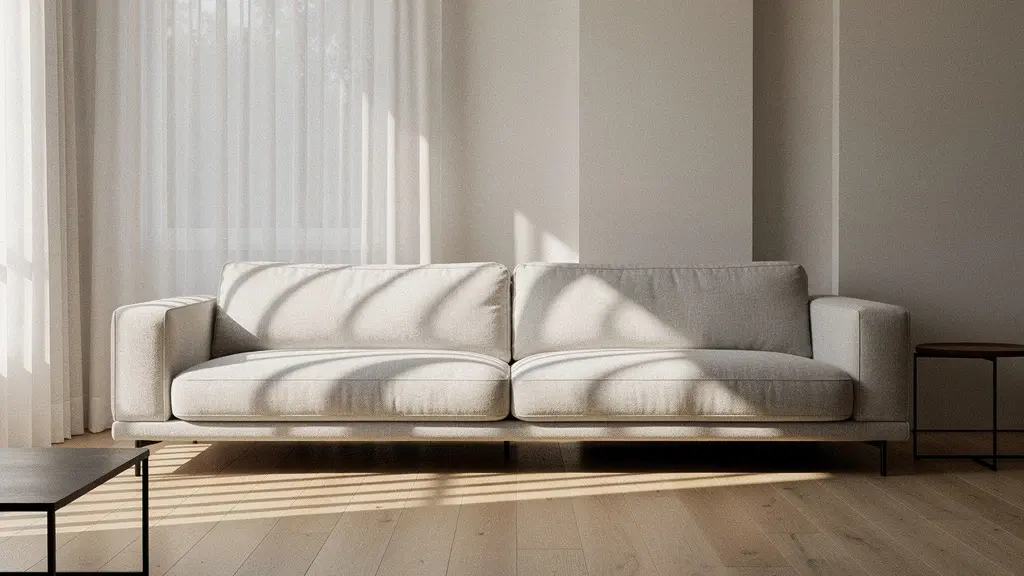
However, if your sofa is made with High-Resilience (HR) foam, the experience will be different. HR foam is defined by having a density of at least 2.5 PCF and a high “support factor,” meaning it returns to its original shape much faster than conventional foams. While it will still have a brief break-in period, it’s designed to maintain its shape and firmness for a much longer time. The initial stiffness is a sign of its durability. Unlike lower-density foams that soften and then quickly proceed to sag, HR foam softens to a comfortable baseline and then holds that state for years. The goal isn’t to make it mushy; it’s to break it in to its optimal state of supportive comfort.
So, while the initial firmness might be surprising, it’s often a positive sign of a durable, well-constructed piece of furniture. Patience is key; with regular use, the foam will adapt and settle into the comfortable yet supportive seat you expected.
The “Hammocking” Effect That Destroys Lumbar Support in Old Sofas
The “hammocking” effect is the catastrophic failure of a sofa’s support system, where the center of the seating area sinks dramatically, creating a deep trough. This is more than just sagging cushions; it’s a structural collapse that renders the sofa uncomfortable and detrimental to posture, completely eliminating crucial lumbar support. When you sit in a hammocked sofa, your spine is forced into a C-shaped curve, putting strain on your lower back and often leading to pain and discomfort.
Hammocking can be caused by two primary failures. The first is the complete breakdown of low-density foam cushions, which have lost all their ability to resist compression. The second, and often more severe, cause is the failure of the underlying support system—the springs or webbing beneath the cushions. Sinuous springs can stretch and break, while webbing can lose its elasticity or detach from the frame. In sofas longer than 7 feet, the absence of a center support leg is a common design flaw that puts immense stress on the middle of the frame, accelerating this collapse.
To diagnose hammocking, you can perform a few simple checks:
- Perform a Visual and Tactile Check: Remove the seat cushions and press firmly on the sofa deck. If there is significant give or you feel broken springs, the support system has failed.
- Use the Yardstick Test: Place a yardstick or other straight edge across the top of a cushion. If there is a significant gap between the center of the cushion and the yardstick, the foam has developed a permanent hammock.
- Assess Cushion Shape: Quality cushions are often made with a slight “crown,” meaning the center is slightly higher than the edges. This convex shape is designed to combat sagging. If your cushions are concave, they are failing.
- Ensure Even Wear: To prevent uneven breakdown, it’s critical to rotate and flip your cushions weekly for the first three months of ownership and monthly thereafter.
This failure highlights the advantage of more robust support systems. For instance, furniture durability testing shows that some pocketed coil cushions, like those used by IKEA, can maintain their comfort and support for up to 10 years, which can be twice as long as sofas using standard 1.8 density foam.
Why Wool Springs Back After Furniture Compression Unlike Synthetics?
While polyurethane foams dominate the furniture market, natural fibers like wool offer unique properties of resilience that synthetic materials struggle to replicate. The secret to wool’s remarkable ability to spring back after compression lies in its microscopic structure. Each wool fiber has a natural, three-dimensional crimp—a helical spring-like shape—that gives it inherent elasticity. When compressed, these fibers bend and flex; when the pressure is released, they naturally recoil to their original form. This “memory” is built into the fiber itself.
Synthetic fibers, like polyester fill (often used in cheaper back cushions), lack this complex internal structure. They are typically smooth, straight filaments. Under compression, they simply flatten and mat together. Over time, they lose their loft and ability to recover, leading to cushions that look perpetually deflated and lumpy. Wool, by contrast, can be compressed repeatedly while retaining its volume and supportive qualities for a much longer period.
This is why high-end furniture manufacturers often use wool or down-and-feather blends as a wrap around a high-density foam core. This hybrid approach offers the best of both worlds: the firm, durable support of the foam core and the soft, resilient, and luxurious feel of the natural fiber wrap. Some premium furniture makers even use innovative synthetic fills designed to mimic the properties of down, combining them with a foam core for a balance of comfort and durability. The goal is always to create a system where different materials work together to resist material fatigue.
This principle of superior resilience extends to the foam itself. As noted in upholstery durability testing, higher-grade foams exhibit much greater longevity. For example, 2.5+ PCF foam typically lasts 5-10+ years, while top-tier HR foam with a density of 3.0 PCF or more can last well over a decade with proper care. These materials have the robust cellular structure necessary to “spring back” effectively, much like a natural wool fiber.
Key Takeaways
- Density is Durability: The single most important factor for a sofa’s lifespan is its foam density (PCF or kg/m³), not its initial firmness. Aim for 2.0 PCF or higher for daily-use cushions.
- Perform the “Push Back” Test: A quick, forceful rebound after pressing into a cushion signals high-quality, resilient foam. A slow, sluggish recovery is a major red flag for premature sagging.
- Heat is Foam’s Enemy: For sofa beds or warm climates, latex foam’s natural breathability makes it a much cooler sleeping option than traditional memory foam, which traps body heat.
How to Position a Sectional Sofa Without Blocking Room Flow?
Positioning a large piece of furniture like a sectional sofa is a challenge of balancing comfort with functionality. The primary goal is to arrange it in a way that anchors the room without obstructing the natural pathways people use to move through the space. From an engineering standpoint, this is about optimizing for “traffic flow.” Before placing the sofa, identify the main traffic lanes: the paths from doorways to other rooms, to windows, or to other key areas. A sectional should never cut across these primary lanes.
One of the most effective ways to position a sectional is to use it to define a “zone” within a larger open-plan space. By placing one side of the sectional with its back to an adjacent area (like a dining room), you create a clear, psychological boundary that defines the living room area. This is often called “floating” the sofa. When doing this, ensure there is a wide enough walkway (at least 30-36 inches or 75-90 cm) behind it to allow for comfortable passage. Placing a slim console table behind the floated sofa can soften this boundary and provide a surface for lamps or decor.
Another strategy is to tuck the sectional into a corner. This is the most space-efficient layout and naturally opens up the rest of the room. This works especially well in smaller living rooms. The key is to pull it out from the walls by a few inches. This small gap prevents the room from feeling cramped and gives curtains or blinds space to hang freely. It also creates a more intentional, designed look than pushing furniture directly against the wall.
Finally, consider the room’s focal point. This could be a fireplace, a television, or a large window with a view. The sectional should be oriented to face this focal point, creating a natural and inviting seating arrangement. If the TV is the focal point, ensure the viewing distance is comfortable. If it’s a fireplace, the sectional can create a cozy, conversational grouping around it. The goal is to make the room’s layout feel intuitive and effortless, where the largest piece of furniture enables, rather than hinders, the room’s natural flow.
Armed with a technical understanding of material science, you are no longer a passive buyer but an informed investor. Demand the specifications, perform the tests, and choose furniture engineered for longevity. Your back—and your wallet—will thank you for years to come.