Garden and Exterior
Your outdoor space represents far more than a decorative boundary around your home. It functions as an extension of your living area, a significant factor in property valuation, and a critical element affecting your home’s structural integrity. Whether you’re working with a sprawling suburban lot or a compact urban courtyard, thoughtful garden and exterior design transforms underutilized ground into a dynamic environment that enhances daily life while protecting your investment.
Creating successful outdoor spaces requires balancing multiple priorities: aesthetic appeal, functional utility, environmental sustainability, and long-term durability. This comprehensive exploration examines the fundamental elements that comprise well-designed gardens and exteriors, from strategic landscape planning that increases property value to practical considerations like drainage integration, outdoor living platforms, water features, and illumination strategies that make spaces usable from dawn to dusk.
Strategic Landscape Planning for Long-Term Value
The foundation of any successful garden begins with strategic planning that considers both immediate visual impact and long-term return on investment. Unlike interior renovations that can be easily modified, landscape decisions often involve elements that will remain in place for decades, making initial planning critically important.
Hardscaping vs Softscaping Investment
Understanding the financial implications of hardscaping (permanent structures like patios, walls, and pathways) versus softscaping (plants, soil, and organic elements) helps prioritize spending effectively. Hardscaping typically delivers immediate visual transformation and requires substantial upfront investment—think of it as the structural skeleton of your outdoor space. A well-executed stone patio might cost three to five times more than establishing a perennial border, but it provides permanent functionality and appeals broadly to future buyers.
Softscaping, conversely, offers flexibility and evolves over time. A carefully selected tree costing a modest amount today can become a magnificent focal point within a decade, dramatically increasing its contribution to property value. The optimal approach combines both elements strategically: invest in hardscaping for high-traffic areas and primary sight lines, then use softscaping to soften edges, provide seasonal interest, and fill gaps cost-effectively.
Foundation Protection and Drainage Integration
One of the most critical yet frequently overlooked aspects of landscape planning involves protecting your home’s foundation from moisture damage and aggressive root systems. Water must move away from structures efficiently, which requires integrating drainage solutions seamlessly into the overall design rather than treating them as afterthoughts.
Proper drainage integration involves several key strategies:
- Grading landscapes to direct water away from foundations with a minimum slope of 2-3% within the first ten feet
- Installing French drains or channel systems where surface grading alone proves insufficient
- Positioning downspout discharge points at least five feet from foundation walls
- Creating rain gardens or dry creek beds that transform drainage necessities into attractive design features
Root damage prevention requires equal attention. Trees like willows, poplars, and some maples develop aggressive root systems that can compromise foundations, sewer lines, and hardscaping. Maintain planting distances equal to the mature canopy spread for large trees, and consider installing root barriers when planting near structures.
Plant Selection for Minimal Maintenance
Selecting plants that thrive in your specific conditions without constant intervention represents perhaps the single most effective strategy for long-term landscape success. The concept centers on right plant, right place—matching botanical requirements to existing site conditions rather than constantly fighting nature.
Begin by honestly assessing your site’s sun exposure, soil type, moisture levels, and hardiness zone. A shade-loving hosta will never perform satisfactorily in full sun, regardless of how much you water it. Similarly, plants adapted to dry conditions will languish in poorly drained soil. Native and regionally adapted plants typically require less water, fewer pesticides, and minimal fertilization once established, making them excellent foundational choices that reduce ongoing labor and resource inputs.
Seamless Indoor-Outdoor Transitions
The threshold between interior and exterior spaces deserves careful attention, as this transitional zone significantly impacts how frequently and comfortably you’ll actually use outdoor areas. Creating genuine indoor-outdoor flow requires addressing practical challenges while maintaining aesthetic continuity.
Continuous flooring materials that extend from inside to outside create powerful visual connections that make spaces feel larger. When interior tile, concrete, or wood-look materials continue onto a patio with minimal interruption, the eye reads the space as unified rather than separated. This doesn’t necessarily mean identical materials—a polished interior porcelain tile might transition to a textured exterior version in the same color palette, maintaining visual consistency while providing necessary slip resistance.
Recessed drainage channels installed at thresholds handle the critical function of preventing water infiltration without creating trip hazards. These linear drains sit flush with the finished floor surface, intercepting water before it reaches door openings. They’re particularly essential when outdoor paving sits level with interior floors, a design choice that maximizes accessibility but eliminates the traditional step-down that typically keeps water out.
Material selection for transition zones must address multiple performance requirements simultaneously. Anti-slip surfaces become non-negotiable in areas exposed to weather, yet they must complement interior aesthetics. Thermal bridging—the transfer of heat or cold through materials—requires attention in climate-controlled homes. Metal thresholds, for instance, can transmit significant cold during winter, creating condensation and discomfort. Insulated threshold systems or thermally broken materials solve this technical challenge while maintaining clean visual lines.
Outdoor Living Spaces: Patios and Decking
Dedicated outdoor living platforms transform gardens from spaces you look at into spaces you actively inhabit. Whether constructed from stone, concrete, composite materials, or traditional wood, these structures require careful planning to deliver both immediate functionality and long-term durability.
Patio Design Fundamentals
Successful patio design begins with understanding how orientation impacts usage patterns. A west-facing patio bathes in afternoon and evening sun—ideal for dinner entertaining but potentially uncomfortable during summer without adequate shade provisions. East-facing orientations capture gentle morning light perfect for breakfast settings but may sit in shadow during prime evening hours. South-facing spaces receive maximum sun exposure, excellent for cooler climates but requiring robust shade solutions in warmer regions.
Sizing deserves equal attention. A common mistake involves creating platforms that appear adequate on paper but feel cramped once furniture is arranged. A dining table seating six requires roughly 100-120 square feet once you account for chair pullout space and circulation. Add a separate seating area, and total requirements quickly expand to 250-300 square feet for comfortable, functional layouts. Planning for integrated utilities—electrical outlets for lighting and entertainment, gas lines for grills or fire features, and water access for cleaning—during construction avoids expensive retrofitting later.
Foundation preparation determines long-term stability. Proper installation follows this sequence:
- Excavate to appropriate depth (typically 6-8 inches for pedestrian patios)
- Install landscape fabric to prevent weed growth and base migration
- Add compacted gravel base in lifts, ensuring thorough compaction between layers
- Apply leveling sand or screenings as a setting bed
- Install pavers or stone with appropriate edge restraint systems
Skipping steps or inadequate compaction leads to settling, unevenness, and premature failure regardless of surface material quality.
Building Durable Decking Platforms
Elevated decking platforms create outdoor living spaces where terrain, drainage, or architectural style make ground-level patios impractical. Modern decking divides into natural wood and composite categories, each offering distinct advantages. Traditional wood delivers authentic aesthetics and initial cost savings but requires regular maintenance including cleaning, staining, and eventual board replacement. Composite materials manufactured from wood fiber and plastic polymers resist rot, insects, and weathering while eliminating staining requirements, though they carry higher upfront costs.
The hidden structure beneath visible decking boards determines longevity. Joist rot represents the primary failure mode in deck systems, occurring when moisture becomes trapped against wood framing. Prevention strategies include using pressure-treated or naturally rot-resistant lumber for all structural elements, installing flashing tape over joists before fastening deck boards, ensuring adequate ventilation beneath the platform, and maintaining proper drainage away from support posts.
Hidden fastener systems create clean surfaces without exposed screw heads while allowing individual board expansion and contraction. Though they add installation time, the refined aesthetic and reduced moisture penetration points justify the extra effort for premium installations.
Garden Design Elements and Focal Points
While functional platforms and proper drainage provide essential infrastructure, the elements that make gardens truly memorable involve thoughtful design layers that create visual interest, provide comfort, and guide attention through composed sequences.
Island Beds and Layered Planting
Breaking up expansive lawn areas with strategically placed island beds transforms monotonous green carpets into dynamic landscapes with defined rooms and visual destinations. These freestanding planting areas viewed from all sides require different compositional approaches than traditional border plantings backed by walls or fences.
Successful island design employs layering principles: taller elements positioned near the center graduate down to lower plants at the edges, ensuring visibility from all viewing angles. This creates the three-dimensional quality that makes plantings interesting. Establishing new beds in existing turf involves removing sod, amending soil, and installing edging before planting. Timing this process for early fall allows roots to establish before winter stress, positioning plants for vigorous spring growth.
Irrigation presents unique challenges for isolated beds surrounded by lawn. Extended drip lines or dedicated irrigation zones ensure adequate moisture without overwatering surrounding turf, which typically requires less frequent watering than garden beds once established.
Shade Structures for Comfort and Health
As awareness of UV exposure risks has increased, providing adequate shade has evolved from aesthetic preference to health imperative. Designated shade areas make outdoor spaces usable during peak daylight hours while protecting occupants from harmful radiation that contributes to skin damage and increases skin cancer risk.
Effective shade planning begins with mapping sun patterns across your site. The sun’s angle changes dramatically between seasons—a location shaded by a nearby structure in winter might receive full exposure during summer when the sun tracks higher across the sky. Simple observation at different times of day and seasons, or using digital sun-path tools, reveals these patterns and informs shade structure placement.
Shade solutions divide into static and dynamic categories. Static options—pergolas, arbors, fixed awnings—provide permanent coverage but can’t adapt to changing conditions. Dynamic solutions including retractable awnings, shade sails, and movable umbrellas offer flexibility but require active management. Combining both approaches often works best: permanent structures define spaces and support climbing plants, supplemented by adjustable elements that fine-tune coverage as needed.
Specimen Trees as Focal Points
Few landscape elements deliver the dramatic impact of properly selected and positioned specimen trees. Unlike mass plantings chosen primarily for screening or filling space, specimen trees function as living sculpture—individual plants selected for outstanding characteristics that command attention and anchor compositions.
The visual impact of branching structure becomes particularly important. Trees with distinctive forms—Japanese maples with layered horizontal branching, river birches with exfoliating multi-stem trunks, or fastigiate conifers with columnar silhouettes—maintain interest even during leafless winter months. Deciduous versus evergreen foliage persistence affects year-round presence; evergreens provide constant structure while deciduous specimens offer seasonal transformation.
Up-lighting techniques dramatically enhance specimen trees after dark, projecting branch shadows upward and creating nighttime focal points. Strategic pruning maintains desired forms and removes competing leaders or crossing branches that diminish visual clarity. Timing pruning correctly by species—late winter for most deciduous trees, after flowering for spring bloomers—ensures vigorous recovery and minimizes stress.
Water Features: From Fountains to Ecosystem Ponds
Water elements introduce movement, sound, and reflective qualities that transform garden character. Scale and complexity range from compact self-contained fountains suitable for small courtyards to elaborate ecosystem ponds that support aquatic and terrestrial wildlife.
Small water features offer acoustic masking benefits that make outdoor spaces more private and peaceful. The gentle sound of moving water effectively obscures traffic noise, neighboring conversations, and other urban intrusions without requiring high volume. Compact recirculating fountains accomplish this with minimal space requirements and straightforward installation. Concealing pumps and tubing within feature bases or planted areas maintains aesthetic focus on water movement rather than mechanical components.
Self-sustaining ecosystem ponds represent more ambitious projects that, when properly balanced, create nearly maintenance-free aquatic environments. Success depends on establishing equilibrium between fish waste (nutrients), beneficial bacteria, aquatic plants (which consume nutrients), and adequate filtration. Liner installation forms the waterproof foundation—EPDM rubber and reinforced polyethylene provide durability and flexibility to accommodate ground movement. Pond structure options include preformed rigid shells for smaller features or custom-shaped flexible liner installations for larger, more naturalistic designs.
Common challenges include algae blooms triggered by nutrient imbalances or excessive sunlight, and silent leaks that gradually lower water levels. Regular monitoring of water chemistry, appropriate fish stocking densities, and incorporating adequate plant coverage help prevent algae issues. Leak detection requires systematic checking of liner edges, plumbing connections, and waterfall structures. Winterization procedures in freezing climates include removing sensitive pumps, preventing complete ice-over with floating heaters or aerators, and protecting plumbing from freeze damage.
Landscape Lighting for Function and Atmosphere
Thoughtfully designed lighting extends outdoor space usability beyond daylight hours while enhancing security, safety, and nighttime aesthetics. Modern approaches increasingly emphasize solar-powered solutions and LED technology that minimize energy consumption and installation complexity.
Solar landscape lighting has evolved significantly from early underpowered novelties to genuinely functional systems. Success depends on understanding battery capacity metrics and realistic performance expectations. Quality solar fixtures store sufficient charge during daylight hours to operate through extended winter nights, but performance correlates directly with panel exposure. Positioning panels for maximum southern exposure (in northern hemisphere locations) free from tree shade ensures optimal charging. Activation mode options include dusk-to-dawn sensors, motion detection, or timer controls—each serving different functions from all-night ambient lighting to security-focused motion activation that conserves battery life.
Pathway lighting serves the critical safety function of guiding movement through gardens after dark while preventing trip hazards on steps, grade changes, and surface transitions. Lumen output requirements for pathway applications are surprisingly modest—excessive brightness creates harsh pools of light and dark that actually impair night vision. Low-level lighting (50-100 lumens per fixture) positioned every 8-10 feet along pathways provides adequate visibility without glare.
Color temperature selection impacts atmosphere significantly. Warm temperatures (2700-3000K) create inviting, intimate environments suited to entertainment areas, while cooler temperatures (4000K+) render colors more accurately but may feel clinical. Most landscape applications benefit from warm tones that complement foliage and hardscape materials naturally.
Installation methods vary by system type. Low-voltage systems offer safety advantages and easy DIY installation with simple soil anchoring stakes, though they require transformer placement and wire runs that need periodic checking for damage or connection corrosion. Solar fixtures eliminate wiring entirely but depend on individual panel exposure.
Accent lighting creates drama by highlighting specific features—up-lighting specimen trees, grazing textured walls, or backlighting translucent foliage. These techniques transform nighttime gardens into three-dimensional compositions quite different from their daytime character, revealing new perspectives and extending the value derived from landscape investments around the clock.
Creating successful gardens and exterior spaces involves coordinating multiple disciplines—from civil engineering considerations like drainage and structural foundations to horticultural knowledge of plant requirements, plus aesthetic sensibilities that compose elements into cohesive designs. While the breadth of knowledge required might seem daunting initially, approaching projects systematically and understanding how different elements interconnect allows you to make informed decisions that align with your specific priorities, whether emphasizing low maintenance, maximizing property value, creating entertainment venues, or simply crafting beautiful spaces that enhance daily life. Each element explored here offers opportunities for deeper investigation based on your unique site conditions and personal goals.
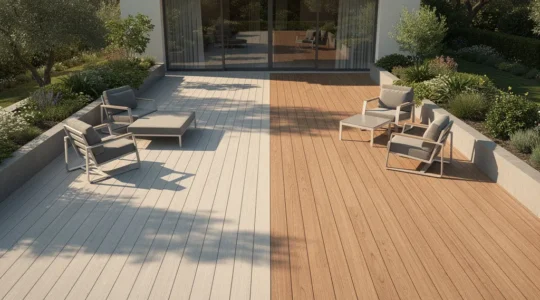
Composite vs. Hardwood Decking: What Really Defines ‘Maintenance-Free’ Over 10 Years?
The “maintenance-free” promise of a deck doesn’t come from the surface boards, but from the integrity of the entire decking system. Composite and hardwood both fail prematurely if the hidden components—substructure, fasteners, and water management—are neglected. A small investment in…
Read more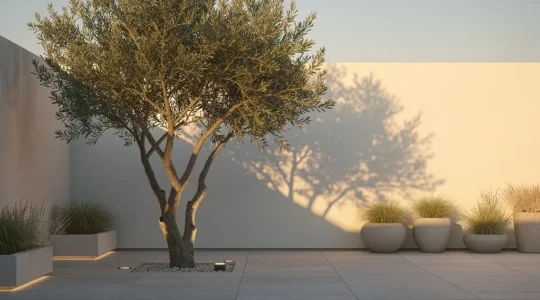
How to Select a Specimen Tree That Won’t Outgrow Your Courtyard?
The secret to a stunning courtyard specimen tree isn’t finding the perfect species, but treating it as long-term living architecture whose growth, light, and risks are managed from day one. A tree’s vertical presence is essential for making small, flat…
Read more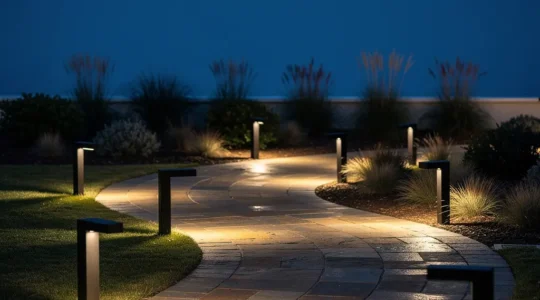
How to Space LED Bollards for Perfect, Glare-Free Pathway Illumination
Achieving perfect pathway lighting isn’t about following a generic ‘feet-apart’ rule. It’s a deliberate design process of layering light to sculpt a safe, intuitive, and beautiful journey. By mastering the principles of light pooling, lumen levels for safety, and strategic…
Read more
How to Choose Solar Lights That Actually Stay On All Night in Winter?
The number one reason solar lights fail in winter isn’t brightness, but the poor quality of their internal “engine”—the battery and charging system. Prioritise lights with Lithium Iron Phosphate (LiFePO4) batteries; they drastically outperform older NiMH technology in cold weather….
Read more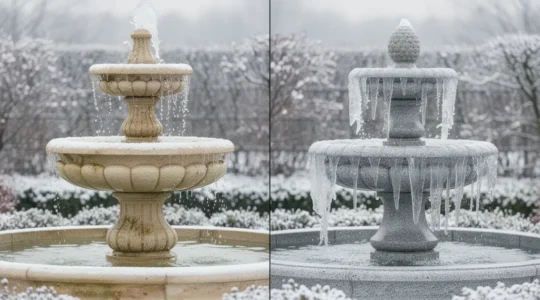
Cast Stone vs Natural Stone Fountains: Which Survives Freeze-Thaw Cycles Best?
The long-term survival of a stone fountain in freezing climates depends less on the choice between cast or natural stone and more on a complete structural system designed to manage water and pressure. A solid foundation is non-negotiable to counteract…
Read more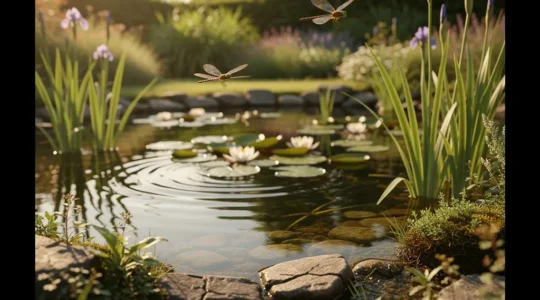
How to Build a Pond That Naturally Becomes a Dragonfly Sanctuary
The secret to a thriving dragonfly pond isn’t advanced pumps or crystal-clear water; it’s creating a self-sustaining, slightly ‘messy’ ecosystem that supports their entire life cycle. A balanced pond requires no pumps or filters, as these remove the microscopic life…
Read more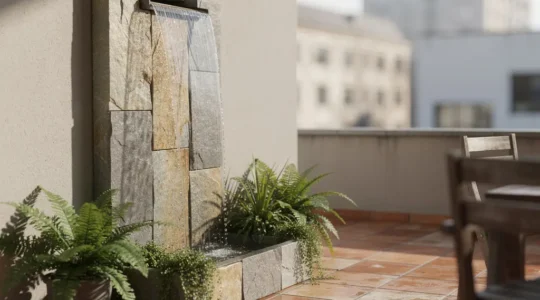
How to Integrate a Water Feature into a Small Patio Without Losing Space?
A well-chosen water feature does more than add charm; it actively reclaims your patio’s soundscape and visual space, making it feel larger and more serene. Focus on “acoustic masking” to dissolve urban noise, using multi-tiered designs for varied and effective…
Read more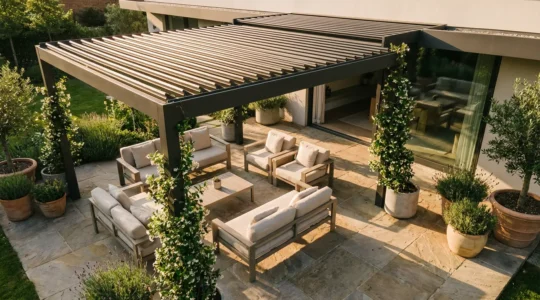
How to Create Effective Shade for South-Facing Gardens Without Blocking the View?
The common approach of adding umbrellas or fixed awnings to a south-facing garden is a strategic failure; it trades a clear view for inadequate, unreliable protection. Effective shade is not an add-on, but an engineered system that masters sun paths,…
Read more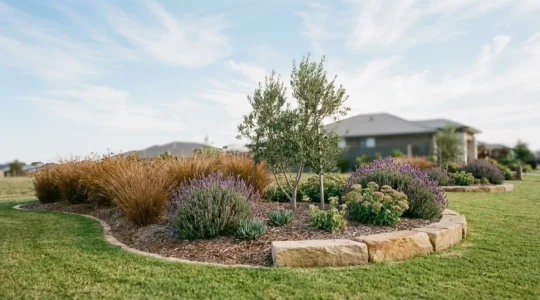
How to Design a Low-Maintenance Garden Island That Survives Summer Droughts?
A flat, thirsty lawn is a maintenance nightmare; a drought-proof garden island solves this, but only if designed as a self-sufficient ecosystem, not just a pile of rocks and tough plants. Focus on building deep, living soil from the start…
Read more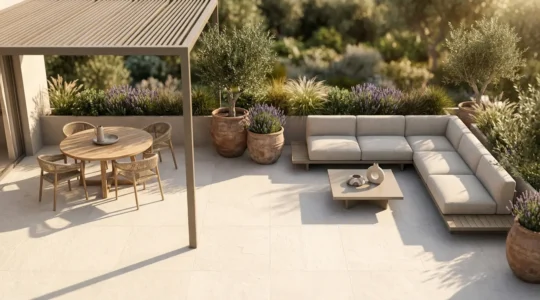
How to Engineer a 50m² Patio for Perfect Dining and Lounging Zones
A perfectly zoned patio is born from foundational engineering, not decorative afterthoughts. The success of your dining and lounging areas depends on invisible decisions about the sub-base, material heat-reflection, and ergonomic clearances. Planning for “invisible infrastructure” like electrical conduits and…
Read more