Blog
Glass extensions, conservatories, and sunrooms represent a unique intersection of architectural ambition and engineering challenge. These glazed structures transform living spaces by flooding interiors with natural light and creating seamless transitions between indoor and outdoor environments. Yet achieving year-round comfort, structural integrity, and long-term durability requires careful attention to thermal dynamics, construction methodology, and environmental control systems.
Whether you’re planning a new conservatory, retrofitting an existing glass structure, or simply seeking to understand why your sunroom feels too hot in summer and too cold in winter, this comprehensive resource will walk you through the fundamental technical considerations. From invisible thermal leaks to the physics of metal framing, from heritage property compliance to smart HVAC integration, we’ll explore the critical factors that separate mediocre glass extensions from exceptional ones.
Thermal Performance: The Foundation of Comfort
The greatest challenge facing any glass structure is thermal regulation. Unlike conventional walls with substantial insulation, glazed surfaces create a delicate balance between transparency and energy efficiency. Understanding how heat moves through these structures is essential for creating spaces that remain comfortable throughout the seasons.
Understanding Heat Loss in Glazed Structures
Heat escapes through glass extensions via three primary mechanisms: conduction through the materials themselves, convection through air movement, and radiation through transparent surfaces. A single-glazed conservatory can lose heat up to ten times faster than a well-insulated wall. This explains why early conservatories often became unusable during winter months despite enthusiastic summer use.
Modern performance is measured through U-values, which quantify how much heat passes through a given material. Lower numbers indicate better insulation. While a traditional brick wall might achieve U-values of 0.18-0.25 W/m²K, even high-performance triple glazing typically ranges from 0.6-0.8 W/m²K. This fundamental difference means glass structures require compensatory strategies throughout their design.
Insulation Materials and Techniques
Roof retrofits offer the most significant opportunity for thermal improvement in existing conservatories. Several materials compete for effectiveness:
- Multi-foil insulation: Lightweight and thin, ideal for preserving headroom, though requiring careful installation to avoid moisture trapping
- Rigid foam boards: Excellent thermal resistance with minimal thickness, but higher cost and potential compatibility issues with curved roof designs
- Spray foam: Creates seamless coverage and eliminates air gaps, though professional application is essential and future access becomes difficult
- Insulated panel systems: Purpose-built conservatory roof replacements that combine structural support with integrated insulation layers
The choice depends on your structure’s geometry, budget constraints, and whether you prioritize maintaining transparent sections for natural light. Many homeowners find that replacing at least 50% of a glazed roof with insulated panels dramatically improves comfort while preserving the airy feel that made the conservatory attractive initially.
Condensation Control and Humidity Balance
Post-insulation condensation represents an invisible threat that can undermine even the most carefully planned thermal upgrade. When warm, moisture-laden interior air contacts cold surfaces, water droplets form. In glass structures, this typically manifests on glazing units, aluminum frames, and inadequately insulated roof sections.
The risk intensifies after insulation improvements because the structure becomes more airtight, trapping humidity that previously escaped through ventilation gaps. Successful condensation management requires a three-pronged approach: adequate ventilation to remove moisture-laden air, thermal breaks to eliminate cold spots where condensation forms, and humidity control through proper heating strategies. A conservatory used for drying laundry or housing numerous plants will require substantially more ventilation than one used purely as a sitting room.
Structural Planning and Renovation Strategies
Adding or modifying a glass extension involves navigating structural requirements, regulatory frameworks, and the practical sequencing of multiple trades. These considerations become especially complex when working with existing architecture or heritage properties.
Heritage Properties and Regulatory Compliance
Modernizing conservatories on heritage properties demands balancing contemporary performance standards with aesthetic preservation. Many jurisdictions impose strict requirements on visible alterations to historically significant buildings, meaning that efficient modern glazing must often replicate the visual appearance of less efficient traditional designs.
Slim-profile double glazing, powder-coated aluminum finished to resemble traditional paint, and thermally broken frames that maintain period proportions have emerged as solutions. The permit process typically requires detailed drawings showing how new elements harmonize with existing architecture, along with material specifications demonstrating reversibility—the ability to restore original conditions if desired. Engaging with conservation officers early in the design process prevents costly redesigns after plans have been rejected.
Load-Bearing Walls and Safe Modifications
Creating openings for conservatory access frequently involves modifying load-bearing walls. This structural intervention requires careful engineering to redistribute the weight previously supported by the removed wall section. The process follows a critical sequence:
- Structural survey to identify load paths and bearing capacities
- Engineer-approved calculations for temporary support systems
- Installation of temporary supports before any wall removal
- Careful removal of masonry in manageable sections
- Installation of permanent support beam (steel, laminated timber, or concrete)
- Building inspector verification before removing temporary supports
The beam specification depends on the span width, the load from above (single-story versus multi-story), and the wall construction type. A seemingly modest 3-meter opening in a two-story home might require a substantial steel beam weighing over 100 kilograms, necessitating equipment access and multiple installers.
Material Compatibility and Trade Sequencing
Complex conservatory renovations involve multiple specialized trades whose work must occur in precise order. Mismatching materials—such as connecting aluminum frames directly to untreated timber, or using incompatible sealants between dissimilar substrates—creates failure points that may not manifest for months or years.
The correct sequence typically begins with groundwork and foundation preparation, followed by structural frame installation, then roofing and weatherproofing, and only afterward internal finishing trades like electricians and decorators. Attempting to accelerate by overlapping trades often creates rework when later specialists need access to areas already finished. A well-coordinated project timeline, with clearly defined handover points between trades, prevents conflicts and ensures each specialist can complete quality work without compromising others’ efforts.
Climate Control and Ventilation Solutions
Maintaining comfortable temperatures and fresh air in glass structures requires thoughtful integration of passive and active systems. The goal is creating year-round usability without excessive energy consumption.
Natural Ventilation Through Louver Technology
Adjustable louvers offer precision airflow control unavailable from simple opening windows. These angled slats can be positioned to capture breezes, deflect direct wind, or create controlled cross-ventilation. The aerodynamics of louver blade shape significantly affects performance—curved profiles generally move more air with less noise than flat blades, while the rotation range determines how completely the opening can be sealed when closed.
Placement matters enormously. Ridge-mounted louvers exploit natural convection as warm air rises, creating continuous passive airflow even without wind. Side-mounted units should be positioned considering prevailing wind directions to maximize natural ventilation potential. In winter, the ice formation risk requires selecting louvers with drainage channels and avoiding designs where water can pool and freeze the mechanism immobile.
HVAC Integration for Year-Round Use
Extending your existing home heating and cooling system into a conservatory seems logical but creates challenges. The glass structure’s dramatically different thermal characteristics mean it heats and cools far more rapidly than adjoining rooms. Simply adding radiators connected to your central heating typically results in the conservatory remaining cold while the main house overheats, because the system cycles based on the main thermostat’s location.
Effective solutions include dedicated zone controls with separate thermostats, or standalone units specifically sized for the conservatory’s unique heat loss calculations. Modern mini-split heat pumps excel in this application, offering both heating and cooling from a single system with energy efficiency far superior to electric resistance heating. The key is right-sizing: oversized units cycle on and off too frequently, creating temperature swings and humidity problems, while undersized units run continuously without achieving comfort.
Smart Automation and Energy Optimization
Intelligent controls transform conservatory climate management by responding to multiple variables simultaneously. A basic smart thermostat adjusts based on temperature alone, but advanced systems incorporate outdoor temperature, solar intensity, occupancy detection, and even weather forecasting to preemptively adjust settings.
For example, on a sunny winter day, a smart system might reduce heating input as solar gain warms the space naturally, then gradually increase heating as the sun sets to maintain consistent temperature. Similarly, motorized louvers can automatically open when indoor temperature exceeds a threshold, close when rain is detected, and adjust based on wind speed to prevent drafts. These coordinated responses maintain comfort while minimizing energy consumption, often achieving reductions of 20-30% compared to manual control approaches.
Weatherproofing: Ensuring Long-Term Protection
Water infiltration represents the most common failure mode in glass structures. Even minor leaks can cause progressive damage to frames, finishes, and structural elements, making absolute weatherproofing essential from initial construction.
Roof Sealing and Pitch Considerations
Conservatory roofs demand different waterproofing approaches than conventional pitched roofs. The shallower pitches often used in glass structures—sometimes as low as 10-15 degrees—reduce the gravitational force moving water off the surface, increasing the risk of water pondering and finding entry through joints.
Modern sealing technologies include structural silicone glazing that bonds glass directly to frames while remaining flexible enough to accommodate thermal expansion, EPDM rubber gaskets that compress to create watertight seals, and self-adhesive butyl tapes that conform to irregular surfaces. The optimal choice depends on the frame material, glass thickness, and expected movement from thermal cycling. Insufficient roof pitch cannot be fully compensated by better sealants—structures below minimum recommended pitches require alternative waterproofing strategies like standing-seam metal roofing or specialized low-slope glazing systems.
Gutter Systems and Water Management
Integrating conservatory gutters with existing home drainage requires careful planning. The conservatory roof often meets the house wall at a height where traditional gutters cannot be easily positioned, necessitating lead flashings, box gutters, or specialized secret gutter systems concealed within the structure.
Capacity calculations must account for the entire catchment area, including any house roof sections that drain across the conservatory. Undersized gutters overflow during heavy rain, potentially directing water into vulnerable junctions. Many jurisdictions require downpipes to connect to soakaways or stormwater systems rather than discharging onto paved areas, adding complexity to drainage planning. Regular maintenance—clearing debris from gutters and checking that downpipes flow freely—prevents the blockages that turn adequate systems into sources of leaks.
Leak Detection and Preventive Maintenance
Invisible thermal imaging cameras reveal moisture intrusion before visible damage appears, showing temperature differentials that indicate water presence. This technology proves invaluable for diagnosing mysterious leaks where water enters at one location but appears elsewhere, following structural members before becoming visible.
Preventive maintenance focuses on vulnerable points: sealant joints that degrade with UV exposure, requiring replacement every 10-15 years; glazing gaskets that compress and lose elasticity; and frame drainage channels that must remain clear to evacuate condensation and any water that bypasses primary seals. Establishing a maintenance schedule—annual inspections before winter, with more detailed five-year reviews—catches deterioration before it becomes expensive damage.
Construction Methods and Frame Technology
Modern manufacturing techniques and material science have transformed how glass structures are built, offering performance levels impossible in traditional site-built approaches.
Modular Construction Benefits
Factory-built conservatory modules arrive on site as complete wall sections or roof panels, requiring only assembly and sealing. This approach offers remarkable advantages: precision manufacturing in controlled conditions eliminates the weather-dependent variables of site construction, factory jigs ensure perfect squareness and alignment, and quality control catches defects before shipping rather than after installation.
The cost benefits stem from reduced labor hours and minimized weather delays. A conservatory that might require three weeks of site construction can often be assembled in 3-5 days with modular components. Site preparation becomes crucial—the foundation must be precisely level and dimensioned, because modular units cannot easily accommodate significant variations. Delivery logistics also require planning, as large sections need clear access and potentially crane lifting if manual handling isn’t feasible.
Modern Metal Framing and Thermal Breaks
Aluminum and steel framing dominate contemporary glass structures due to their strength-to-weight ratio, allowing larger glazed areas with minimal visual obstruction. However, metal’s excellent thermal conductivity creates a liability: frames become cold bridges where heat escapes and condensation forms.
Thermal breaks solve this problem by inserting low-conductivity material between inner and outer metal sections. High-quality thermal breaks use polyamide reinforced with glass fiber, creating structural continuity while drastically reducing heat transfer. The difference is measurable—frames without thermal breaks might have U-values of 5.0 W/m²K or higher, while thermally broken equivalents achieve 1.5-2.0 W/m²K. When comparing frame quotations, asking specifically about thermal break specifications reveals quality differences invisible in photographs but obvious in performance.
Foundation Preparation and Site Requirements
The foundation mismatch risk occurs when conservatory bases are built to different standards than the supporting structure requires. Lightweight polycarbonate conservatories might perform adequately on simple paving slabs, but substantial glass structures with insulated roofs demand engineered foundations that resist settlement.
Proper preparation includes excavating to below frost depth to prevent heaving, providing adequate drainage to avoid water accumulation beneath the structure, and ensuring the foundation perimeter ties into the house foundation to prevent differential settlement. The specific requirements depend on soil conditions—clay soils that expand and contract with moisture require deeper foundations than stable sandy soils. Building control approval typically requires foundation drawings before construction begins, ensuring the base will support the structure safely for decades.
Creating a high-performance glass extension requires integrating knowledge across thermal science, structural engineering, climate control, waterproofing, and construction methodology. Each decision influences others—your insulation choices affect HVAC sizing, your structural approach determines weatherproofing details, and your construction method impacts both timeline and performance. By understanding these interconnected systems, you can make informed decisions that result in beautiful, comfortable spaces that perform excellently throughout the seasons. Whether you’re in early planning stages or troubleshooting an existing structure, the principles outlined here provide the foundation for achieving outstanding results.
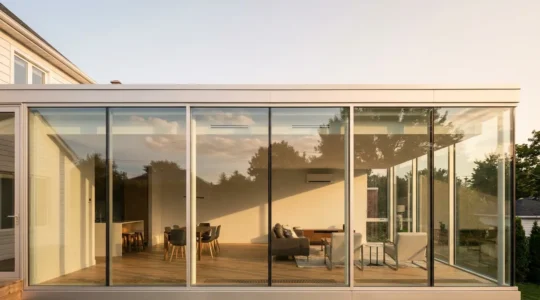
How to Calculate the HVAC Tonnage Needed for a Highly Glazed Extension?
Correctly sizing HVAC for a glass extension is not about maximizing BTUs, but about minimizing the thermodynamic load first, then precisely matching a system to the remaining demand. A glass wall loses heat at triple the rate of an insulated…
Read more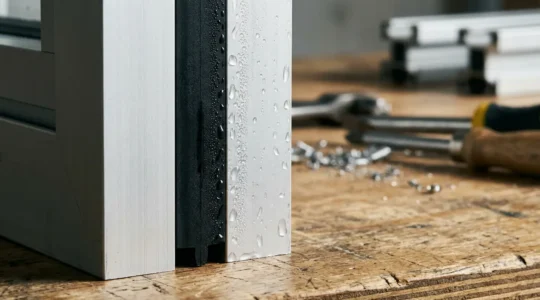
How to Verify If Your Aluminum Windows Are Truly Thermally Broken?
The term “thermally broken” on an aluminum window is no guarantee of performance; many use cheap fillers that fail to prevent heat loss and can even cause frames to warp. High-quality breaks use glass-fiber reinforced polyamide (PA 6.6), not simple,…
Read more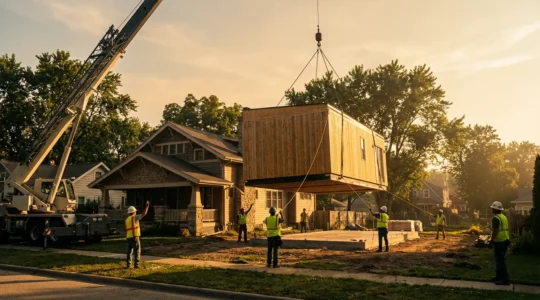
How to Install a Modular Home Addition in Just 3 Days?
Expanding your home doesn’t have to mean months of dust and disruption; the key is shifting 90% of the work off-site. Factory-built modules slash construction time by up to 50% and reduce material waste by as much as 90% compared…
Read more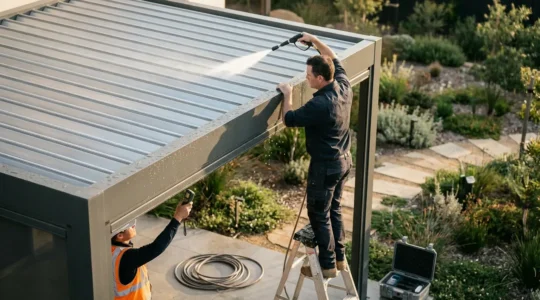
How to Test a Pergola for Watertightness Before Finalizing the Payment?
A simple garden hose test is not enough to guarantee your expensive new pergola is truly waterproof. Leaks often appear only under specific stress conditions, like thermal expansion from sun exposure or high-volume rainfall. A professional-grade inspection involves validating drainage…
Read more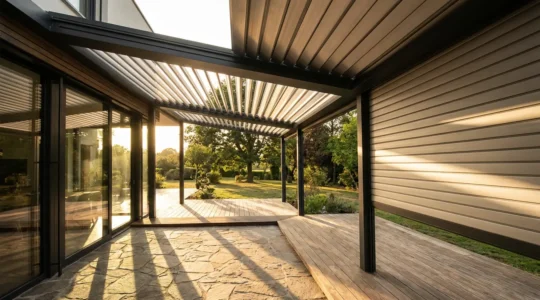
How to Orient Adjustable Louvers to Maximize Winter Sun and Block Summer Heat?
Mastering your louvered pergola isn’t about memorizing settings; it’s about understanding the physics of passive climate control. Your pergola is a thermodynamic system; its louvers and frame directly manage solar gain, convective cooling, and heat loss. Specific angles create aerodynamic…
Read more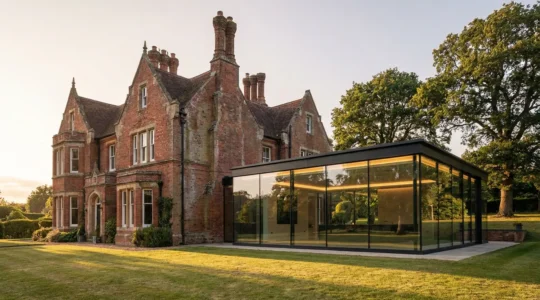
How to Modernize a Historic Home Extension Without Violating Heritage Laws?
Successfully extending a historic home isn’t about fighting regulations; it’s about making them your co-designer to create a timeless architectural dialogue that increases both character and value. Permit rejections are often due to a lack of detail and a misunderstanding…
Read more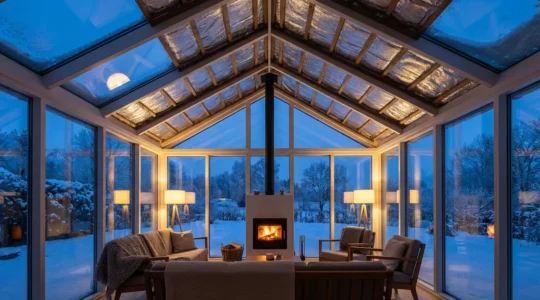
How to Insulate a Glass Extension for Winter Use Without Replacing Windows?
Upgrading your conservatory for winter is less about simply adding insulation and more about engineering a complete thermal system. Identify and seal hidden thermal bridges in frames and dwarf walls, not just obvious drafts. Ensure proper ventilation is integrated with…
Read more